Introduction
The Islamic faith, with over a billion followers worldwide, is rooted deeply in the teachings of the Quran and the practices of the Prophet Muhammad. However, a significant point of contention among Muslims is the role of Hadith—records of the sayings and actions of the Prophet Muhammad—in shaping Islamic practice. This article delves into an enlightening discussion on the authenticity and necessity of Hadith in comparison to the Quran, highlighting various perspectives, including those of Submitters.
The Core of Islamic Practice: Quran vs. Hadith
The Quran: The Ultimate Source of Guidance
The Quran, believed by Muslims to be the literal word of God, is considered the ultimate source of guidance. It is described as a complete and fully detailed book, as stated in the Quran:
6:114 Shall I seek other than God as a source of law, when He has revealed to you this book fully detailed?* Those who received the scripture recognize that it has been revealed from your Lord, truthfully. You shall not harbour any doubt.
This verse underscores the Quran’s sufficiency in guiding the faithful.
The Role of Hadith
Hadith, on the other hand, are collections of the sayings, actions, and approvals of the Prophet Muhammad, compiled by various scholars centuries after his death. The most notable collections include those by Bukhari and Muslim. Proponents of Hadith argue that they provide necessary context and details for practicing the faith, particularly in areas where the Quran is silent.
The Debate: Submitters vs. Traditionalists
Submitters
Submitters, argue that the Quran alone is sufficient for guidance. They cite verses like:
16:89 The day will come when we will raise from every community a witness from among them, and bring you as the witness of these people. We have revealed to you this book to provide explanations for everything, and guidance, and mercy, and good news for the submitters.
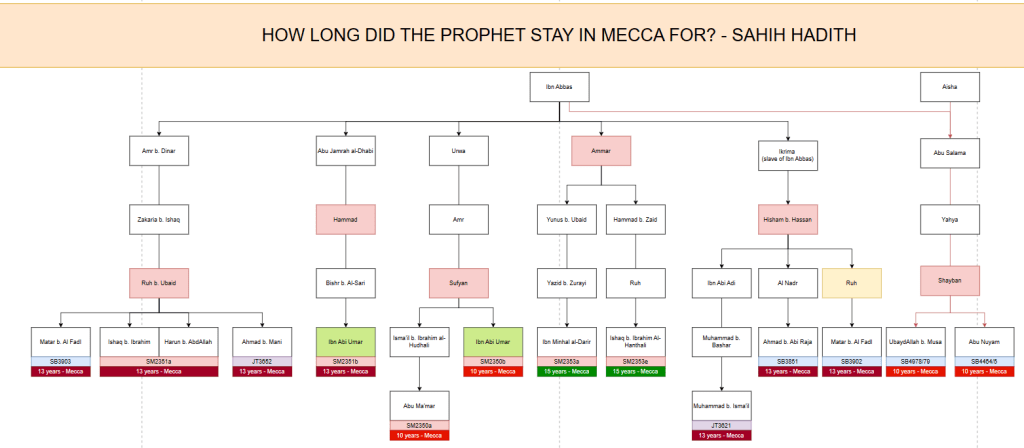
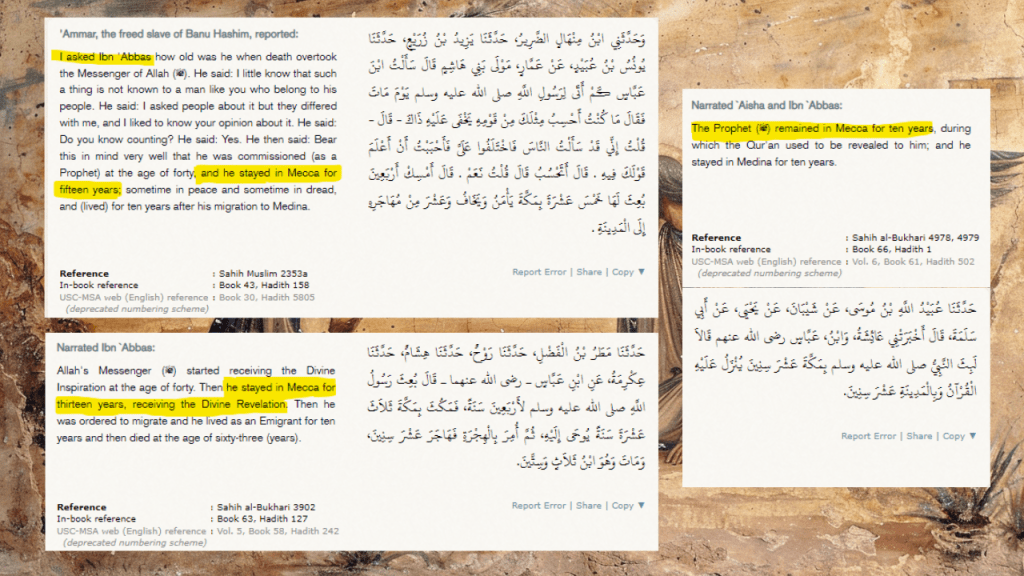
They believe that the Hadith, compiled centuries after the Prophet’s death, are not infallible and often contradict the Quran. An example often cited is the contradiction in the lengths of the Prophet’s stay in Mecca after receiving the Quran, as reported by various Hadith sources.
Traditionalists
Traditionalists, who follow both the Quran and Hadith, believe that the Hadith are essential for understanding the Quran and practicing Islam correctly. They argue that the Hadith provide context, historical background, and detailed instructions for rituals, such as Salah (prayer) and Wudu (ablution), which they purport is not fully detailed in the Quran.
5:6 O you who believe, when you observe the Contact Prayers (Salat), you shall: (1) wash your faces, (2) wash your arms to the elbows, (3) wipe your heads, and (4) wash your feet to the ankles. If you were unclean due to sexual orgasm, you shall bathe. If you are ill, or traveling, or had any digestive excretion (urinary, fecal, or gas), or had (sexual) contact with the women, and you cannot find water, you shall observe the dry ablution (Tayammum) by touching clean dry soil, then rubbing your faces and hands. God does not wish to make the religion difficult for you; He wishes to cleanse you and to perfect His blessing upon you, that you may be appreciative.
https://sunnah.com/bukhari:164
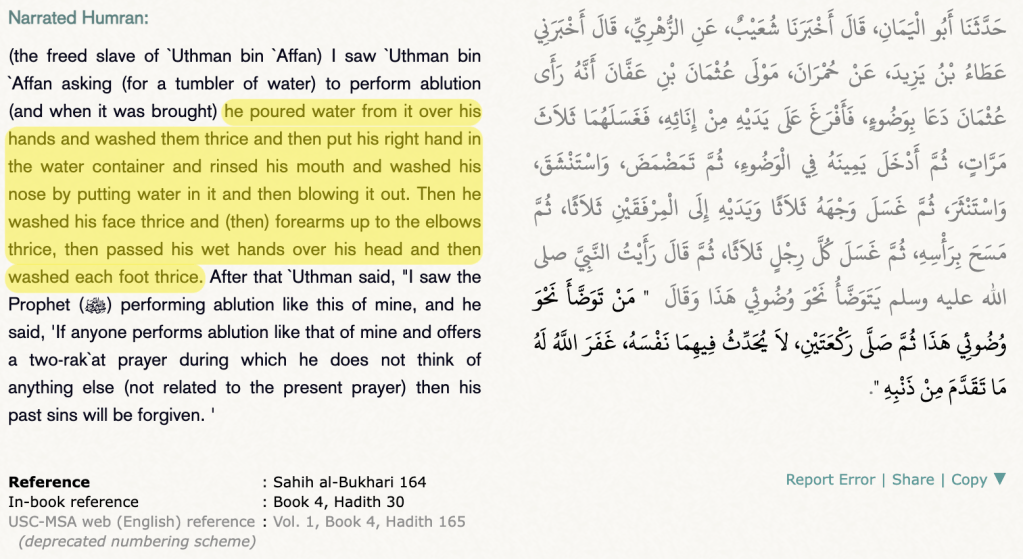
Exact translation including the isnad:
‘Abu Al-Yaman told us that Shuayb informed us from Al-Zuhri who said that Ata’ bin Yazid narrated from Humran, the freed slave of Uthman bin Affan, that he saw Uthman performing ablution. He poured water from his
vessel onto his hands and washed them three times. Then he put his right hand into the water, rinsed his mouth, sniffed water into his nose, blew it out, washed his face three times, his hands up to the elbows three times, wiped his head, washed each foot three times, and then said, “I saw the Prophet (peace be upon him) perform ablution similar to my ablution, and he said, ‘Whoever performs ablution like my ablution and then prays two units of prayer without letting his thoughts wander, his previous sins will be forgiven by Allah.’”‘,
It’s interesting that the hadith citations has various differences to actual translation. For one, it cites that the “forearm up to the elbow” should be washed, which most Muslims would accept as an erroneous practice. The direct translation suggest hands up to the elbow. Furthermore, the head is not mentioned as being wiped three times.
Alongside this, it adds laws and commandments that were not instituted within the Quran. If one could wipe their previous sins purely by doing 2 rak’ah prayer without wandering in thoughts, then you could imagine a bevvy of sins that could be commited without the slightest hesitation, as long as you can ‘reset’ the sin counter.
Another citation:
https://sunnah.com/tirmidhi:48
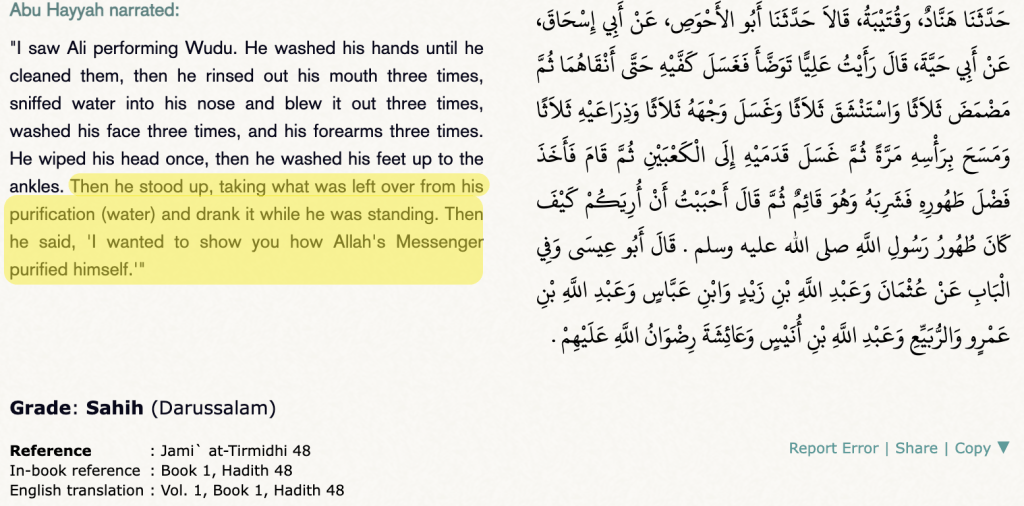
The citation above is particularly concerning as it suggests that you should “drink” the water used for purification. This is unsanitary and ill advised. There are stark differences in practices in the Wudu using the hadith, whereas the Quran gives 4 simple steps. At a minimum these extra steps can qualify as bid’ah (innovations) that did not exist in the Quran.
Critical Examination of Hadith Authenticity
Compilation and Authentication
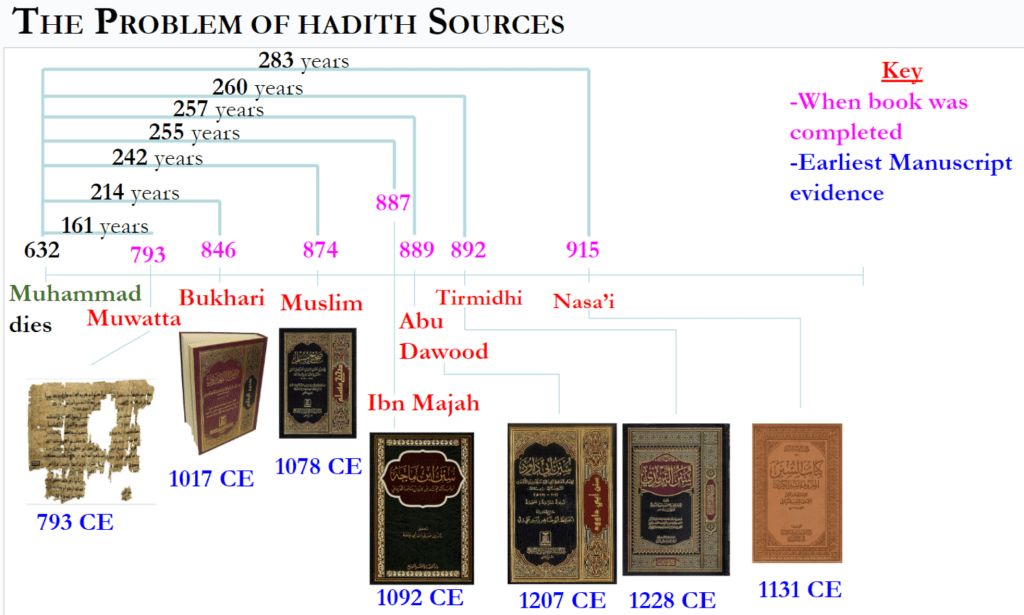
Hadith were compiled approximately 250 years after the Prophet’s death, primarily by Persian scholars like Bukhari and Muslim. The authentication process, known as Ilm al-Rijal (science of men), involves scrutinizing the chain of narrators to ensure their reliability. However, critics argue that this method is flawed and subjective.
Contradictions and Inconsistencies
Submitters point to numerous contradictions within Sahih (authentic) Hadith collections. For instance, Sahih chains report different lengths of the Prophet’s stay in Mecca—10, 13, and 15 years—all attributed to the same companion, Ibn Abbas. Such inconsistencies raise doubts about the reliability of Hadith.
Understanding Salah: Quranic Perspective
Salah in the Quran
Salah, the Muslim prayer, is a fundamental pillar of Islam. The Quran mentions Salah numerous times and emphasizes its importance. For instance,
2:43: You shall observe the Contact Prayers (Salat) and give the obligatory charity (Zakat), and bow down with those who bow down.
However, the Quran does not provide explicit details on the method of Salah.
Inherited Practice
Submitters believe that the method of Salah was passed down from the Prophet Abraham and was practiced by subsequent prophets, including Muhammad. They argue that the core elements of Salah (standing, bowing, prostrating) are universally understood and practiced by Muslims, regardless of Hadith.
16:123 Then we inspired you (Muhammad) to follow the religion of Abraham,* the monotheist; he never was an idol worshiper.
ثُمَّ أَوْحَيْنَآ إِلَيْكَ أَنِ ٱتَّبِعْ مِلَّةَ إِبْرَٰهِيمَ حَنِيفًا وَمَا كَانَ مِنَ ٱلْمُشْرِكِينَ
Root Word-by-Word Translation:
ث م م – Then
و ح ي – we revealed / inspired
ا ل ي – to you;
ا ن – [that]
ت ب ع – “follow
م ل ل – (the) religion (of)
ا ب ر – Abraham;
ح ن ف – monotheism;
م ا – and not
ك و ن – he was
م ن – of
ش ر ك – the polytheists / idol worshipers.”
Commonalities and Differences
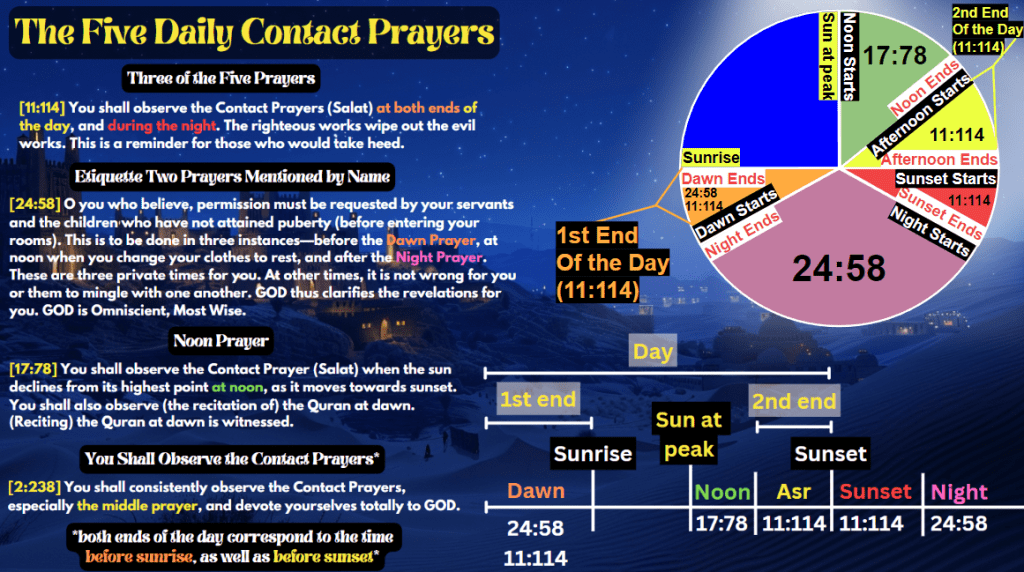
Interestingly, despite rejecting Hadith, Submitters and traditionalists share a similar structure in Salah. Both groups perform Salah five times a day, with specific units (rak’ahs) and common physical postures. The primary difference lies in additional supplications and phrases derived from Hadith.
Quran Alone:
Using Hadiths:
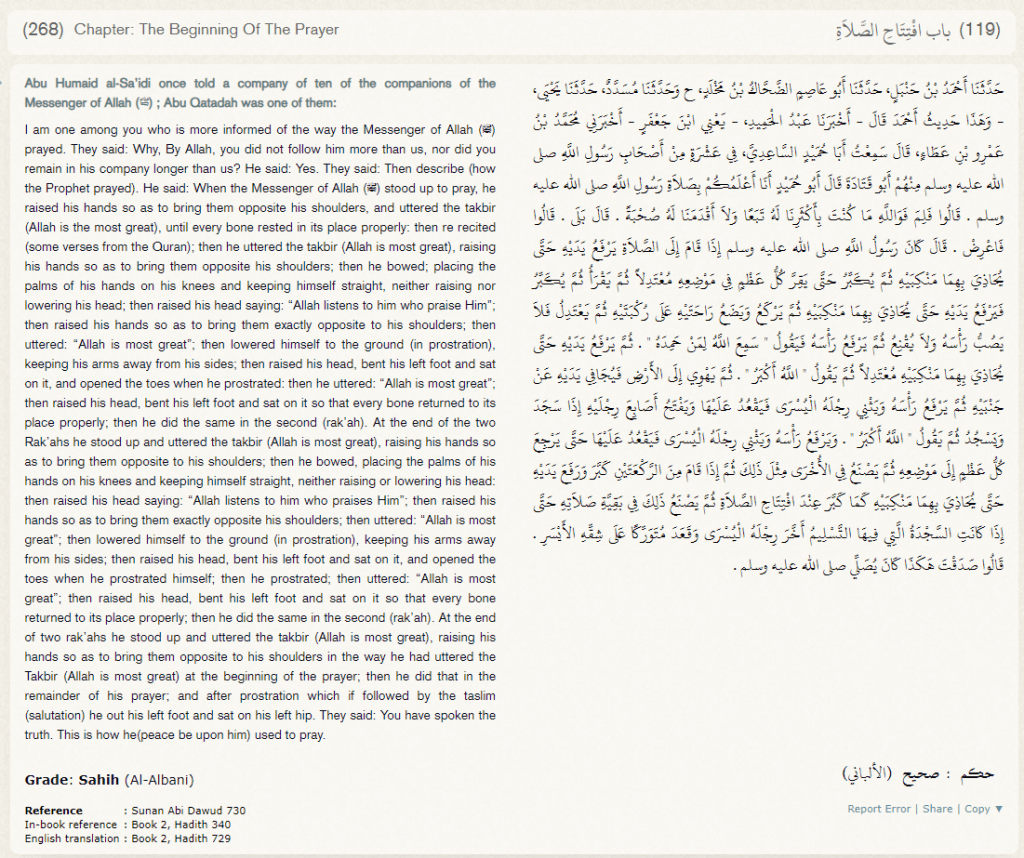
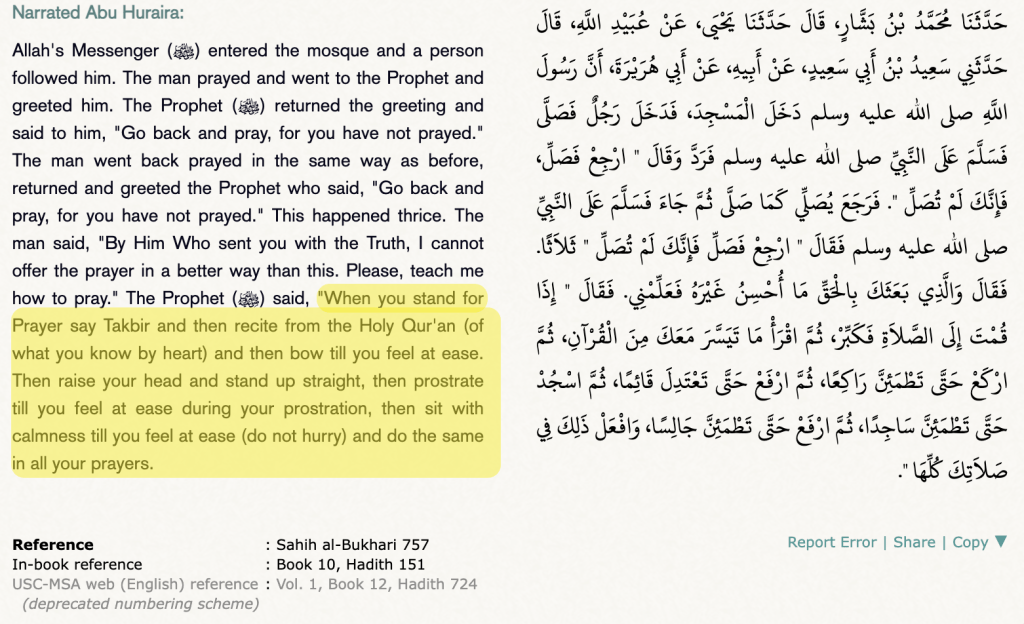
None of these hadiths prescribe the mannerism that Muslims practice today. There is not a single hadith that tells you to apply the نِيَّة Niyyah (intention), before the prayer.
The Controversy of Shirk (Associating Partners with God)
Pure Monotheism
A central tenet of Islam is Tawhid, the belief in the oneness of God. The Quran repeatedly warns against shirk, the sin of associating partners with God:
4:48: God does not forgive idolatry,* but He forgives lesser offenses for whomever He wills. Anyone who sets up idols beside God, has forged a horrendous offense.
ا ن ن – Indeed;
ا ل ه – God
ل ا – not
غ ف ر – He forgives
ا ن – that
ش ر ك – He has partners associated
ب – with Him;
غ ف ر – but He forgives
م ا – what (is)
د و ن – other than
ذ ل ك – that
م ن – for whom
ش ي ا – He wills.
م ن – And whoever
ش ر ك – he associates partners
ا ل ه – with God;
ق د – then surely
ف ر ي – he fabricated
ا ث م – a sin –
ع ظ م – tremendous.
The word “sharika” is associating partners. Any form of association to his absolute authority is rejected. This includes the inclusion of Muhammad in the “shahaada”.
Implications in Salah
Submitters argue that traditional practices, such as invoking the Prophet Muhammad during Salah, constitute shirk. They reference the Quranic command to devote worship solely to God:
6:162 Say, “My Contact Prayers (Salat), my worship practices, my life and my death, are all devoted absolutely to God alone, the Lord of the universe.
Root Word-by-Word Translation:
ق و ل – Say;
ا ن ن – “Indeed;
و ص ل – my Contact Prayers (Salat);
ن س ك – and my rites of sacrifice / worship practices;
ح ي ي – and my living;
م و ت – and my dying
ا ل ه – (are) for God;
ر ب ب – Lord (of)
ع ل م – the worlds / universe.
They believe that mentioning the Prophet in Salah deviates from pure monotheism.
Traditionalists instead give a salawat to the prophet during their At-Tahiyyat which forms part of the Tashahhud, recited during the sitting position in the Islamic prayer (Salah).
Arabic Text of At-Tahiyyat:
اَلتَّحِيَّاتُ لِلَّهِ وَالصَّلَوَاتُ وَالطَّيِّبَاتُ
اَلسَّلاَمُ عَلَيْكَ اَيُّهَا النَّبِيُّ وَرَحْمَةُ اللَّهِ وَبَرَكَاتُهُ
اَلسَّلاَمُ عَلَيْنَا وَعَلَى عِبَادِ اللَّهِ الصَّالِحِينَ
اَشْهَدُ اَنْ لاَ اِلٰهَ اِلَّا اللَّهُ وَ اَشْهَدُ اَنَّ مُحَمَّدًا عَبْدُهُ وَرَسُولُهُ
- التَّحِيَّاتُ (At-Tahiyyatu) – “All greetings”
- لِلَّهِ (Lillahi) – “are for Allah”
- وَالصَّلَوَاتُ (Was-Salawatu) – “and prayers”
- وَٱلطَّيِّبَاتُ (Wat-Tayyibatu) – “and good deeds”
- اَلسَّلاَمُ (As-Salamu) – “Peace”
- عَلَيْكَ (Alaika) – “be upon you”
- اَيُّهَا النَّبِيُّ (Ayyuha An-Nabiyyu) – “O Prophet”
- وَرَحْمَةُ اللَّهِ (Wa Rahmatullahi) – “and the mercy of Allah”
- وَبَرَكَاتُهُ (Wa Barakatuhu) – “and His blessings”
- اَلسَّلاَمُ (As-Salamu) – “Peace”
- عَلَيْنَا (Alayna) – “be upon us”
- وَعَلَى (Wa Ala) – “and upon”
- عِبَادِ اللَّهِ (Ibadillah) – “the righteous servants of Allah”
- الصَّالِحِينَ (As-Saliheen) – “the righteous”
- اَشْهَدُ (Ash-hadu) – “I bear witness”
- اَنْ (An) – “that”
- لاَ اِلٰهَ اِلَّا اللَّهُ (La Ilaha Illa Allah) – “there is no deity except Allah”
- وَاَشْهَدُ (Wa Ash-hadu) – “and I bear witness”
- اَنَّ (Anna) – “that”
- مُحَمَّدًا (Muhammadan) – “Muhammad”
- عَبْدُهُ (Abduhu) – “is His servant”
- وَرَسُولُهُ (Wa Rasuluhu) – “and His messenger”
The Muslims of today, give “salawat”, prayers or greetings, to the Prophet, as if he is alive.
23:99 When death comes to one of them, he says, “My Lord, send me back.
23:100 “I will then work righteousness in everything I left.” Not true. This is a false claim that he makes. A barrier will separate his soul from this world until resurrection.
35:22 Nor are the living and the dead; God causes whomever He wills to hear. You cannot make hearers out of those in the graves.
Where do you stand?
The debate over the role of Hadith in Islamic practice is complex and deeply rooted in historical, theological, and practical considerations. While traditionalists view Hadith as indispensable for understanding and practicing Islam, Submitters advocate for a return to the Quran as the sole source of guidance. The references above should be investigated by the readers as God has given us the brain to arrive at an understanding.
17:36 You shall not accept any information, unless you verify it for yourself. I have given you the hearing, the eyesight, and the brain, and you are responsible for using them.
Ultimately, this ongoing discourse reflects the schism in belief systems when information is accepted without question. Whether they were handed down to you from your family or close of kin, or even a trusted scholar. Your duty is to return to the source of truth. The infallible beacon.
2:2 This scripture is infallible; a beacon for the righteous;

 Quran Only Studies
Leave a comment