A Forensic Analysis of the Most Overused “Prophecy” in Hadith Apologetics

Introduction: The Skyscraper Smokescreen
What if the most celebrated “prophecy” in hadith literature is nothing more than a vague statement being retrofitted to modern events through selective interpretation? For decades, hadith proponents have pointed to the glittering towers of Dubai and Riyadh as “proof” that hadith is divinely inspired. “Look!” they exclaim, “Muhammad predicted that barefoot Bedouins would compete in building tall structures! This proves hadith is from God!”
But does it? In this forensic investigation, we will expose the fatal flaws in this argument – from the compromised chain of narration to the logical fallacies that undergird this claim. Most importantly, we will demonstrate what the Quran itself says about following sources other than God’s revealed scripture. The evidence we present is not based on emotion or sectarian bias, but on hard facts that even traditional hadith scholars couldn’t ignore.
The stakes of this investigation extend far beyond a single hadith. If Muslims can be deceived about something as significant as a prophetic prediction, what else in the hadith literature is fabricated? How many other “prophecies” were invented after the fact to create an illusion of divine foreknowledge? This analysis will demonstrate why God commanded us to follow the Quran alone, and why He specifically condemned those who believe in “hadith” other than His revelations.
Part 1: The Hadith in Question
The Text That Fooled Millions
The hadith in question appears in both Sahih Bukhari (50) and Sahih Muslim (8a), as part of the famous “Hadith of Jibreel” where Gabriel allegedly came to test the Prophet. When asked about the signs of the Hour, Muhammad supposedly responded with this statement:
“…and that you see barefoot, naked, destitute shepherds competing in constructing tall buildings.”
This statement is presented as one of the “signs of the Hour” – supposedly proving Muhammad had knowledge of the future. Hadith apologists claim this “predicted” the modern skyscrapers in Dubai, the Burj Khalifa (tallest building in the world), Saudi Arabia’s ambitious construction projects, and the general wealth of Gulf Arabs who were once “poor Bedouins.” Therefore, they conclude, hadith must be divinely inspired and should be followed alongside the Quran.
This argument fails on every level. Let us systematically expose why this “prophecy” proves nothing except the desperation of hadith apologists to find validation for their corrupted religious system.

Part 2: The Chain of Transmission – The 200+ Year Problem
Following the Trail of Oral Transmission
Every hadith stands or falls on its chain of transmission (isnad), and the “tall buildings” hadith’s chain reveals a devastating problem that should end all debate. Let us examine when this hadith was allegedly spoken versus when it was written down:
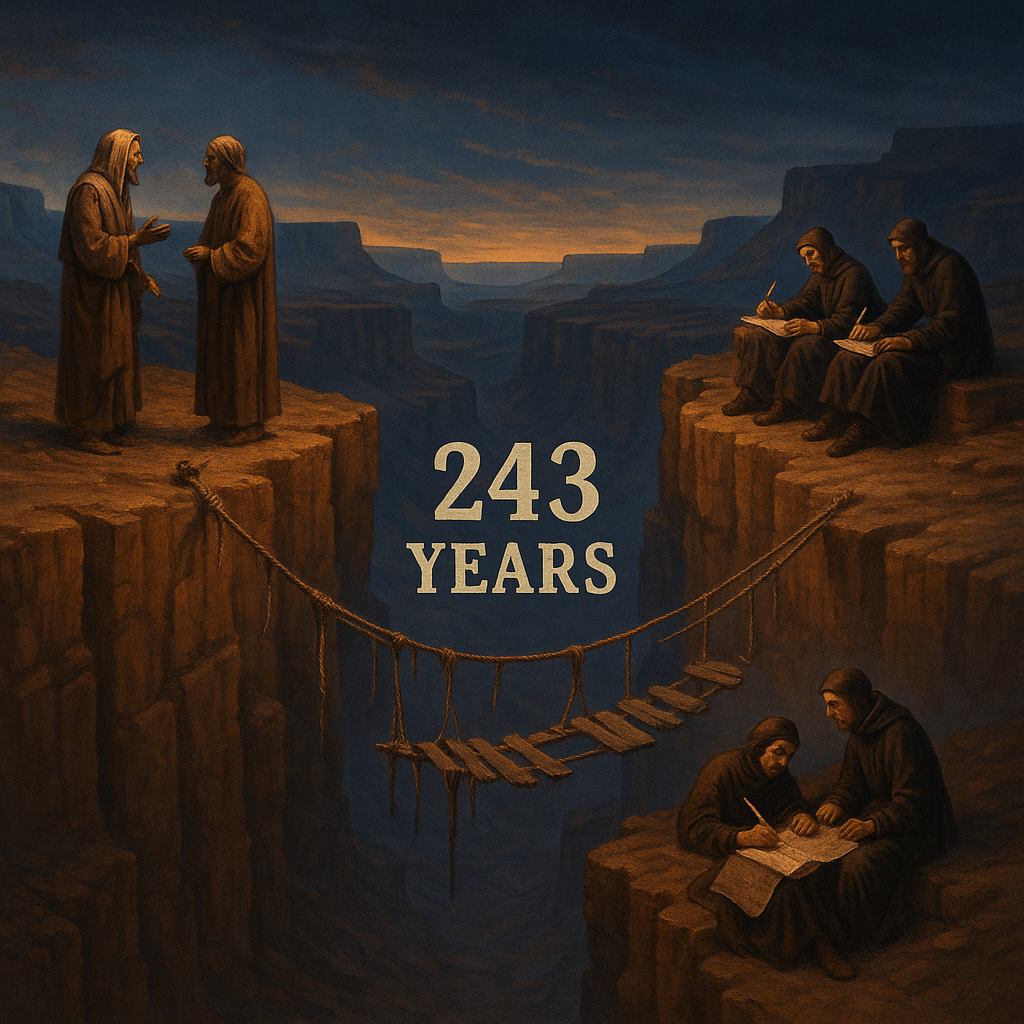
Prophet Muhammad died in 632 CE. Sahih al-Bukhari was compiled around 846-870 CE – a gap of 214-238 years. Sahih Muslim was compiled around 875 CE – a gap of 243 years. Think about that for a moment. The hadith was transmitted orally for over two centuries before anyone wrote it down in these collections. This is like asking someone today to accurately recall a conversation from 1781 that was passed down through eight generations of word-of-mouth storytelling.
The Bukhari Chain – The Abu Hurairah Problem
The Bukhari version traces through: Musaddad – Ismail ibn Ibrahim – Abu Hayyan al-Taymi – Abu Zur’a – Abu Hurairah – Prophet. The entire chain depends on Abu Hurairah – perhaps the most controversial figure in hadith history. Who was Abu Hurairah? He spent only 3 years with the Prophet (629-632 CE), yet narrated 5,374 hadith – more than ALL other companions combined. He was publicly criticized by Aisha and Umar ibn al-Khattab for his impossible output.
Aisha’s famous rebuke: “How can Abu Hurairah narrate so many hadith when he only knew the Prophet for three years?” Umar ibn al-Khattab threatened Abu Hurairah with exile if he continued narrating hadith. When the Prophet’s own wife and the second Caliph questioned this narrator’s reliability, why should we trust him?

The Muslim Chain – Gaps and Unknowns
The Muslim version traces through: Imam Muslim – Waki’ ibn al-Jarrah – Kahmas – Abdullah ibn Buraidah – Yahya ibn Ya’mur – Abdullah ibn Umar – Umar – Prophet. The problems with this chain are numerous. Kahmas has unknown dates of birth and death – a near “ghost narrator” with minimal biographical record. Yahya ibn Ya’mur has limited biographical information available in classical sources. Abdullah ibn Buraidah was a Tabi’i (successor) who never met the Prophet. The chain spans 7+ generations of oral transmission over 243 years.

Two Different Chains, Same “Prophecy”?
Notice how Bukhari and Muslim have completely different chains yet arrive at the same hadith text? This is actually a red flag for fabrication, not authentication. When a fabricated story spreads through a community, different people create different chains to legitimize it – all leading to the same invented content. The parallel emergence of the same text through divergent chains suggests coordinated fabrication rather than independent verification.

Part 3: The Logical Fallacies – Why This “Prophecy” Proves Nothing
Fallacy #1: The Vagueness Problem
The statement “barefoot shepherds competing in tall buildings” is extraordinarily vague. What constitutes “tall”? Tall compared to what – a tent? A house? What about “barefoot shepherds”? This describes any rural population that urbanizes throughout history. And “competing” simply means any economic development where people build impressive structures.
This “prophecy” could apply to Ancient Rome where they built insulae (apartment buildings) up to 10 stories. It could apply to Medieval Europe with cathedral building competitions. It applies to Ancient Mesopotamia where former nomads built ziggurats. It fits 19th Century America during the skyscraper race in Chicago and New York. And it applies to Modern China where rural peasants now build mega-cities. Any civilization that experiences economic growth could “fulfill” this vague statement.
Fallacy #2: Post-Hoc Rationalization (Texas Sharpshooter Fallacy)
This fallacy occurs when someone shoots randomly at a barn, paints a target around wherever the bullet landed, then claims they’re a sharpshooter. Hadith apologists see tall buildings in Dubai (the bullet hole), search through 600,000+ hadith to find a vague match, then declare it a “miraculous prophecy.” This is intellectual dishonesty of the highest order – retrofitting ancient vague statements to modern events.

Fallacy #3: Selection Bias
There are hundreds of thousands of hadith in existence. With such volume, statistically, some will accidentally match future events by pure chance. What about all the hadith “prophecies” that failed? The Hour was supposed to come before the last companion died. Specific predictions about the end times never materialized. Countless “signs” have been conveniently reinterpreted or ignored. Cherry-picking one vague match while ignoring thousands of failures is not evidence – it’s confirmation bias.
Fallacy #4: The Non-Sequitur
Even if this hadith accurately predicted tall buildings – which it doesn’t – this would NOT establish that hadith is divine revelation, that hadith can serve as religious law, or that hadith should be followed alongside Quran. Consider: A fortune cookie might predict something correctly. Does that make it scripture? Nostradamus made vague predictions that people claim “came true.” Should we follow Nostradamus as religious guidance? A prediction, even if true, does not establish religious authority.
Fallacy #5: Historical Inaccuracy
The premise that Arabs were all “barefoot, destitute shepherds” is historically false. The Kaaba existed before Islam – Arabs built it. Mecca and Medina were trading cities, not tent camps. The Nabataeans (Arab people) built Petra – a wonder of the ancient world. Arab traders had extensive commerce with Rome, Persia, and India. Wealthy Arab merchants like Khadijah existed before Islam. Arabs were not all “barefoot beggars” waiting for oil money.
Part 4: What the Quran Actually Says
The Quran is Complete and Fully Detailed
Now we come to the most important evidence: What does God actually say about following sources other than the Quran? The answer is unambiguous and devastating to hadith proponents.
[6:38] “All the creatures on earth, and all the birds that fly with wings, are communities like you. We did not leave anything out of this book. To their Lord, all these creatures will be summoned.”
God explicitly states that He did not leave anything out of the Quran. If God didn’t leave anything out, what exactly are hadith adding? The only logical answer is that hadith are adding human fabrications, political propaganda, and sectarian divisions that God deliberately excluded from His perfect book.
[6:114] “Shall I seek other than God as a source of law, when He has revealed to you this book fully detailed? Those who received the scripture recognize that it has been revealed from your Lord, truthfully. You shall not harbor any doubt.”
This verse explicitly prohibits seeking any source of law other than God through His revealed book. The Quran is described as “mufassalan” – fully detailed. Yet the entire hadith system is based on seeking other sources of law, claiming the Quran isn’t detailed enough for practical religion. Muslims who follow hadith are directly violating this commandment.
[6:115] “The word of your Lord is complete, in truth and justice. Nothing shall abrogate His words. He is the Hearer, the Omniscient.”
God’s word is “complete” (tammat), requiring no supplementation. This completeness encompasses both truth and justice, meaning the Quran provides all necessary guidance for both belief and practice.

God Explicitly Asks: Which Hadith Do You Follow?
[12:111] “In their history, there is a lesson for those who possess intelligence. This is not fabricated Hadith; this (Quran) confirms all previous scriptures, provides the details of everything, and is a beacon and mercy for those who believe.”
God specifically contrasts the Quran with “fabricated Hadith” (hadithan yuftara), making clear that His book is not fabricated hadith and provides “the details of everything” (tafsila kulli shay’). The fact that God uses the exact word “hadith” in this condemnation is not coincidental – He knew exactly what corruption would plague the Muslim community.
[45:6] “These are God’s revelations that we recite to you truthfully. In which Hadith other than God and His revelations do they believe?”
God directly challenges those who believe in hadith other than His revelations. The question is rhetorical – the answer is that they should not believe in any hadith beyond God’s revelations. Yet Muslims have built an entire religion based on believing in hadith narrated by known liars.
[77:50] “Which Hadith, other than this, do they uphold?”
The Quran’s final condemnation of external hadith comes near its end, as if God wanted to leave no doubt about His position. After presenting all His revelations, God asks which hadith other than the Quran people will uphold. The answer should be “none.”
Warning Against Baseless Hadith
[31:6] “Among the people, there are those who uphold baseless Hadith, and thus divert others from the path of God without knowledge, and take it in vain. These have incurred a shameful retribution.”
The Arabic phrase “lahw al-hadith” (baseless hadith/idle tales) is a direct condemnation of following fabricated stories attributed to religion. Those who uphold baseless hadith face “shameful retribution” – this is not ambiguous language.
Follow ONLY What is Revealed
[7:3] “You shall all follow what is revealed to you from your Lord; do not follow any idols besides Him. Rarely do you take heed.”
[18:27] “You shall recite what is revealed to you of your Lord’s scripture. Nothing shall abrogate His words, and you shall not find any other source beside it.”
The phrase “you shall not find any other source beside it” is devastating to hadith proponents. God explicitly states there is no other source – not hadith, not scholars’ opinions, not centuries of tradition.
[17:46] “We place shields around their minds, to prevent them from understanding it, and deafness in their ears. And when you preach your Lord, using the Quran alone, they run away in aversion.”
The phrase “wahdahu” (alone) in 17:46 is devastating to hadith proponents – those who preach the Quran alone cause the disbelievers to flee! This describes exactly what happens when Quran-alone submitters expose hadith fabrications.

Muhammad’s Sole Duty Was Delivering the Quran
[5:99] “The sole duty of the messenger is to deliver the message, and God knows everything you declare and everything you conceal.”
[42:48] “If they turn away, we did not send you as their guardian. Your sole mission is delivering the message.”
Muhammad was tasked with delivering the Quran – not creating thousands of additional religious rulings that contradict it. His “sole duty” and “sole mission” was delivering God’s message, not authoring a parallel scripture.
Warning About Fabrications
[6:112] “We have permitted the enemies of every prophet – human and jinn devils – to inspire in each other fancy words, in order to deceive. Had your Lord willed, they would not have done it. You shall disregard them and their fabrications.”
God warned us that enemies would create “fancy words” (zukhrufa al-qawl) to deceive. Hadith literature is full of beautifully worded stories designed to mislead. The command is clear: “disregard them and their fabrications.”
The Messenger’s Complaint on Judgment Day
[25:30] “The messenger said, ‘My Lord, my people have deserted this Quran.’”
This is devastating. On the Day of Judgment, Muhammad will complain that his people abandoned the Quran – not that they failed to follow hadith. How do people desert the Quran? By following other sources for their religion. Every Muslim who prioritizes hadith over Quran will face this complaint.
Part 5: The Authentication Problem
The Quran Has Mathematical Verification
The Quran possesses the remarkable Code 19 – a mathematical structure that verifies preservation of the text, provides objective authentication, is computer-verifiable and falsifiable, and was discovered exactly as prophesied in verse 74:30-31. The Basmalah has 19 letters. Over 600 mathematical patterns based on 19 have been documented. This is testable, verifiable proof.
Hadith Has No Authentication
Hadith literature has no mathematical structure, relies on human memory across 200+ years, was compiled by fallible scholars with political agendas, contains internal contradictions, contains scientific absurdities, and contains moral atrocities attributed to the Prophet. The contrast could not be starker. One is mathematically authenticated; the other asks us to trust a game of telephone spanning two centuries.

Part 6: The Pattern of Post-Event “Prophecies”
The Hadith Factory of Convenient Predictions
The “tall buildings” fabrication is not an isolated incident but part of a systematic pattern of manufacturing prophecies after events occurred. This pattern is so consistent throughout hadith literature that it reveals an entire industry of fabrication operating for centuries after the Prophet’s death. The technical term for this fraud is “vaticinium ex eventu” – prophecy from the event.
Consider the suspiciously specific “prophecies” about the Abbasid dynasty, which conveniently appeared during Abbasid rule. Or the detailed predictions about specific battles and conquests that mysteriously emerged after those events occurred. The hadith about “black flags from Khurasan” supposedly predicting the Abbasid revolution appeared after the Abbasids came to power from that region. The predictions about specific cities Muslims would conquer emerged after each conquest.
The pattern is consistent: Event happens, then hadith appears claiming Muhammad predicted it, then Muslims celebrate the “miracle,” and finally political authorities gain religious legitimacy. This is exactly what happened with the Constantinople hadith, as we exposed in our previous investigation: The Impossible Prophecy: Exposing the Fabricated Constantinople Hadith.
Part 7: Why Muslims Fall For This
The Psychology of Deception and Desperation
Understanding why educated, intelligent Muslims continue to believe obviously fabricated hadiths requires examining the psychological and social forces at work. The primary psychological factor is confirmation bias combined with emotional investment. Muslims desperately want Islam to be true, and prophecies seem like powerful proof. When they hear about tall buildings being “predicted,” it triggers an emotional high that overrides critical thinking.
The social pressure to accept hadith is enormous. Questioning hadith is equated with questioning Islam itself, leading to accusations of apostasy, social ostracism, and in some countries, legal persecution. Muslims learn from childhood that doubting hadith makes them bad Muslims, creating a powerful psychological barrier to critical thinking. In this environment, it’s easier to accept obvious fabrications than to face the social consequences of honest investigation.

Part 8: Breaking Down the “Prophecy” Point by Point
A Systematic Demolition
Let’s systematically demolish every aspect of this fabricated prophecy, leaving no room for doubt about its fraudulent nature:
First, the timing: The hadith claims Muhammad predicted this, but it was transmitted orally for over 200 years before being written down. No contemporary record exists. In any field of historical inquiry, such a gap renders accounts unreliable.
Second, the narrator problem: The Bukhari version depends entirely on Abu Hurairah, who was criticized by Aisha and Umar for narrating impossible quantities of hadith. The Muslim version includes “Kahmas” with unknown dates – a near ghost narrator.
Third, the Quranic contradiction: The Quran explicitly states Muhammad didn’t know the future in verses 6:50, 7:188, and 46:9. This hadith claims he made predictions about events 1400 years later. These cannot both be true.
Fourth, the vagueness: “Tall buildings” could apply to any civilization experiencing economic growth throughout human history – Rome, medieval Europe, ancient Mesopotamia, modern China, 19th century America.
Fifth, the logical failure: Even if true, a prediction doesn’t establish religious authority. Fortune cookies sometimes come true – that doesn’t make them scripture.
Part 9: The Danger of Accepting Lies
How One Fabrication Corrupts Everything
Accepting fabricated hadiths like the “tall buildings” prophecy doesn’t just involve believing one false narrative; it corrupts the entire framework of religious understanding. When Muslims accept that Muhammad made prophecies contradicting the Quran’s clear statements, they’ve essentially declared that hadith can override God’s word. This precedent allows any fabrication to enter the religion as long as it has an isnad chain.
The intellectual damage is profound and generational. Children raised believing these fake prophecies develop a distorted understanding of both their religion and critical thinking itself. They’re taught that faith means accepting obvious contradictions, that questioning religious sources is sinful, and that emotional attachment to tradition overrides logical analysis.
The spiritual corruption is even more devastating. By accepting fabricated prophecies, Muslims inadvertently commit the very sin the Quran repeatedly condemns – attributing lies to God and His messenger. Every time someone cites the “tall buildings” hadith as proof of Muhammad’s prophethood, they’re spreading a lie in God’s name.
Conclusion: The Moment of Truth
Choosing Between God’s Word and Human Lies
We have now completed our forensic investigation of the “tall buildings” hadith, and the evidence is overwhelming. This celebrated “prophecy” fails every test of authenticity: chain reliability (200+ year gap, controversial narrators), specificity (vague enough to match any economic development), logical validity (predictions don’t establish religious authority), Quranic alignment (Quran condemns following other hadith), and authentication (no verification mechanism whatsoever).
The Quran declares itself complete, fully detailed, and providing explanations for everything. It explicitly asks: “In which Hadith other than God and His revelations do they believe?” and “Which Hadith, other than this, do they uphold?” These questions demand an answer from every sincere believer.
The tall buildings of Dubai are impressive feats of engineering. They are NOT proof that hadith is divine. They are simply buildings – constructed by humans with oil wealth, just as humans throughout history have built impressive structures when resources allowed. The Quran is sufficient. God said so. Will you believe God, or will you continue chasing tall tales?
[45:6] “These are God’s revelations that we recite to you truthfully. In which Hadith other than God and His revelations do they believe?”
[77:50] “Which Hadith, other than this, do they uphold?”
The choice is yours. Will you continue believing in hadith transmitted through 200+ years of oral tradition by controversial narrators, or will you return to God’s revelations alone? The evidence has been presented, the truth has been revealed, and the judgment now rests with you.
[25:30] “The messenger said, ‘My Lord, my people have deserted this Quran.’”

Related Reading
The Impossible Prophecy: Exposing the Fabricated Constantinople Hadith

 Quran Only Studies
Leave a comment