Introduction: The Cave Quran Scenario
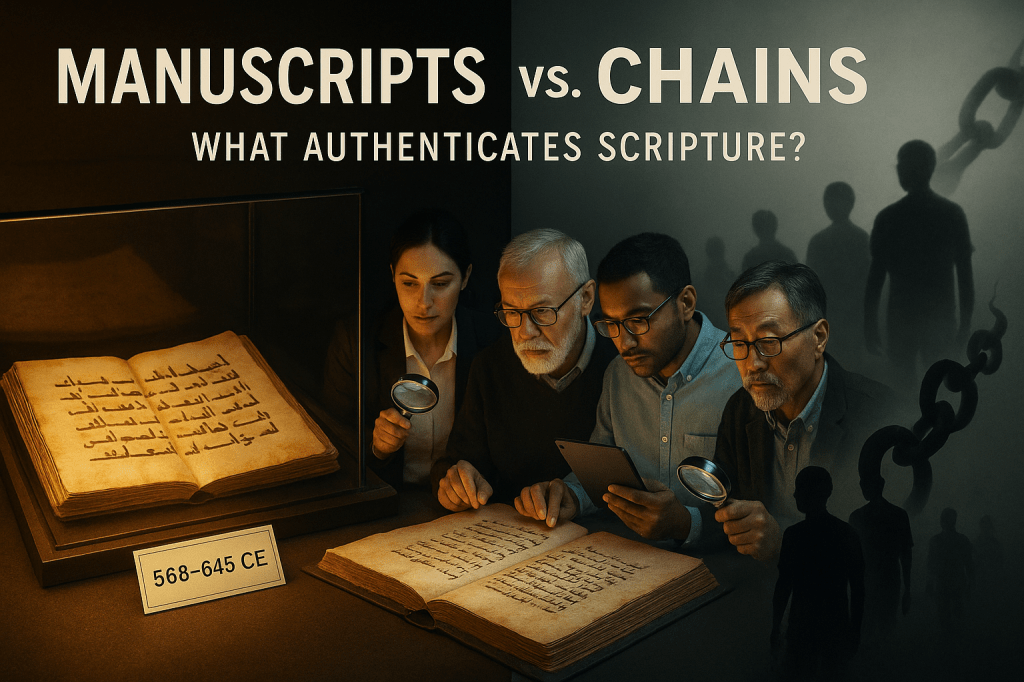
Imagine that tomorrow, archaeologists exploring a sealed cave in the Arabian Peninsula unearth a complete Quran manuscript. The parchment is sent to Oxford University’s Radiocarbon Accelerator Unit — the same world-class facility that dated the Birmingham manuscript — and the results come back: 620-640 CE, with 95.4% confidence. The text is compared letter by letter against every printed Quran on Earth, and the verdict is unanimous: it matches perfectly. Not one word differs. Not one letter has been altered. The find is announced in Nature, peer-reviewed, and confirmed by laboratories in Zurich, Tokyo, and Melbourne. The entire academic world agrees: this is a Quran from the Prophet’s lifetime, and it is identical to what 1.8 billion people read today.
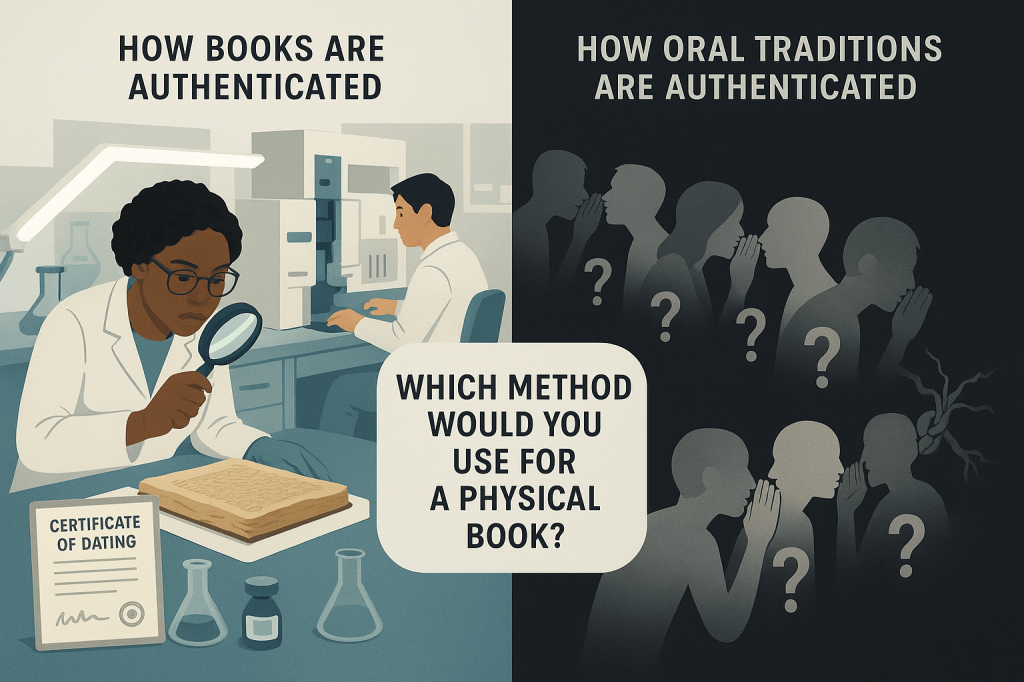
Now here is the question that should end every debate about Quranic authentication: what chain of narration would you require to accept that manuscript? What isnad would you demand before trusting it? The answer, of course, is none. You would not ask who copied it, who carried it, or who recited it to whom. The physical object is self-authenticating. Its authority rests on what it is — a tangible, datable, scientifically verifiable artifact — not on who claims to have transmitted it. Carbon dating does not need a narrator. Paleographic analysis does not require a chain of custody through human memory. The manuscript speaks for itself.
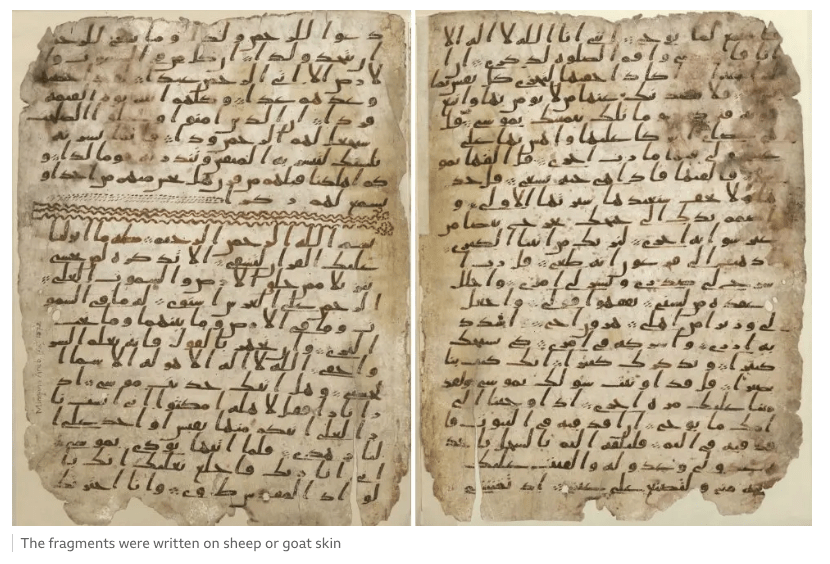
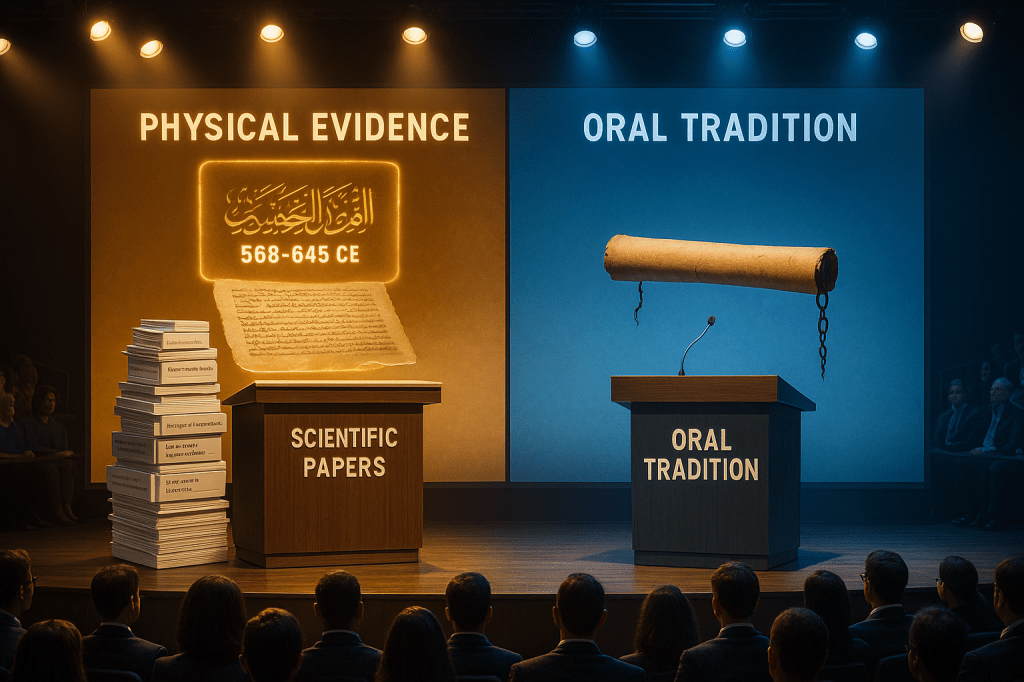
This thought experiment is not hypothetical fiction. We already have such manuscripts. The Birmingham Quran, carbon dated to 568-645 CE, contains portions of Chapters 18, 19, and 20 — and every word matches the Quran you can pick up in any bookstore on Earth. The Sana’a manuscripts, the Topkapi codex, the Samarkand codex, the Berlin fragments: separated by thousands of miles and centuries of history, all containing the same text. No central printing authority coordinated this uniformity. No human institution enforced it. The physical evidence exists, it has been examined by secular academic institutions with no theological motivation, and the conclusion is unambiguous: the Quran has been preserved. The isnad framework — a system invented for oral traditions that were never written down — is simply irrelevant to a book that has always existed as a physical manuscript.
Part 1: God’s Promise — The Quranic Foundation
The Divine Guarantee of Preservation
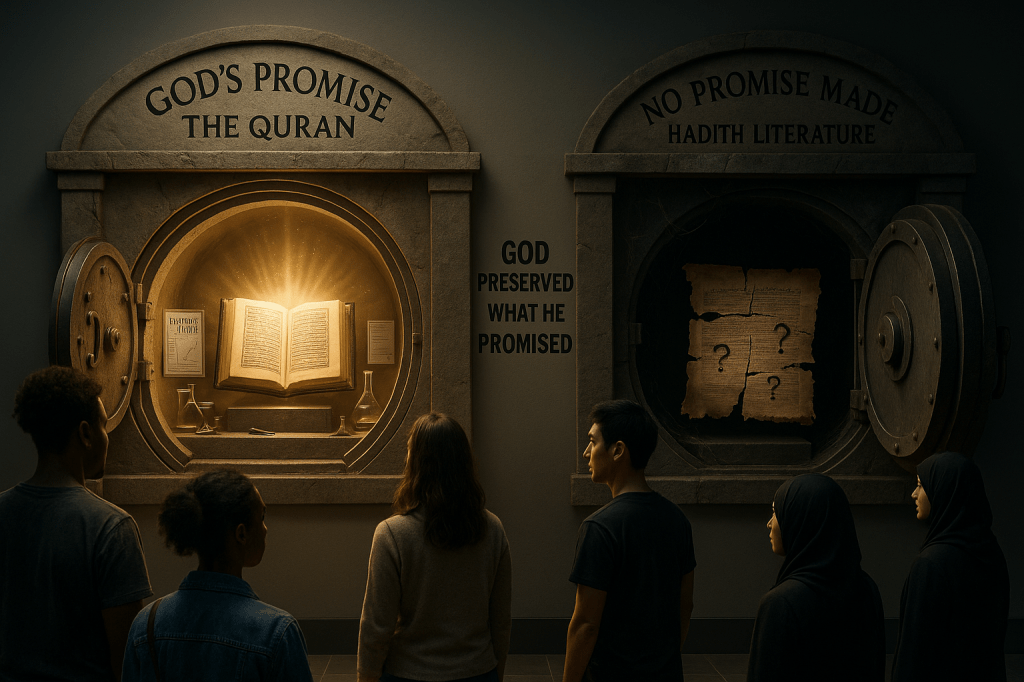
Before examining the physical evidence, we must understand the theological foundation upon which the Quran’s preservation rests. Unlike any other scripture in human history, the Quran contains an explicit, emphatic, divine promise of its own preservation. This is not a human claim made by scholars, caliphs, or institutions. It is a statement from the Creator of the universe, recorded within the scripture itself, using the strongest possible language of certainty.
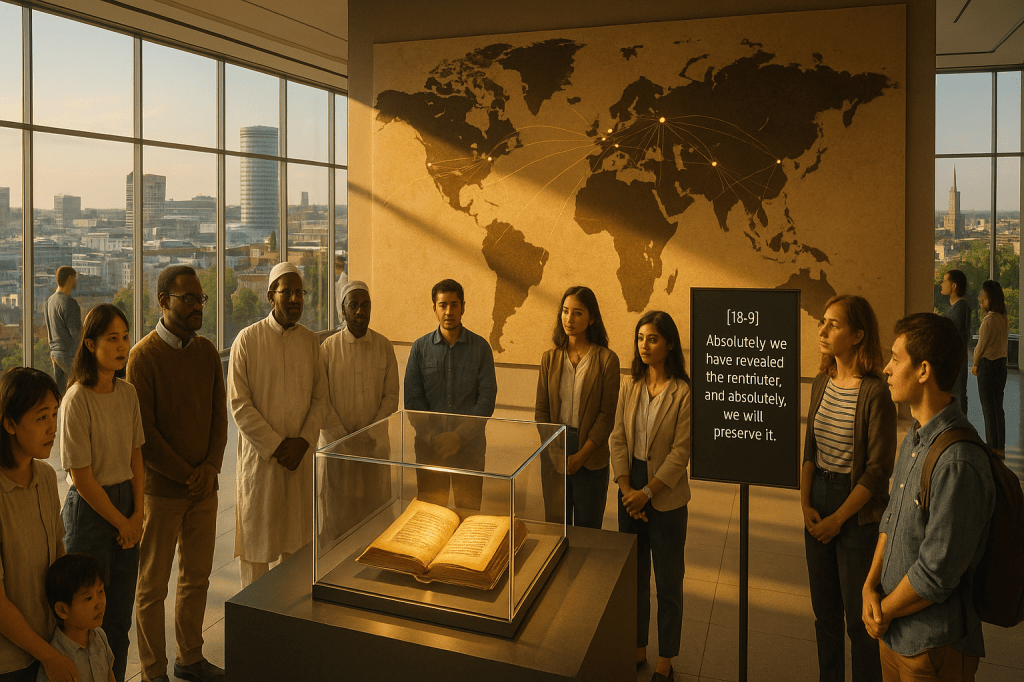
[15:9] “Absolutely, we have revealed the reminder, and, absolutely, we will preserve it.”
The double emphasis in this verse — “absolutely… absolutely” — uses the emphatic particle to stress with maximum force that preservation is not merely intended but guaranteed. This is a covenant between God and humanity. The Torah and the Gospel were entrusted to human custodianship and were subsequently corrupted, as the Quran itself attests. But the Quran would remain under direct divine protection. Every manuscript we examine, every carbon dating result we receive, every paleographic analysis conducted by secular universities is simply the physical confirmation of this promise. God said He would preserve it. The laboratory evidence proves He did.
[6:114] “Shall I seek other than God as a source of law, when He has revealed to you this book fully detailed? Those who received the scripture recognize that it has been revealed from your Lord, truthfully. You shall not harbor any doubt.”
[6:115] “The word of your Lord is complete, in truth and justice. Nothing shall abrogate His words. He is the Hearer, the Omniscient.”
These verses establish two critical principles. First, the Quran is “fully detailed” — it requires no supplement, no additional oral tradition, no hadith corpus to complete it. Second, God’s words cannot be abrogated — they are permanent, unchangeable, and supreme. When traditionalists argue that the Quran needs the hadith to be understood, they are directly contradicting God’s own description of His book. And when they demand an isnad chain to authenticate a book that God Himself promised to preserve, they are replacing divine guarantee with human methodology — a methodology, as we shall see, that was invented centuries after the Prophet and applied retroactively to lend authority to texts that had no physical evidence of their own.
The Quran’s Verdict on Other “Hadith”
The Quran does not merely claim completeness — it explicitly warns against following any hadith other than God’s revelations. The Arabic word “hadith” appears multiple times in the Quran, and in every instance where it is contrasted with God’s message, it is used as a warning against those who uphold anything alongside or instead of scripture.
[45:6] “These are God’s revelations that we recite to you truthfully. In which Hadith other than God and His revelations do they believe?”
[39:23] “God has revealed herein the best Hadith; a book that is consistent, and points out both ways (to Heaven and Hell). The skins of those who reverence their Lord cringe therefrom, then their skins and their hearts soften up for God’s message. Such is God’s guidance; He bestows it upon whomever He wills. As for those sent astray by God, nothing can guide them.”
[77:50] “Which Hadith, other than this, do they uphold?”
[12:111] “In their history, there is a lesson for those who possess intelligence. This is not fabricated Hadith; this (Quran) confirms all previous scriptures, provides the details of everything, and is a beacon and mercy for those who believe.”
[31:6] “Among the people, there are those who uphold baseless Hadith, and thus divert others from the path of God without knowledge, and take it in vain. These have incurred a shameful retribution.”
The pattern is unmistakable. God describes His book as “the best hadith,” warns against those who uphold “baseless hadith,” explicitly asks what hadith other than His revelations people believe in, and declares that the Quran is “not fabricated hadith” but rather provides “the details of everything.” These are not ambiguous statements requiring scholarly interpretation. They are direct, repeated, emphatic warnings against the very practice that traditional religion has elevated to the status of divine law. The isnad system exists to authenticate hadith — texts that God Himself has warned us not to uphold. The Quran, by contrast, needs no such authentication because its Authenticator is God.

Part 2: The Physical Manuscript Evidence
The Birmingham Manuscript (568-645 CE)
Perhaps the most significant Quranic manuscript discovery of the modern era is the Birmingham Quran, housed at the University of Birmingham’s Cadbury Research Library. In 2015, this manuscript underwent rigorous radiocarbon dating at the Oxford Radiocarbon Accelerator Unit — one of the world’s most respected dating facilities — and the results sent shockwaves through the academic world. The parchment was dated with 95.4% confidence to between 568 and 645 CE. This places the physical manuscript within the lifetime of the Prophet Muhammad (570-632 CE) or within thirteen years of his death. This is not a copy of a copy of a copy made centuries later. This is a manuscript that could have been written by someone who heard the Quran directly from the Prophet’s mouth.
The Birmingham manuscript contains portions of Chapters 18, 19, and 20, and when compared to modern Qurans, the text is identical. Not one word differs. Not one letter has been changed. Professor David Thomas of the University of Birmingham, who analyzed the manuscript, stated: “The person who actually had their hand on these pieces of parchment could well have known the Prophet Muhammad. He would have seen him probably, and maybe have heard him preach” (Source: BBC News, 2015). This level of proximity to the original source is unmatched by any hadith manuscript in existence. Here is a secular academic institution, with no religious motivation whatsoever, confirming that the Quran has been preserved from the very beginning.
The Sana’a Manuscripts (Late 7th – Early 8th Century CE)
Discovered in 1972 during restoration work on the Great Mosque of Sana’a in Yemen, these manuscripts represent one of the largest collections of early Quranic fragments ever found. Dating to the late 7th and early 8th centuries CE — roughly 38 to 78 years after the Prophet — the Sana’a manuscripts comprise thousands of parchment fragments painstakingly analyzed by scholars including Gerd-R. Puin and Hans-Caspar Graf von Bothmer of Saarland University, Germany.
Critics of the Quran initially hoped these manuscripts would reveal textual corruption. They found the opposite. While some palimpsest fragments — manuscripts where earlier text was washed and overwritten — show minor spelling variations, these represent regional orthographic conventions comparable to the difference between British and American English spelling. The core consonantal text — the actual words of the Quran — remains consistent across all fragments. Even more remarkably, the palimpsest layers, when the earlier text is read underneath the overwriting, contain the same words. Dr. Puin himself acknowledged that the variations were cosmetic, not doctrinal. The text was fixed from the very beginning.
The Topkapi Manuscript (Istanbul, ~650 CE)
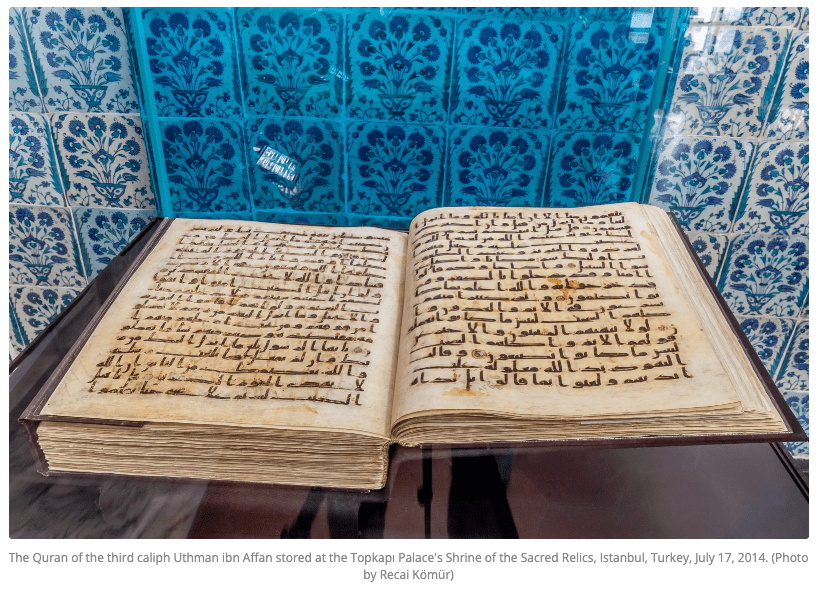
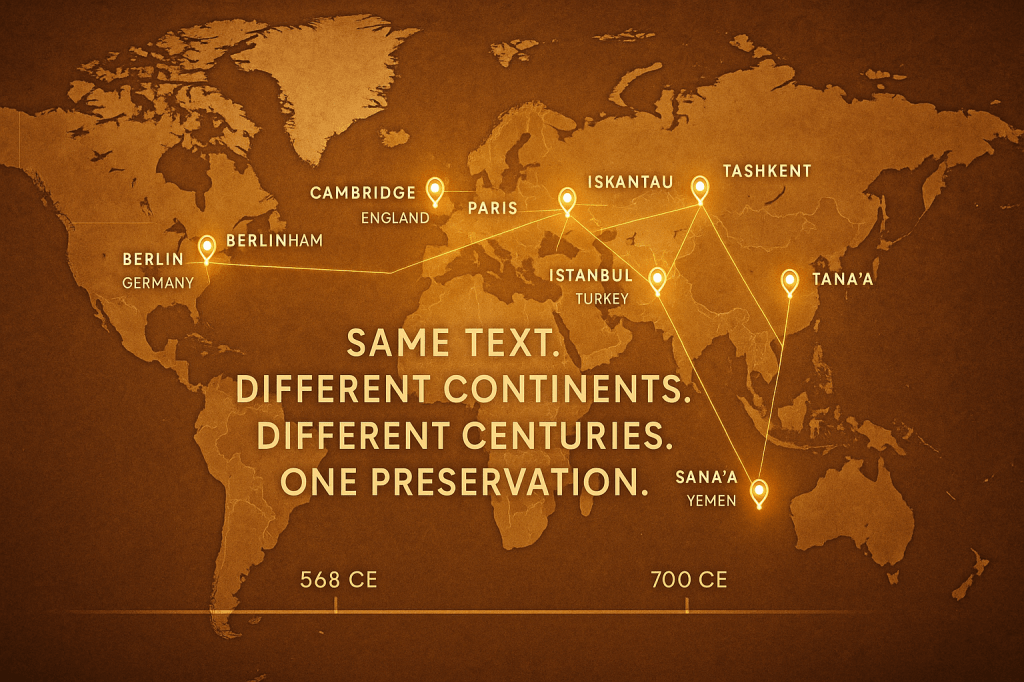
The Topkapi manuscript, preserved at the Topkapi Palace Museum in Istanbul, is one of the oldest near-complete Qurans in existence. Traditionally attributed to the era of the third caliph Uthman ibn Affan, who commissioned the first official compilation around 650 CE, the manuscript has been confirmed through paleographic analysis and radiocarbon dating to originate within the first century of the faith. Written in Kufic script on deer-skin parchment and comprising 408 folios, the Topkapi manuscript is textually consistent with all other ancient Quran manuscripts found worldwide — from Yemen to Uzbekistan, from Berlin to Cambridge.
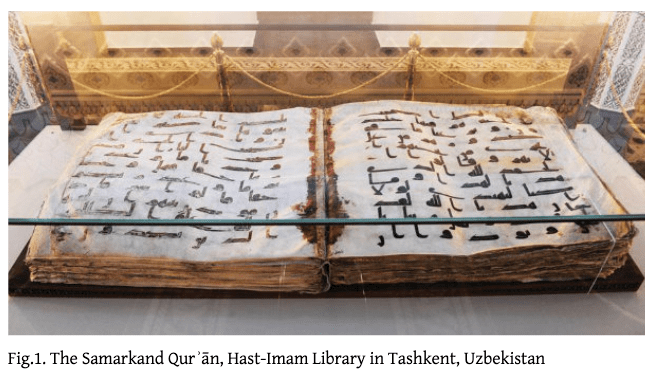
What makes this consistency particularly significant is its geographical scope. The Topkapi manuscript was preserved in Istanbul. The Sana’a manuscripts were buried in Yemen. The Birmingham fragments were held in England. The Samarkand codex sat in Uzbekistan. No central printing authority existed in the 7th century. No bureaucratic institution could have enforced textual uniformity across these vast distances. The only explanation for identical text appearing in manuscripts separated by thousands of miles and centuries of history is the one given in verse 15:9: divine preservation.
The Samarkand Codex and Berlin Fragments
The Samarkand Codex, also known as the Uthman Quran, is currently housed in Tashkent, Uzbekistan. Traditionally attributed to the era of Caliph Uthman (644-656 CE), the codex consists of approximately 250 parchment folios. Its history traces a path through Damascus, Baghdad, and Samarkand before reaching its current location. Comparative textual analysis between the Samarkand Codex and every other early manuscript confirms the same remarkable consistency: identical text, across the entire Muslim world, with no central coordination.
The Staatsbibliothek zu Berlin houses several early Quran fragments, including folio Ms. or. fol. 4313, which contains portions of Chapter 2 and has been dated to approximately 670-690 CE. When compared letter by letter with modern printed Qurans, the text shows complete consonantal agreement. The Berlin manuscripts are written in Hijazi script — an early Arabic calligraphic style predating the more angular Kufic script — confirming their very early origin. The words remained constant even as the aesthetic presentation of Arabic writing evolved over centuries. Beyond these major manuscripts, dozens of other early fragments have been identified at the Bibliotheque nationale de France, the British Library (the Ma’il Quran, late 7th century), Cambridge University, the Chester Beatty Library in Dublin, and numerous other institutions worldwide. Each discovery adds to an overwhelming pattern: textual consistency across time and space, confirmed by secular academic institutions with no theological motivation.
Part 3: The Hadith Manuscript Gap — A Devastating Contrast
The Timeline That Collapses the Argument
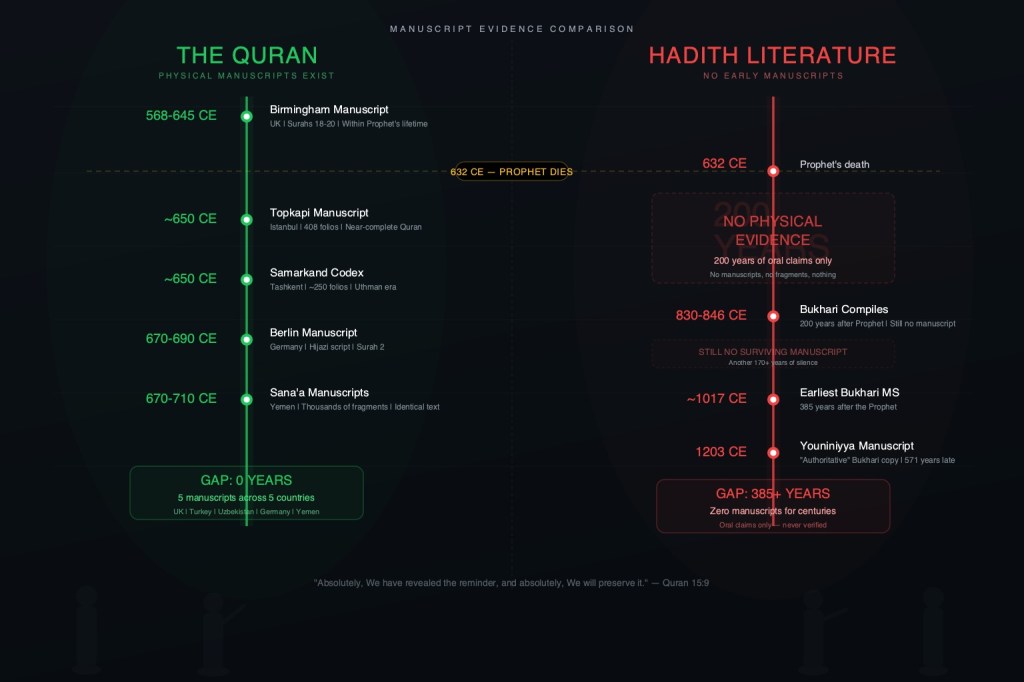
The manuscript evidence for the Quran is overwhelming. But its true significance becomes apparent only when you place it beside the manuscript evidence for hadith literature — because there is almost none. The hadith collections that traditional religion treats as co-equal with the Quran have a physical evidence problem so severe that it would be disqualifying in any other field of historical inquiry. The gap between claimed authorship and earliest surviving manuscript is not decades — it is centuries.
Consider the timeline. The Prophet Muhammad died in 632 CE. The most famous hadith collection, attributed to Bukhari, was compiled between approximately 830-846 CE — a full 200 years after the Prophet’s death. But here is the critical point that is almost never discussed: the earliest surviving manuscript of Bukhari’s collection dates to approximately 1017 CE, over 150 years after Bukhari himself died. The famous Youniniyya manuscript, often cited as the authoritative copy of Bukhari, was produced in 1203 CE — nearly 600 years after the Prophet. During this immense timespan, we have zero physical evidence for how these texts were transmitted, preserved, or potentially altered. We are asked to accept on faith that oral transmission through multiple generations maintained perfect accuracy — despite every known principle of human memory, bias, and fabrication.
The Comparison Table
| Source | Prophet Died | Compilation Date | Earliest Manuscript | Gap from Prophet |
|---|---|---|---|---|
| Quran (Birmingham) | 632 CE | During lifetime | 568-645 CE | Within lifetime |
| Quran (Sana’a) | 632 CE | During lifetime | 670-710 CE | 38-78 years |
| Sahih Bukhari | 632 CE | 830-846 CE | ~1017 CE | 385 years |
| Sahih Muslim | 632 CE | ~855 CE | ~11th century | ~400+ years |
| Muwatta Malik | 632 CE | ~780 CE | Multiple medieval recensions | ~300+ years |
| Al-Kafi (Shia) | 632 CE | ~941 CE | Medieval | 300+ years |
Look at this table and ask yourself a simple question: if you were a historian evaluating two competing sources, and one had physical manuscripts dating to within the lifetime of its claimed origin while the other had a 385-year gap between its claimed origin and its earliest physical evidence, which would you trust? In any other discipline — archaeology, textual criticism, classical studies — a 385-year manuscript gap would render a text suspect at best and unreliable at worst. Yet traditional religion asks us to treat Bukhari’s collection as virtually sacred, while simultaneously demanding an isnad chain to authenticate the Quran — the only source that actually has physical manuscript evidence from the beginning.
The irony is breathtaking. The source that needs no authentication (the Quran) is subjected to a framework designed for oral traditions. The sources that desperately need authentication (the hadith collections) cannot provide it. And the isnad system — the very tool invented to fill the manuscript gap for hadith — is then imported into Quranic studies where it does not belong. This is not just methodological confusion. It is the inversion of evidence-based reasoning.
Part 4: Where Did Isnad Come From? The Retroactive Construction
A System That Did Not Exist in the Prophet’s Time
The isnad — the chain of narrators placed at the beginning of each hadith to establish its authenticity — is presented by traditional religion as an ancient and rigorous methodology for verifying prophetic traditions. But the historical record reveals something far more troubling: the isnad system did not exist during the Prophet’s lifetime. It did not exist during the era of the first four caliphs. It did not exist during the first fifty years after the Prophet’s death. It emerged gradually, retroactively, and for reasons that had more to do with political legitimacy than historical truth.
The most commonly cited origin story for the isnad system comes from Ibn Sirin (died 110 AH / 728 CE), a scholar of the second generation after the companions. His famous statement, recorded in the introduction to Sahih Muslim, reads: “They did not used to ask about the isnad. But when the fitna (civil war) occurred, they said: ‘Name your men.’” The “fitna” in question is the First Civil War (656-661 CE), which erupted approximately 24 years after the Prophet’s death. This means that for the first quarter-century of the post-prophetic era — the period when the companions were still alive and the Prophet’s teachings were freshest in living memory — nobody asked for chains of narration. Nobody demanded proof of who said what to whom. The entire companion generation transmitted religious knowledge without isnad, because the concept simply did not exist yet.
The Political Origin: Civil War and Fabrication
Why did people suddenly start asking for chains of narrators? The answer is political, not scholarly. The First Civil War pitted the Prophet’s companions against each other — Ali ibn Abi Talib against Muawiyah ibn Abi Sufyan — and both sides began fabricating prophetic traditions to justify their political positions. When people realized that hadith were being invented wholesale to support factional claims, a demand arose: name your sources, so we can evaluate whether you are lying. The isnad was born not as a scholarly tool for preserving the Prophet’s legacy but as a desperate reaction to the realization that people were already fabricating that legacy for political gain.
This origin reveals a fundamental problem. If hadith were already being fabricated in large numbers by the time people started demanding isnad chains (mid-to-late 7th century CE), then the chains themselves were constructed in an environment of rampant fabrication. The fox was already in the henhouse. Fabricators did not stop fabricating when the isnad system was introduced — they simply began fabricating isnad chains as well. A person willing to invent a hadith and attribute it to the Prophet was certainly willing to invent a chain of narrators to make that hadith look authentic. The isnad system did not solve the fabrication problem; it merely added another layer of unverifiable oral claims on top of the original unverifiable oral claims.
Schacht’s Common Link Theory: Chains Fabricated Backwards
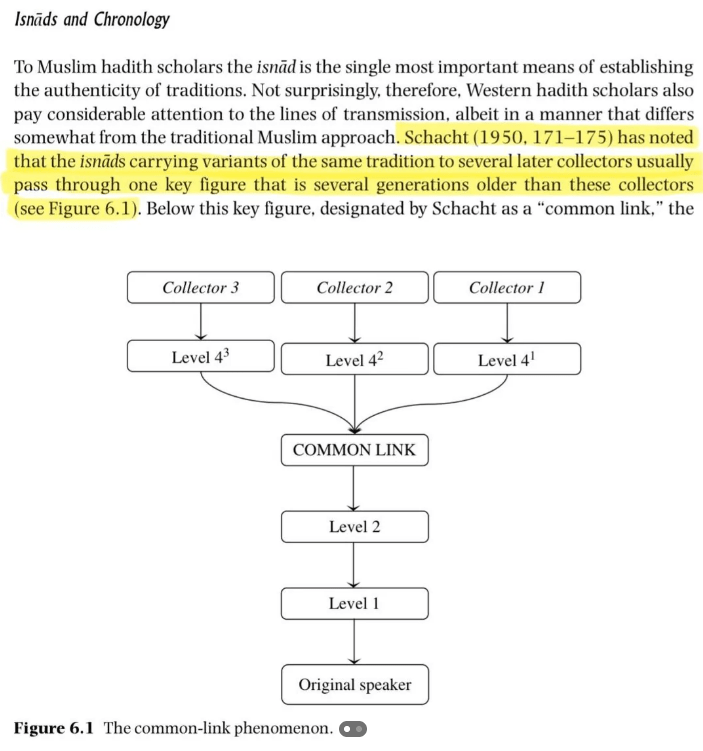
The retroactive nature of isnad construction was demonstrated with devastating rigor by Joseph Schacht, one of the most influential Western scholars of Islamic law, in his landmark 1950 work The Origins of Muhammadan Jurisprudence. Schacht analyzed the isnad chains for hundreds of legal hadith and discovered a consistent pattern: chains of transmission could be traced back to a “common link” — a single figure, usually a scholar of the late 1st or early 2nd century AH (late 7th to early 8th century CE), from whom multiple chains diverged. Before this common link, the chains typically showed a single strand going back to the Prophet.
Schacht’s conclusion was explosive: the common link was not a faithful transmitter who happened to teach many students. The common link was the actual originator of the hadith, who fabricated the chain backwards to the Prophet to give his own legal opinion prophetic authority. In other words, the isnad chains were not records of genuine transmission — they were retroactive constructions, projected backwards through time to create the illusion of an unbroken connection to the Prophet. Schacht wrote:
“We shall find that every legal tradition from the Prophet, until the contrary is proved, must be taken not as an authentic or essentially authentic, even if slightly obscured, parsing of something he said or did, but as a fictitious expression of a legal doctrine formulated at a later date.”
Later scholars, including G.H.A. Juynboll, refined Schacht’s common link theory and confirmed its essential validity across broader categories of hadith, not just legal traditions.
Bukhari: 200 Years Too Late
Muhammad al-Bukhari (810-870 CE) is perhaps the most venerated hadith compiler in traditional Sunni religion. His collection, Sahih Bukhari, is treated by many as second only to the Quran in authority. Yet consider what Bukhari actually did: he was born 178 years after the Prophet’s death. He traveled across the Islamic world collecting oral reports about oral reports about oral reports — chains of human memory stretching back two centuries through civil wars, political upheavals, dynastic changes, and documented mass fabrication campaigns. He reportedly examined 600,000 hadith and rejected over 90% of them as fabricated — an admission that the vast majority of what circulated as “prophetic tradition” in his time was known to be false.
But the 7,275 hadith Bukhari accepted (approximately 2,602 unique hadith, with repetitions) are no more physically verifiable than the 592,725 he rejected. His selection criteria were the isnad chains — the same chains that Schacht demonstrated were frequently fabricated backwards, the same chains that emerged from an environment of political fabrication, the same chains that did not exist for the first 50 years after the Prophet. Bukhari evaluated the narrators’ reputations, their memory, their contemporaneity — all based on biographical dictionaries compiled by people who lived long after the narrators in question had died. He was evaluating oral claims about oral claims about people’s reputations, made by people who never met them. And the earliest physical manuscript of his completed work dates to approximately 1017 CE — 147 years after his own death. We cannot even verify that the Bukhari we have today is the Bukhari he compiled.
Part 5: The Category Error — Why Isnad Does Not Apply to the Quran
Books Are Not Hadith
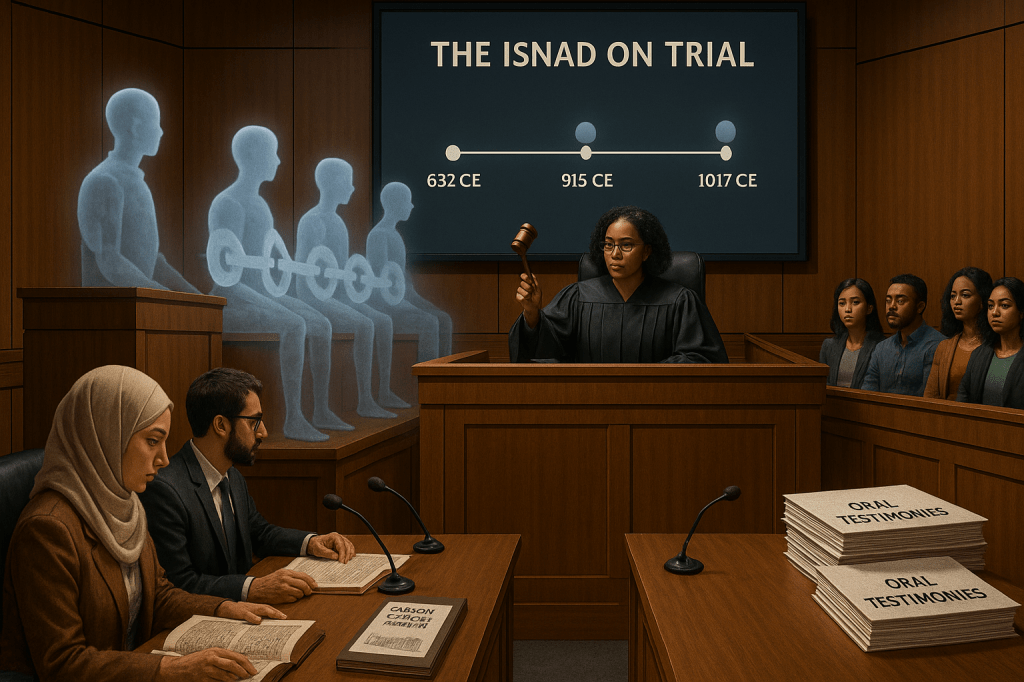
The most fundamental problem with applying isnad methodology to the Quran is that it constitutes a category error — the application of a tool designed for one type of evidence to a completely different type of evidence. The isnad system was invented to authenticate verbal reports: things people claimed to have heard someone say, which were never written down at the time they were allegedly spoken, and which circulated orally for generations before anyone attempted to compile them. The Quran, by contrast, is a physical written text. It was revealed to the Prophet, written down by designated scribes during his lifetime, compiled into a standardized codex within two decades of his death, and preserved as a manuscript tradition ever since.
Applying isnad to the Quran is like demanding a chain of narrators for the Dead Sea Scrolls, the Rosetta Stone, or the Code of Hammurabi. No historian asks: “Who recited the Dead Sea Scrolls to whom? What is the chain of oral transmission for the Rosetta Stone?” These questions are absurd because the artifacts are self-authenticating. You date the object, analyze the script, compare the text with contemporaneous sources, and draw conclusions. This is exactly what has been done with early Quran manuscripts — and the result is overwhelming confirmation of preservation. The text we read today matches manuscripts from the Prophet’s era. The physical evidence speaks for itself.
The Irony of the Traditionalist Position
When traditionalists demand a recitation chain (like the Hafs chain) to authenticate the Quran, they are importing hadith methodology into a domain where it does not belong. And the irony is devastating: the isnad system is used to authenticate something that does not need authenticating (the Quranic text, which has physical manuscript evidence) while it cannot authenticate what desperately needs it (the hadith literature, which has no manuscripts from within centuries of its claimed origin). The entire framework is inverted. The tool is being applied to the wrong problem, while the problem it was designed to solve remains unsolved.
[18:27] “You shall recite what is revealed to you of your Lord’s scripture. Nothing shall abrogate His words, and you shall not find any other source beside it.”
[10:37] “This Quran could not possibly be authored by other than God. It confirms all previous messages, and provides a fully detailed scripture. It is infallible; for it comes from the Lord of the universe.”
God describes the Quran as “infallible” — a word that applies to a text, not to a chain of narrators. He says “nothing shall abrogate His words” — a guarantee about the text itself, not about the people who recite it. The Quran’s authority rests on what it is (God’s preserved word) and what it contains (an internally consistent, mathematically structured, self-authenticating scripture), not on who transmitted it. The isnad framework fundamentally misunderstands the nature of Quranic authority by treating it as dependent on human transmission rather than divine preservation.
Part 6: The Hafs Chain — What Happens When Isnad IS Applied to the Quran
The Chain Presented
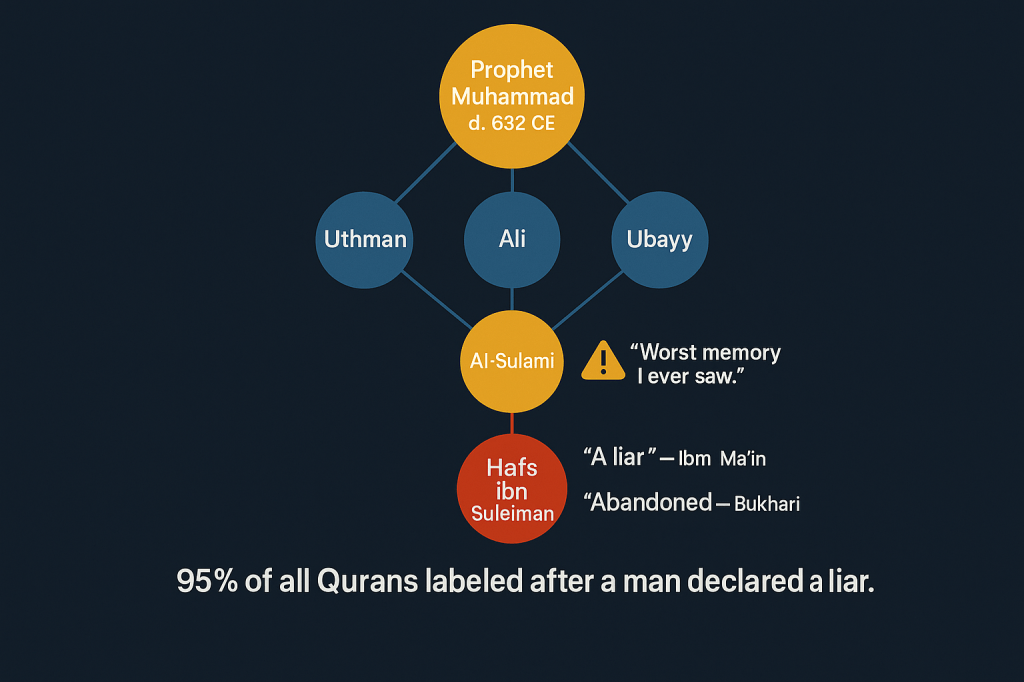
Even though the isnad framework is a category error when applied to the Quran, it is worth examining what happens when traditionalists do apply it — because the results are devastating to their own position. The recitation used by approximately 95% of all printed Qurans today is the Hafs reading, transmitted through the following chain: Prophet Muhammad, to the companions Uthman, Ali, Ubayy ibn Ka’b, and Zaid ibn Thabit, to Abu Abd al-Rahman al-Sulami, to Asim ibn Abi al-Najud, to Hafs ibn Suleiman, and from Hafs to the present-day recitation tradition. If the isnad system is supposed to guarantee reliability, then every link in this chain must be trustworthy. Let us examine the chain by the standards of its own proponents.
The first problem is structural. The chain claims that al-Sulami learned from four companions simultaneously — Uthman, Ali, Ubayy, and Zaid. But each of these companions had different personal codices, and Uthman famously ordered the others burned to standardize the text. Listing four sources simultaneously is rhetorical padding, not genuine multiple attestation. No specification is given for which companion transmitted which specific reading. This is like citing four witnesses to a crime who each saw a different event and claiming their testimonies corroborate each other.
Asim ibn Abi al-Najud: The Weak Memory
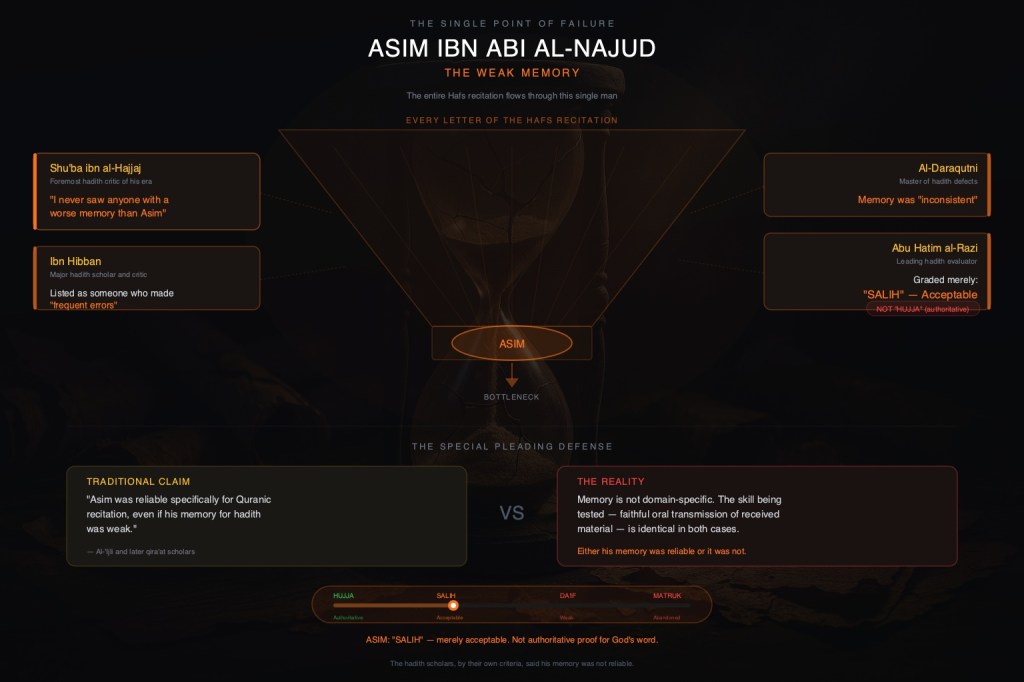
The entire Hafs recitation flows through a single man: Asim ibn Abi al-Najud. He is the bottleneck through which every letter of the Hafs reading must pass. And the hadith scholars’ own assessment of Asim’s reliability is damning. Shu’ba ibn al-Hajjaj, one of the foremost hadith critics in Islamic history, stated bluntly: “I never saw anyone with a worse memory than Asim.” Ibn Hibban listed him as someone who made frequent errors. Al-Daraqutni described his memory as “inconsistent.” Abu Hatim al-Razi graded him merely “salih” (acceptable) — a far cry from “hujja” (authoritative proof), the standard required for someone through whom the entirety of God’s word supposedly passes.
The traditional defense is that Asim was reliable specifically for Quranic recitation even if his memory for hadith was weak — a distinction made by scholars like al-‘Ijli. But this is special pleading of the most transparent kind. You cannot apply different reliability standards to the same person for the same type of cognitive activity. Memory is not domain-specific. A man whose memory was so poor that the greatest hadith critics of his era condemned it does not magically develop perfect recall when the subject changes from hadith to Quranic recitation. The skill being tested — faithful oral transmission of received material — is identical in both cases. Either Asim’s memory was reliable or it was not. The hadith scholars, by their own criteria, said it was not.
Hafs ibn Suleiman: Declared a Liar by the Greatest Scholars
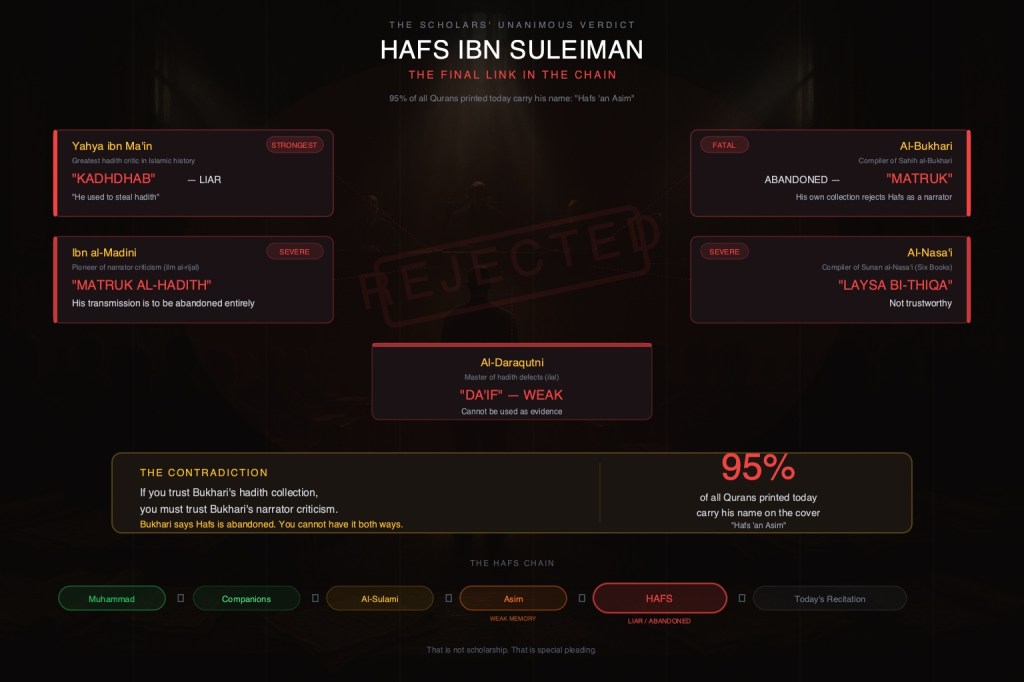
If Asim’s weakness is troubling, the final link in the chain — Hafs ibn Suleiman — is catastrophic. The most authoritative hadith critics in Islamic history did not merely grade Hafs as unreliable. They declared him a liar, a thief, and a fabricator. Yahya ibn Ma’in, widely regarded as the greatest hadith critic in Islamic history, stated: “Hafs ibn Suleiman is a liar (kadhdhab) — he used to steal hadith.” The word “kadhdhab” is the strongest possible condemnation in the narrator-criticism vocabulary. It means he deliberately fabricated traditions and attributed them falsely to others.
The list of scholars who condemned Hafs reads like a who’s who of traditional hadith criticism. Ibn al-Madini classified him as “matruk al-hadith” — his transmission is to be abandoned entirely. Al-Bukhari himself — the compiler whose collection traditional religion treats as second only to the Quran — declared Hafs “matruk” (abandoned). Al-Nasa’i stated he was “laysa bi-thiqa” — not trustworthy. Al-Daraqutni graded him as “da’if” (weak). These are not marginal scholars. These are the very men whose authority the entire hadith sciences rest upon. And their unanimous verdict on Hafs ibn Suleiman is that he was a liar who stole and fabricated hadith.
Yet 95% of all Qurans printed today carry his name on the cover: “Hafs ‘an Asim.” The man through whom the recitation supposedly passed was declared a liar by the scholars whose methodology is being used to authenticate that very recitation. If you trust Bukhari’s hadith collection, you must trust Bukhari’s narrator criticism — and Bukhari’s narrator criticism says Hafs was unreliable. You cannot accept the methodology when it validates what you want and reject it when it undermines what you need. That is not scholarship. That is special pleading.
The Knock-Out Point
There is an additional biographical detail that makes the Hafs situation even more problematic. Hafs ibn Suleiman was the stepson of Asim ibn Abi al-Najud. He had a personal, familial motivation to promote his stepfather’s reading over competing transmissions. The other major transmitter from Asim, Shu’ba ibn Ayyash, was considered far more reliable by the hadith scholars — yet it is Hafs’s transmission, not Shu’ba’s, that became dominant. The less reliable transmitter won, not because of superior evidence, but because of historical accident and political favor.
[17:36] “You shall not accept any information, unless you verify it for yourself. I have given you the hearing, the eyesight, and the brain, and you are responsible for using them.”
God commands us to verify information and holds us accountable for using our faculties of reason. When the greatest scholars of the hadith tradition — the very scholars that traditionalists revere — unanimously declare a narrator to be a liar, and we accept his transmission anyway because rejecting it would undermine our religious framework, we are violating this divine command. We are refusing to verify. We are refusing to use the brain God gave us. The Quran’s text is preserved by God and confirmed by manuscripts. It does not need Hafs. It does not need any chain. The physical evidence is sufficient, and God’s promise in 15:9 is the ultimate guarantee.
Part 7: The Abu Hurairah Problem — A Case Study in Isnad Failure
When the Numbers Do Not Add Up
The Hafs chain is not an isolated failure of the isnad system. It is a representative example of a systemic problem. To illustrate just how fundamentally broken the isnad methodology is, consider the case of Abu Hurairah — the single most prolific hadith narrator in Sunni tradition and the source through whom thousands of hadith flow. Abu Hurairah converted to the faith in 7 AH (628 CE) and the Prophet died in 11 AH (632 CE). This gives a maximum association period of four years, though most scholars acknowledge it was closer to three. During this brief time, Abu Hurairah allegedly memorized and transmitted 5,374 hadith — more than any other companion.
Compare this with the companions who spent decades with the Prophet. Abu Bakr, the Prophet’s closest friend who spent 23 years at his side, narrated only 142 hadith. Umar ibn al-Khattab, who spent a similar period and was known for his exceptional memory, narrated 537. Aisha, the Prophet’s wife who lived with him for nine years, narrated 2,210. Yet Abu Hurairah, with his three-to-four year association, narrated 38 times more than Abu Bakr and 10 times more than Umar. The mathematics are simple: at four years, Abu Hurairah would have needed to hear, memorize, and later transmit approximately 3.7 new hadith every single day, without exception, for four straight years (Source: QuranOnlyStudies.com, “The Abu Hurairah Problem: When Numbers Don’t Lie,” 2025). At three years, it jumps to 4.9 per day. Meanwhile, Abu Bakr averaged one new hadith every 59 days over 23 years.
Condemned by the Companions Themselves
The statistical impossibility alone should disqualify Abu Hurairah. But the historical record is even more damning. Umar ibn al-Khattab, the second caliph, discovered that Abu Hurairah had embezzled 10,000 dirhams during his governorship of Bahrain. According to classical sources including at-Tabari’s Ar-Riyad an-Nadira and Abu Ubayd’s Kitab al-Amwal, Umar beat Abu Hurairah with his walking stick until he bled, stripped him of his governorship, and confiscated the stolen money. But Umar’s accusation went beyond financial corruption: “You narrate hadith that we never heard while we were with the Messenger of God.” The caliph threatened to exile him if he did not stop fabricating traditions.
Ali ibn Abi Talib, the Prophet’s cousin and fourth caliph, was even more direct. Ibn Abul-Hadeed’s Sharh Nahjul-Balagha preserves Ali’s statement: “The greatest liar among people concerning hadith is Abu Hurairah.” Aisha, the Prophet’s wife, repeatedly and publicly corrected Abu Hurairah’s narrations, often exposing them as misunderstood fragments or outright fabrications. When Abu Hurairah claimed the Prophet said prayer is invalidated if a woman, a donkey, or a dog passes in front of the person praying, Aisha responded: “You have made us equal to donkeys and dogs! By God, I saw the Prophet praying while I was lying on the bed between him and the direction of prayer.” This is direct eyewitness refutation from the person who knew the Prophet’s daily practice better than anyone alive.
The isnad system is supposed to filter out unreliable narrators. Yet its most prolific source — the single individual through whom more hadith flow than any other — was condemned as a liar by the Prophet’s cousin, beaten and accused of fabrication by the second caliph, and repeatedly corrected by the Prophet’s own wife. If the system cannot catch its most obvious failure, what value does it have? And if this is the system being used to authenticate the Quran — a book that needs no human authentication because God Himself is its guarantor — then the entire enterprise is not merely misguided but actively harmful to the truth.
Part 8: God Preserved What He Promised — And Nothing More
The Selectivity of Divine Preservation
The manuscript evidence for the Quran and the manuscript absence for hadith are not accidental. They are not a historical curiosity. They are a message. God promised to preserve “the reminder” — the Quran — and the physical evidence proves He kept that promise. God made no such promise for hadith, traditions, narrations, or any other source. And the physical evidence proves that too. The hadith literature was left to suffer the fate of all human compositions: corruption, variation, uncertainty, fabrication, and loss.
[41:42] “No falsehood could enter it, in the past or in the future; a revelation from a Most Wise, Praiseworthy.”
[4:82] “Why do they not study the Quran carefully? If it were from other than God, they would have found in it numerous contradictions.”
The Quran claims internal consistency as proof of its divine origin — and delivers. Manuscripts separated by continents and centuries contain the same text. The mathematical structure based on the number 19 makes any addition or deletion detectable. The Birmingham manuscript, written during or immediately after the Prophet’s lifetime, matches the Quran on your shelf. No falsehood has entered it. No contradiction has been found. This is 15:9 fulfilled in a laboratory, confirmed by Oxford University, published in peer-reviewed journals.
Now compare this with the hadith literature. Bukhari reportedly examined 600,000 hadith and rejected over 90% as fabrications. Even among the approximately 7,275 he accepted, scholars have identified hadith that contradict the Quran, contradict each other, attribute absurd or blasphemous statements to the Prophet, and reflect the political agendas of their fabricators rather than genuine prophetic teaching. There is no internal mathematical structure. There is no manuscript evidence from the period of claimed compilation. There is no divine promise of preservation. The selectivity of preservation is itself a theological argument: if God intended hadith as an authoritative source alongside the Quran, He could have preserved them with the same miraculous consistency. He did not — and the evidence proves it.
[5:3] “…Today, I have completed your religion, perfected My blessing upon you, and I have decreed Submission as the religion for you…”
[16:89] “The day will come when we will raise from every community a witness from among them, and bring you as the witness of these people. We have revealed to you this book to provide explanations for everything, and guidance, and mercy, and good news for the submitters.”
The religion was completed during the Prophet’s lifetime. The Quran provides “explanations for everything.” It is “fully detailed.” It is “complete.” These are not metaphorical claims — they are divine declarations about the sufficiency of scripture. Every hadith that claims to add something the Quran does not contain is, by definition, claiming that God’s book is incomplete — a direct contradiction of God’s own words. The manuscript evidence simply provides the physical confirmation of what the Quran has always stated about itself.
Part 9: The Internal Authentication — Code 19
A Mathematical Structure Beyond Human Capability
The Quran does not merely rely on manuscript evidence for its authentication — it contains an internal mathematical structure that makes tampering detectable and confirms its superhuman origin. This is the mathematical code based on the number 19, as referenced in Chapter 74, verse 30.
[74:30] “Over it is nineteen.”
Discovered by Rashad Khalifa through computer analysis, the mathematical structure of the Quran is built around the prime number 19 in ways that no human author could have engineered, particularly not in 7th-century Arabia where the mathematical concepts necessary to comprehend such a system did not exist. The first verse of the Quran — “In the name of God, Most Gracious, Most Merciful” — consists of 19 Arabic letters. The word “God” appears in the Quran 2,698 times (19 x 142). The word “Gracious” appears 57 times (19 x 3). The word “Merciful” appears 114 times (19 x 6). These are not isolated coincidences but part of a vast, interlocking mathematical framework that extends through every chapter, every initial, every word count.
What makes Code 19 particularly relevant to the manuscript debate is that it functions as an internal authentication system. Any addition to or deletion from the Quran would disrupt the mathematical patterns, making the tampering immediately detectable. No such mathematical structure exists in hadith literature. The hadith collections have no internal mechanism for verifying their integrity, no mathematical safeguard against corruption, and no superhuman feature that would indicate divine authorship. The Quran authenticates itself — through manuscript evidence from without and mathematical structure from within. The isnad system, by contrast, authenticates nothing but human claims about human memories.
As Rashad Khalifa explained: “God brought to us the Quran out of Muhammad’s mouth. And you will be disobeying God and disobeying Muhammad if you follow any other sources besides the Quran, and specifically I mean sources like Hadith, Sunnah, and all the other books and things that the traditions and the customs invented. If you go to any source besides the Quran you will be disobeying God, because clearly God says in Chapter 6, verse 114, that the Quran is fully detailed, you don’t need anything else” (at 5:25).
In another discussion, when a traditionalist argued for following hadith alongside the Quran, Rashad responded directly: “The hadith was never authored by the Prophet, it has nothing to do with the Prophet… the hadith came from Satan, not from Muhammad” (at 18:00). And in his teaching about devotion: “You devote yourself completely to God alone, and you follow the word of God alone, the Quran alone, no other sources. If you do [follow other sources], you nullify all your work” (at 26:10).
Part 10: Answering the Counter-Arguments
“Hadith Provides Details the Quran Does Not”
This is perhaps the most common traditionalist argument, and it directly contradicts the Quran’s own self-description. God says the book is “fully detailed” (6:114), provides “explanations for everything” (16:89), and that the religion was “completed” (5:3) during the Prophet’s lifetime. If God says the Quran is complete, then claiming it needs hadith to fill gaps is claiming God lied about His own book. Where the Quran is silent on a matter, God intended silence — and silence equals permission, not a gap requiring human invention to fill.
[6:114] “Shall I seek other than God as a source of law, when He has revealed to you this book fully detailed? Those who received the scripture recognize that it has been revealed from your Lord, truthfully. You shall not harbor any doubt.”
“The Recitation Traditions and Manuscripts Are Separate”
This argument claims that manuscripts preserve the text while recitation chains preserve pronunciation, and that both are necessary. The rebuttal is straightforward: the physical manuscripts predate Hafs ibn Suleiman entirely. He died around 180 AH. The Birmingham manuscript predates the faith itself. The text was fixed long before Hafs was born. His chain adds nothing to text verification. It is a redundant overlay on physical evidence that stands on its own, and his reputation as a liar actively undermines the authority of whatever pronunciation details he claims to have transmitted.
“Hafs Was Reliable for Recitation Even If Not for Hadith”
This “two-tradition distinction” was invented specifically to rescue Hafs from the devastating verdict of the hadith critics. There is no principled epistemological basis for it. Memory and truthfulness are not domain-specific virtues. A person does not have two separate memories — one for Quranic recitation that works perfectly and another for hadith transmission that is plagued by dishonesty and error. The same cognitive faculties are involved in both activities. The scholars who graded Hafs as reliable for recitation were Quranic recitation specialists operating within a self-validating tradition — they needed Hafs to be reliable because their own tradition depended on him. The hadith critics — Bukhari, Ibn Ma’in, al-Nasa’i, Ibn al-Madini — who had no stake in recitation politics, unanimously condemned him.
“The Quran Came Through the Same People As the Hadith”
This is the argument that this entire article exists to refute, and the cave Quran scenario dismantles it completely. If you dig up a Quran manuscript dating to the Prophet’s era — and we have — where would you need an isnad for that? The physical object is self-authenticating. The Quran did not “come through the same people” as the hadith. The Quran was written down during the Prophet’s lifetime, compiled into a standardized codex within two decades, and preserved as a manuscript tradition with physical evidence dating to the very beginning. The hadith, by contrast, were oral traditions that were not systematically written down until two centuries after the Prophet, were compiled by men who never met anyone who met the Prophet, and have no physical manuscript evidence from within centuries of their claimed origin. These are categorically different transmission histories, and conflating them is either ignorance or dishonesty.
[2:170] “When they are told, ‘Follow what God has revealed herein,’ they say, ‘We follow only what we found our parents doing.’ What if their parents did not understand, and were not guided?”
[7:3] “You shall all follow what is revealed to you from your Lord; do not follow any idols besides Him. Rarely do you take heed.”
Part 11: The Prophet’s Own Deserted Book
The Quran’s Warning About Itself
Perhaps the most poignant verse in this entire discussion comes not from the passages about hadith or preservation, but from the Prophet’s own complaint, recorded in the Quran for all time:
[25:30] “The messenger said, ‘My Lord, my people have deserted this Quran.’”
This verse is a prophecy fulfilled before our eyes. The Prophet’s community has deserted the Quran — not by burning it or denying its existence, but by supplementing it with hadith collections, by treating human-compiled books as co-equal or even superior to God’s word, by following traditions and customs that contradict the Quran’s own teachings, and by demanding isnad chains to authenticate a book that God Himself promised to preserve. The desertion is not physical but functional: the Quran sits on shelves, beautifully printed and reverently kissed, but its actual authority has been subordinated to Bukhari, Muslim, and the entire hadith apparatus. The book is honored in ritual and abandoned in practice.
[6:112] “We have permitted the enemies of every prophet — human and jinn devils — to inspire in each other fancy words, in order to deceive. Had your Lord willed, they would not have done it. You shall disregard them and their fabrications.”
[33:67] “They will also say, ‘Our Lord, we have obeyed our masters and leaders, but they led us astray.’”
The Quran warns that the enemies of every prophet are permitted to produce “fabrications” — “fancy words” designed to deceive. It warns that people will follow their religious leaders blindly, only to discover on the Day of Judgment that those leaders led them astray. The hadith literature — compiled centuries after the Prophet by men who never met him, containing thousands of narrations that contradict the Quran, authenticated by a system that was retroactively constructed and riddled with unreliable narrators — fits this description with uncomfortable precision. And the isnad system, rather than being a safeguard against fabrication, is the mechanism by which fabrication was given the appearance of authenticity.
Part 12: The Way Forward — Returning to the Source
Manuscripts Over Chains, Scripture Over Tradition
The evidence presented in this article leads to one inescapable conclusion: the Quran’s authority rests on verifiable physical evidence and divine promise, not on chains of human narration. Manuscripts from the Prophet’s era match the text we read today. Carbon dating, paleographic analysis, and comparative textual criticism — all conducted by secular academic institutions with no theological agenda — confirm the Quran’s preservation. The isnad framework, by contrast, was a retroactive construction born from political crisis, riddled with unreliable narrators, and fundamentally misapplied when used for a physical text rather than an oral tradition.
[2:2] “This scripture is infallible; a beacon for the righteous;”
The Quran calls itself “infallible” — a claim validated by every manuscript discovery. It calls itself “fully detailed” — a claim that makes hadith supplements unnecessary by definition. It calls itself “the best hadith” — a ranking that makes all other hadith inferior by God’s own declaration. It asks “which hadith other than this do they uphold?” — a question that every Submitter must answer honestly. And it promises its own preservation — a promise confirmed by laboratories in Oxford, Berlin, and around the world.
Returning to the cave Quran scenario: if a complete Quran were found tomorrow, carbon dated to the Prophet’s lifetime, matching our current text letter for letter, no sane person would ask for an isnad. The manuscript would speak for itself. But we do not need to wait for that hypothetical discovery. The Birmingham manuscript, dated 568-645 CE, already exists. The Sana’a manuscripts, the Topkapi codex, the Samarkand codex, the Berlin fragments — they all already exist. They all confirm the same text. The evidence is in. The case is closed. The Quran is preserved, as God promised. And the isnad system — a human invention applied to a divine book — is irrelevant.
[15:9] “Absolutely, we have revealed the reminder, and, absolutely, we will preserve it.”
He did.

 Quran Only Studies
Leave a comment