The claim that Alban Fejza is a messenger of God has sparked heated debate in Quran-alone (Submission-only) circles. In an era where many seek spiritual guidance, it is crucial to examine such assertions through the lens of the Quran itself. This in-depth article delivers a rigorous, Quran-based analysis—and point-by-point refutation—of Alban Fejza’s messengership claim. By exploring the divine criteria for messengers, clarifying commonly misused verses, and reviewing relevant prophecies and historical context, we aim to safeguard the integrity of pure monotheism and empower readers to discern truth from falsehood.
Quranic Criteria for True Messengers of God
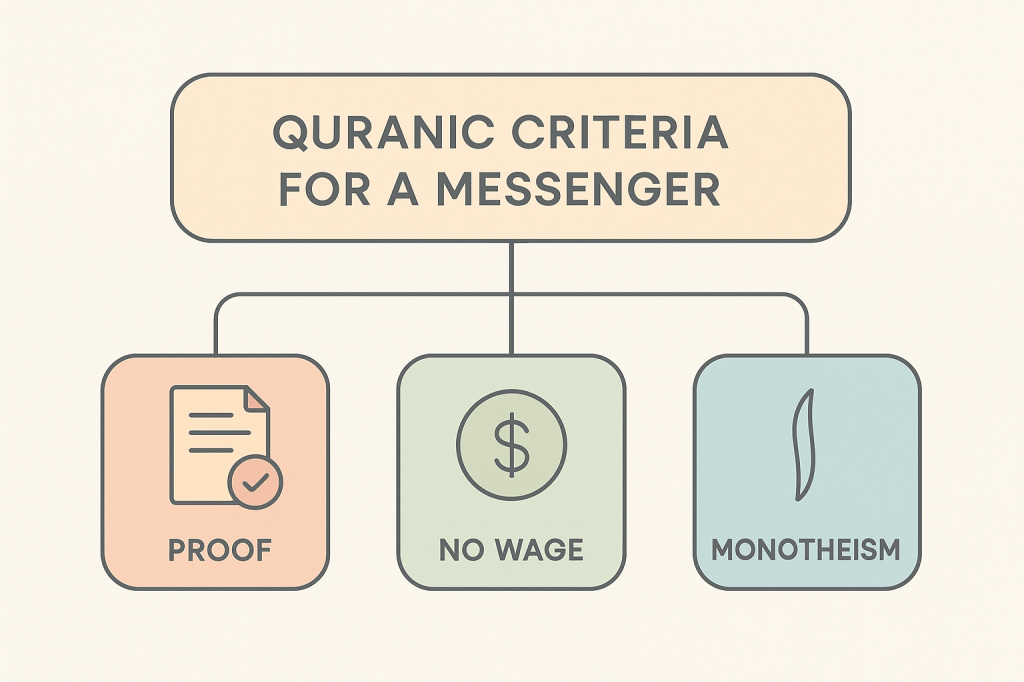
The Quran sets unequivocal standards for identifying a true messenger of God. Any claim to messengership must be tested against these divinely ordained criteria:
- Clear Divine Proof: Every messenger is supported by irrefutable evidence or miraculous signs from God.
- No Personal Wage or Worldly Benefit: True messengers deliver God’s message selflessly, never seeking material reward or leadership.
- Pure Monotheism: The core mission is always to call people to worship God alone and reject all forms of idolatry.
1 — Clear Divine Proof
“We sent our messengers supported by clear proofs, and We sent down to them the scripture and the law, that the people may uphold justice.” (Quran 57:25)
Throughout history, every messenger—from Moses’ staff to Jesus’ healings—was authenticated by God’s signs. When skeptics asked Prophet Muhammad, “How come no miracle came down to him from his Lord?” they were reminded that:
“Miracles come only from God, and THIS QURAN is an ongoing miracle.” (Quran 29:50-51)
Alban Fejza brings forth neither new scripture nor verifiable miracle. The Quran itself stands as the sufficient and final proof.
2 — No Personal Wage or Benefit
“O my people, I do not ask you for any wage. My wage comes only from God.” (Quran 26:109)
This refrain is echoed by all genuine prophets. The Quran further instructs:
“Follow those who do not ask you for any wage, and are guided.” (Quran 36:21)
3 — Pure Monotheism (Worship God Alone)
“We did not send any messenger before you except with the inspiration: ‘There is no god except Me; you shall worship Me alone.’” (Quran 21:25)
Misinterpretation of Verses about Miracles and “Proof”
Supporters of Alban Fejza often cite verses where disbelievers demanded miracles from Muhammad, arguing that lack of signs doesn’t invalidate a modern claimant. The context proves the opposite.
“Every Community Receives a Guide” (Quran 13:7)
“Those who disbelieved say, ‘If only a miracle could come down to him from his Lord.’ You are simply a warner — every community receives a guiding teacher.”
- This refers to Muhammad’s contemporaries; their guide had already come — the Quran.
- The verse does not predict endless future messengers once the scripture is complete.
Verses 20:133, 10:20, 13:27, 29:50-51
- Skeptics asked for more miracles.
- God replied that miracles are His domain and the Quran itself is sufficient.
- No verse excuses a modern claimant from producing clear evidence.
Misinterpreted Verses about “Explaining” or Delivering Scripture
God Himself Explains the Quran (75:19)
“Then it is We who will explain it.”
God, not another human, guarantees the Quran’s clarity over time.
Verses 3:164, 16:44, 98:2 — Contextual Limits
All three speak of Muhammad’s contemporaneous role in teaching newly revealed scripture; they do not mandate continual new “explainers.”

Rashad Khalifa’s Prophesied Role & No Future Messenger Mentioned
Messenger of the Covenant (Quran 3:81)
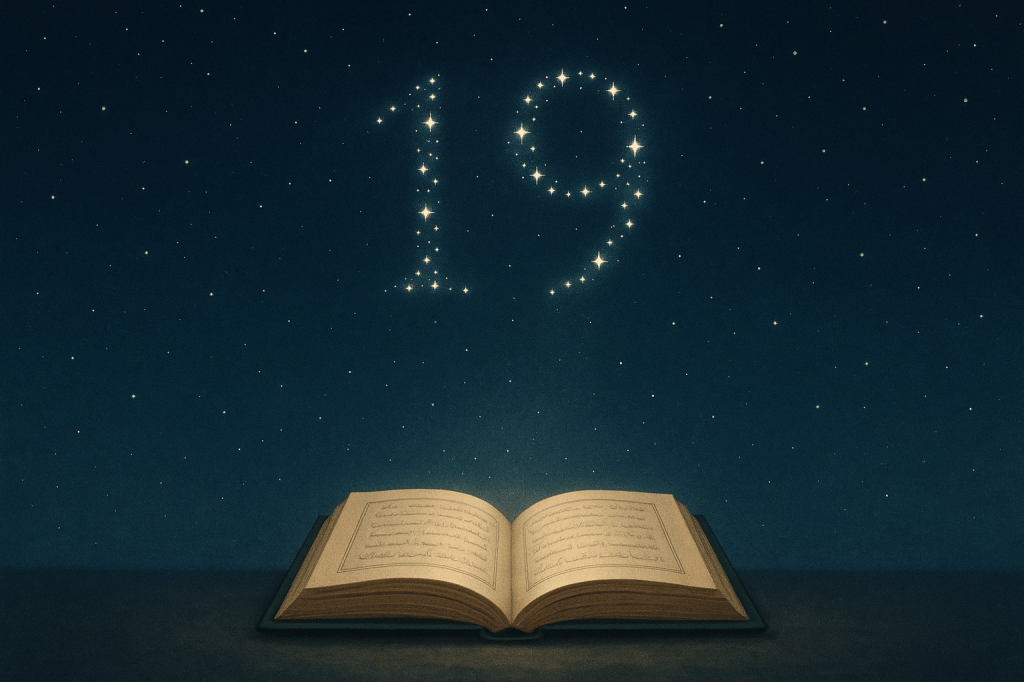
Many Submitters accept Dr Rashad Khalifa as the foretold messenger who confirmed all scripture via the mathematical Miracle of 19. The Quran foretells no further messenger after this role.
Seal of the Prophets (Quran 33:40)
No prophet after Muhammad; any messenger post-Quran can only confirm existing scripture, not add to it — a criterion Alban Fejza does not meet.
Conclusion: Uphold Pure Monotheism, Reject Unsupported Claims
Measured against the Quran, Alban Fejza’s claim fails every critical test. The Quran is complete, perfect, and self-explanatory. Submitters are urged to rely on God’s scripture alone and dismiss personalities who cannot demonstrate divinely sanctioned proof.
“This is the truth from your Lord, so do not be among the doubters.”
(Quran 2:147)
Frequently Asked Questions
What are the key criteria for a true messenger? Clear divine proof, zero personal wage, and a call to worship God alone (Quran 57:25; 26:109; 21:25). Does the Quran predict anyone after Muhammad? Only one post-prophethood figure — the Messenger of the Covenant (Quran 3:81) — widely regarded as fulfilled by Dr Rashad Khalifa. Is lack of a miracle acceptable for a modern claimant? No. God expects believers to verify any claim through clear, Quran-sanctioned proof (Quran 2:111, 6:93).

Extended In-Depth Refutation of Alban Fejza’s Messengership Claim
Executive Summary
Alban Fejza’s claim to be a messenger of God collapses against three unbreakable Quranic tests: (1) clear divine proof, (2) zero personal wage, and (3) uncompromising monotheism. He offers no miracle or prophecy, seeks recognition and leadership, and implicitly undermines the Quran’s finality—fatal contradictions of God’s own criteria.
1 — Quranic Tests Re-examined
- Clear Proof Mandated – Quran 57:25 & 29:50-51 show every messenger is backed by undeniable evidence. Fejza has none.
- No Wage – Messengers repeatedly declare, “I ask you for no wage” (26:109 et al.). Seeking a following disqualifies him.
- Pure Monotheism Without Innovation – Submission was perfected with the Quran (5:3). Claiming new authority contradicts 6:114-115.
2 — Verses Frequently Misused by Supporters
Quran 13:7 – “Every community receives a guide”
Historical statement, not a promise of endless messengers; guidance for our community is already the Quran itself.
Quran 20:133, 10:20, 29:50-51 – “Show us a miracle!”
These rebuked contemporaries who ignored the standing miracle—the Quran. They do not waive the proof-requirement for a modern claimant.
Quran 75:19 – “We will explain it”
God, not a later human, guarantees the Quran’s clarity; verse actually forbids adding personal explanations.
Quran 98:1-2 – “The clear evidence”
Refers to Prophet Muhammad bringing the purified scripture. No perpetual chain of “clarifying messengers” is implied.
3 — Prophecy and Finality
- Quran 3:81 – Prophesies one post-prophetic messenger to confirm scripture—fulfilled by Dr Rashad Khalifa through the Code-19 miracle.
- Quran 33:40 – Muhammad is the final prophet; no Quranic verse predicts anyone after the Messenger of the Covenant.
- No Mahdi doctrine in the Quran – End-time savior narratives come from extra-Quranic sources the Quran-alone approach rejects.
4 — Believers Spread the Message—They Do Not Claim Messengership
All Submitters may “invite to God” (41:33), but attributing new inspiration to oneself triggers the Quran’s stern warning in 6:93 against fabricating lies about God.
Extended Conclusion
Measured against scripture, Fejza’s claim is void. The Quran is complete and fully detailed. Accepting an unverified messenger today is effectively rejecting God’s declaration that His book is the final, sufficient miracle.
🔗 Quick Rebuttal Summary (Copy & Share)
No Proof = No Messenger.
Quran 57:25 & 29:50-51 → Every real messenger comes with a miracle. Fejza offers none.
No Wage. Quran 26:109 → Messengers never seek followers or pay. Fejza does.
No Need. Quran 33:40 & 3:81 → Prophethood sealed; the only post-prophetic messenger (Rashad Khalifa) already confirmed the Quran.
Quran Alone Suffices. 29:51 → “Is the Quran not enough of a miracle?”
➜ Stay with God Alone & the Final Scripture.


 Quran Only Studies
Leave a reply to Abdullah Cancel reply