
Introduction: The Metaphysics of Divine Absence
In the branch of philosophy known as ontology—the study of being and existence—perhaps no question is more profound than understanding the nature of Hell and divine punishment. The Quran presents a revolutionary understanding that shatters conventional notions of a vindictive deity actively tormenting the damned. Instead, it reveals a fundamental truth: Hell is not what God does to us, but what happens when we choose to exist without Him.
This comprehensive analysis will demonstrate how the Quranic concept of Hell aligns perfectly with the ontological reality that God is the source of all good, all light, and all sustenance. Just as darkness is not a thing in itself but merely the absence of light, Hell is not a creation of divine malice but the inevitable consequence of choosing to exist apart from the Source of all existence. Through examining verses, appendices, and the profound insights of Dr. Rashad Khalifa, we’ll understand why those who end up in Hell “fight tooth and nail to get into it.”
Part 1: The Ontological Foundation – God as the Source of All Good
Understanding Divine Ontology
The Quran establishes a fundamental principle about the nature of reality:
[24:35] “God is the light of the heavens and the earth. The allegory of His light is that of a concave mirror behind a lamp that is placed inside a glass container. The glass container is like a bright, pearl-like star. The fuel thereof is supplied from a blessed oil-producing tree, that is neither eastern, nor western. Its oil is almost self-radiating; needs no fire to ignite it. Light upon light. God guides to His light whomever He wills…”
This verse isn’t merely poetic metaphor—it’s describing the fundamental nature of reality. God is THE light, not A light. All illumination, whether physical, spiritual, or metaphysical, emanates from this singular source. To understand Hell, we must first understand this: nothing good exists independently of God.
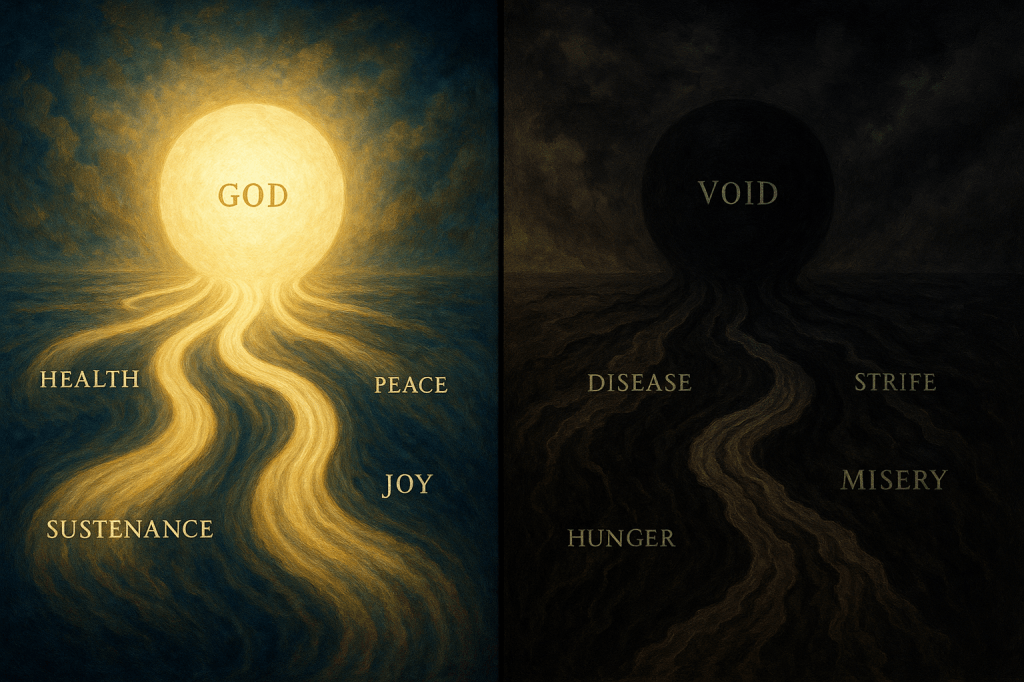
Dr. Rashad Khalifa explains this with striking clarity: “The definition of hell is simply the absence of God. If God is not here, this is hell.” This isn’t hyperbole—it’s ontological fact. Consider what God provides:
- Light (both physical and spiritual guidance)
- Sustenance (both material and spiritual nourishment)
- Peace (the tranquility that comes from divine presence)
- Health (the proper functioning of body and soul)
- Joy (the happiness that flows from divine connection)
Remove God from the equation, and what remains? Darkness, starvation, chaos, disease, and misery—not because God inflicts these things, but because they are the natural state of existence without the Source of all good.
Part 2: The Mechanics of Spiritual Distance
How Souls Move Away from God
The Quran reveals the mechanism by which souls distance themselves from their Creator:
[2:257] “God is Lord of those who believe; He leads them out of darkness into the light. As for those who disbelieve, their lords are their idols; they lead them out of the light into darkness—these will be the dwellers of Hell; they abide in it forever.”
Notice the directional language: God leads believers FROM darkness TO light, while idols lead disbelievers FROM light TO darkness. This isn’t arbitrary punishment—it’s the natural consequence of choosing false gods over the true God. When we orient ourselves toward anything other than the Source of light, we necessarily move toward darkness.
Dr. Khalifa elaborates on this process: “The evidence keeps increasing and they keep rejecting it, until they are confirmed as hardcore disbelievers… no matter what kind of miracle they see, they will not believe in it. So this is to confirm that they deserve the lowest pit of hell.”
Each rejection of divine guidance is a step away from the light. Like a person walking away from a campfire on a cold night, each step brings more cold and darkness—not because the fire pursues them with cold, but because they’re removing themselves from the source of warmth.
The Physics of Spiritual Proximity
Just as physical objects cannot occupy the same space, spiritual entities exist at distances from God determined by their own nature:
[11:86] “Whatever God provides for you, no matter how small, is far better for you, if you are really believers…”
The amount of divine provision one receives is directly proportional to one’s proximity to God. Those who develop their souls through worship and righteousness increase their capacity to be near God and receive His provisions. Those who corrupt their souls through sin and rejection decrease this capacity.
Part 3: The Truth About Who Goes to Hell
Fighting Tooth and Nail to Enter Hell
One of the most profound insights from Dr. Khalifa is that people don’t get forced into Hell—they actively choose it. The Quran confirms this:
[2:6-7] “As for those who disbelieve, it is the same whether you warn them, or not warn them; they will not believe.”
The footnote to this verse explains: “Those who make a decision to reject God are helped in that direction; they are prevented by God from seeing any proof or guidance for as long as they maintain such a decision.”
This reveals a startling truth: those heading to Hell aren’t victims of divine cruelty—they’re getting exactly what they insisted upon. They fight to maintain their disbelief, actively rejecting every opportunity for redemption. God, in His perfect justice, grants them their wish to exist without Him.
Consider the profound statement in Appendix 11: “God does not put a single being in Hell; they go to it of their own volition.” This isn’t divine abandonment—it’s divine respect for free will. Just as God doesn’t force anyone to believe (2:256), He doesn’t force anyone into Hell. They choose it by choosing to reject Him.
The Process of Self-Damnation
The Quran describes how this self-damnation occurs:
[2:130] “Who would forsake the religion of Abraham, except one who fools his own soul?”
Note the language: they fool their own souls. It’s not God who deceives them—they deceive themselves. They convince themselves that they don’t need God, that they can find fulfillment elsewhere, that divine guidance is restrictive rather than liberating. In doing so, they progressively distance themselves from the only Source of true fulfillment.

Part 4: Earth as a Temporary Hell
The Halfway House Between Heaven and Hell
Dr. Khalifa provides a remarkable insight about our current existence: “This is a halfway house, between heaven and hell. You may call this a purgatory if you wish… This is hell because Satan is running it, in accordance with God’s will.”
He further explains that Earth itself is a form of Hell because God is not physically present here:
“Moses wanted to see God, but God said, you cannot see me… This earth cannot stand the presence of God, therefore God, even though He controls every single atom in the universe, He is not here physically… So the absence of God means hell. This is hell.”
Yet even in this “temporary hell,” God’s mercy prevails. As Dr. Khalifa notes: “In the real hell, God will not provide… God wants to give them a chance to redeem themselves. So God interferes, God is the only provider in this world.”
This reveals the profound mercy of God—even in a realm defined by His physical absence, He still provides sustenance, guidance, and opportunities for redemption. The true Hell that awaits those who reject Him will lack even these mercies.
Part 5: The Stratification of Souls
Degrees of Proximity Based on Soul Development
The Quran and its appendices reveal a sophisticated understanding of the afterlife based on soul development. From Appendix 11:
“Upon arrival of Almighty God, all the humans and jinns will be automatically stratified according to their degree of growth and development. Those who nourished their souls through worshiping God alone, believing in the Hereafter, and leading a righteous life will be strong enough to stay close to God; they will occupy the highest ranks.”
This stratification includes several levels:
- High Heaven: For those who fully developed their souls through worship and righteousness
- Lower Heaven: For those with lesser development and those who died before age 40
- Purgatory: For those who developed just enough to avoid Hell but not enough for Heaven
- Hell (The 8th Universe): For those who failed to develop their souls and chose to reject God
Dr. Khalifa explains the mechanism: “Better yet, we learn from the scripture that all your sins of the past will be transformed into credits, that’s right credits in your record, and credits means growth and development and strengthening of your soul, so on the day of judgment you will be strong and able to withstand the energy of God being close to God Himself.”

Part 6: The Purpose of Worship in Soul Development
How Righteousness Builds Spiritual Strength
The Quran makes clear that worship isn’t for God’s benefit—it’s for ours:
[2:54] “…You must repent to your Creator. You shall kill your egos. This is better for you in the sight of your Creator.”
The footnote explains: “It is the ego that led to Satan’s fall. It is the ego that caused our exile to this world, and it is the ego that is keeping most of us from redemption to God’s Kingdom.”
Worship and righteousness serve as spiritual exercises that strengthen the soul’s ability to exist in God’s presence. Just as physical exercise prepares the body for physical challenges, spiritual practice prepares the soul for proximity to the Divine. Without this preparation, the soul simply cannot withstand the intensity of God’s presence.
Dr. Khalifa emphasizes this transformation: “This repentance wipes out all your sins, you become like a newborn baby, no sins whatsoever. Better yet, we learn from the scripture that all your sins of the past will be transformed into credits… credits means growth and development and strengthening of your soul.”
Sin as Spiritual Corruption
Conversely, sin corrupts and weakens the soul:
[2:57] “…They did not hurt us (by rebelling); they only hurt their own souls.”
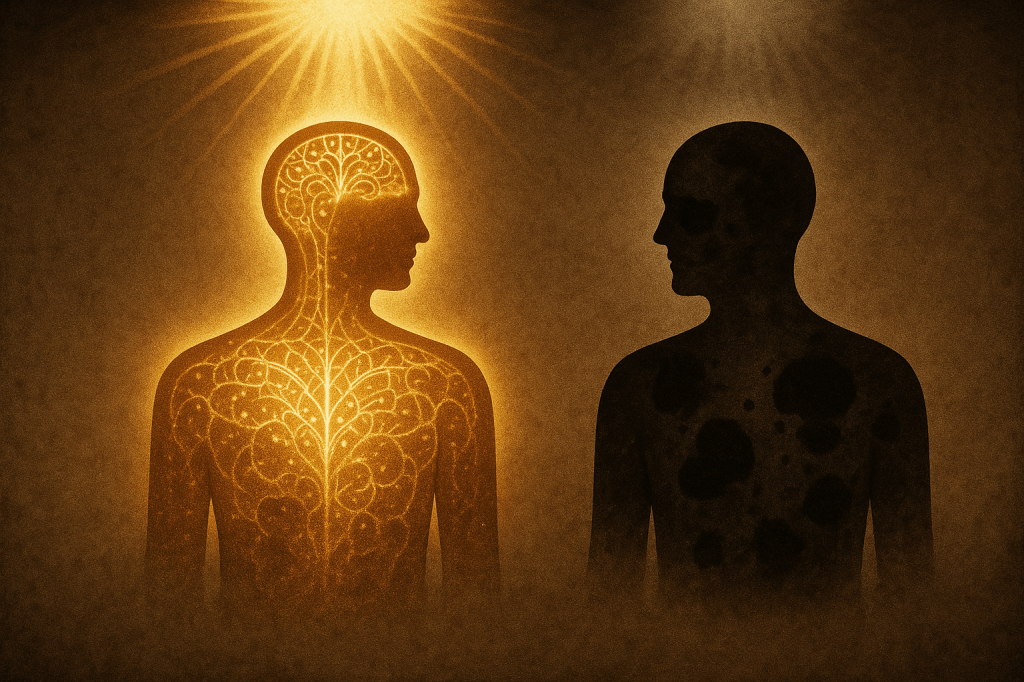
Sin doesn’t harm God—it harms the sinner by corrupting their soul and reducing their capacity for divine proximity. Each sin is like poison that weakens the soul’s ability to tolerate divine light. Without repentance and purification, the soul becomes so corrupted that it cannot exist anywhere near God’s presence.
Part 7: The Allegorical Nature of Hell’s Descriptions
Beyond Human Comprehension
Appendix 5 provides crucial insight: “The descriptions of Heaven and Hell throughout the Quran are allegorical. And the Quran tells us so whenever such descriptions occur as independent statements, not within a general subject. See 2:24-26, 13:35, and 47:15.”
Why allegorical? Because the reality of existing completely separated from God is beyond human comprehension. We’ve never experienced total absence of divine providence. Even in this “temporary hell” of Earth, God provides air, water, natural laws, and countless blessings. True Hell—complete separation from the Source of all good—is unimaginable.
The Quran’s descriptions of fire, chains, and boiling water are metaphors for a reality too terrible for human language. They convey the essence of the experience: suffering, confinement, and torment. But the actual experience of existing without any divine light, mercy, or sustenance transcends these physical metaphors.
Part 8: The Justice of Natural Consequences
Why Hell Isn’t Divine Cruelty
The Quran establishes a principle of natural consequences:
[4:78] “Anything good that happens to you is from God, and anything bad that happens to you is from you.”
The footnote provides a perfect analogy: “God created the fire to serve us, but you can decide to put your finger in it. We thus hurt ourselves. It is God’s law that if you put your finger in the fire, it will hurt.”
This illustrates the relationship perfectly:
- God creates beneficial things (fire for warmth and cooking)
- God establishes natural laws (fire burns flesh)
- Humans make choices (to touch or avoid fire)
- Consequences follow naturally (burning occurs if touched)
Is God cruel for making fire burn? No—the burning is a natural consequence of the choice to touch fire. Similarly, Hell is the natural consequence of choosing to exist apart from God. God doesn’t send people to Hell—they send themselves by rejecting the only Source of good in existence.

Part 9: The Unforgivable Sin and Ultimate Separation
Why Idol Worship Leads to Hell
Dr. Khalifa explains why idol worship is the only unforgivable sin: it represents “siding with Satan’s viewpoint that God alone is not enough.” This isn’t arbitrary—it’s ontological. When someone insists that God alone is insufficient, they’re rejecting the very Source of sufficiency. They’re saying the Source of all light isn’t bright enough, the Source of all sustenance isn’t nourishing enough, the Source of all good isn’t good enough.
This rejection, if maintained until death, makes it impossible for the soul to exist in God’s presence. Not because God refuses to forgive, but because the soul has fundamentally oriented itself away from God and toward something else. It’s like a plant that has grown toward darkness instead of light—even if placed in sunlight, it can no longer properly photosynthesize.
Part 10: The Mercy in Divine Absence
Why Hell Must Exist
Paradoxically, Hell exists because of God’s mercy, not despite it. For souls that have completely rejected God and corrupted themselves through persistent sin and disbelief, being in God’s presence would be unbearable torment. The divine light that brings joy to purified souls would bring agony to corrupted ones.
Appendix 11 reveals: “A new, eighth universe will be created to house those who run away from God due to their weakness; they failed to nourish and develop their souls.” This isn’t vindictive punishment—it’s providing a place for souls that cannot exist anywhere else. They’ve made themselves incompatible with divine presence, so God, in His mercy, provides a realm where they can exist according to their own choice—apart from Him.
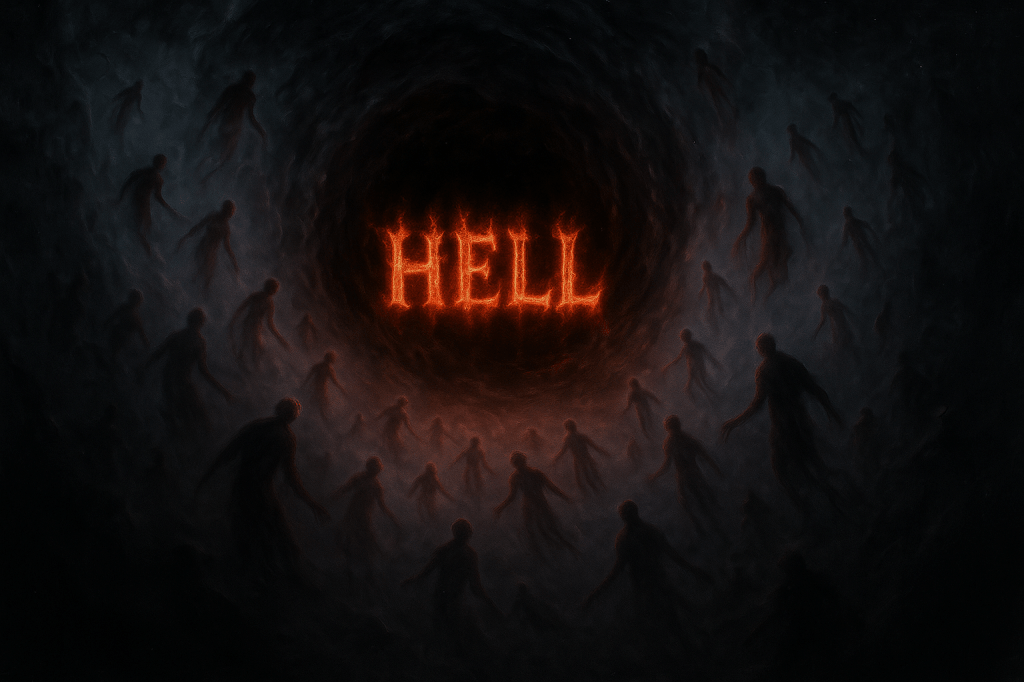
Yet even this mercy comes with natural consequences. Existing apart from the Source of all good means existing without good—hence the suffering of Hell. God doesn’t actively torture the damned; their torment comes from getting exactly what they chose: existence without God.
Part 11: The Window of Redemption
God’s Mercy During Earthly Life
The profound mercy of God is most evident in how He maintains opportunities for redemption throughout earthly life:
[2:256] “There shall be no compulsion in religion: the right way is now distinct from the wrong way. Anyone who denounces the devil and believes in God has grasped the strongest bond; one that never breaks…”
Despite Earth being a “temporary hell” where God is not physically present, He ensures that:
- The right way remains distinct from the wrong way
- No one is compelled to choose either path
- Redemption remains available until death
- Divine sustenance continues even for disbelievers
Dr. Khalifa emphasizes this mercy: “God wants to give them a chance to redeem themselves. So God interferes, God is the only provider in this world.” Even those actively rejecting God still receive His provisions—air to breathe, water to drink, food to eat. This incredible mercy demonstrates that Hell isn’t God’s desire but the inevitable consequence of persistent rejection.
Part 12: The Transformation Through Repentance
From Darkness to Light
The Quran presents repentance not as mere forgiveness but as transformation:
[2:257] “God is Lord of those who believe; He leads them out of darkness into the light.”
This isn’t just metaphorical—it’s ontological transformation. Through sincere repentance and reform, the soul literally moves from darkness toward light, from distance to proximity, from spiritual weakness to strength. Dr. Khalifa explains that repented sins become “credits” that strengthen the soul, preparing it for divine proximity.
This reveals why God allows sin and redemption: the process of falling and rising, sinning and repenting, actually strengthens the soul more than never having sinned. It’s like a broken bone that, when properly healed, becomes stronger at the break point. The soul that has experienced darkness and chosen light appreciates and clings to that light more firmly.

Part 13: The Kingdom Comparison
God’s Kingdom vs. Satan’s Kingdom
Dr. Khalifa provides a practical framework for understanding our current position: “God’s kingdom is characterized by perfect health, perfect wealth, and peace of mind… If you look into your life and find that your life is full of problems or has some problems… you have been victimized by Satan or duped by Satan into joining his kingdom.”
This isn’t about material wealth but about spiritual orientation. Those aligned with God’s kingdom experience:
- Peace despite external circumstances
- Contentment with divine provisions
- Health of soul even if the body suffers
- Joy that transcends situation
Those in Satan’s kingdom experience the opposite—anxiety, dissatisfaction, spiritual illness, and misery—because they’ve oriented themselves away from the Source of all good. Hell is simply the eternal continuation of this chosen orientation.
Part 14: The Scientific Parallel
Entropy and Spiritual Decay
Modern physics provides a striking parallel to the Quranic concept of Hell. The second law of thermodynamics states that entropy (disorder) increases in any closed system without external energy input. Similarly, souls separated from God—the Source of spiritual energy—inevitably decay into maximum disorder and suffering.
Just as a room without maintenance becomes dusty and deteriorated, a soul without divine connection becomes corrupted and weak. Hell represents the state of maximum spiritual entropy—complete disorder resulting from complete separation from the organizing principle of divine presence.
This isn’t punishment—it’s physics. Remove the energy source, and decay follows naturally. Remove the spiritual Source, and spiritual decay follows just as naturally.

Part 15: The Ultimate Choice
Why Free Will Necessitates Hell’s Existence
For free will to be genuine, the choice to reject God must be real—with real consequences. If everyone ended up in Paradise regardless of their choices, then the choices wouldn’t matter. Hell exists because God respects our freedom to choose even unto eternal consequences.
From Appendix 7: “If the human person convinces his or her jinn companion to denounce that original sin, and uphold God’s absolute authority, both creatures are redeemed to God’s eternal kingdom on the Day of Judgment.”
This reveals that redemption is always about choice—choosing to accept God’s absolute authority. Hell awaits those who persistently refuse this choice, not as punishment but as the natural destination for souls that have chosen autonomy over divine connection.
Conclusion: The Profound Justice of Divine Absence
The Quranic concept of Hell revolutionizes our understanding of divine justice and mercy. Hell isn’t a torture chamber created by a vindictive God—it’s a refuge for souls that have made themselves incapable of existing in divine presence. It’s what remains when the Source of all good is removed by choice.
Dr. Khalifa’s insight that people “fight tooth and nail to get into Hell” captures this perfectly. They’re not victims but architects of their own destiny. Through persistent rejection of divine guidance, corruption of their souls through sin, and refusal to develop spiritually, they create their own need for Hell—a place where they can exist according to their choice, apart from God.
The ontological truth is simple yet profound: God is everything good in the heavens and the earth. Light emanates from Him, sustenance flows from Him, peace radiates from Him. To choose against God is to choose against all these things. Hell is simply the logical consequence of this choice—existence without the Source of existence’s goodness.
Yet even this terrible destiny serves to highlight God’s incredible mercy. Throughout our earthly lives, He continues to provide for us, guide us, and call us back to Him. He transforms our repented sins into spiritual strength. He makes the right way distinct from the wrong way. He compels no one, respecting our freedom even when we use it to reject Him.
In the end, everyone gets what they truly wanted. Those who sought God find themselves in His eternal presence, enjoying all the good that flows from Him. Those who rejected God find themselves eternally separated from Him, experiencing the natural consequence of existing without the Source of all good. Both destinations are chosen, not imposed. Both reflect perfect justice—giving each soul exactly what it insisted upon having.
The message is clear: Hell is not proof of divine cruelty but of divine justice and respect for free will. God doesn’t send anyone to Hell—He simply honors their choice to exist without Him, with all the natural consequences that entails. The question for each soul is simple: Do you choose to develop yourself to exist in God’s presence, or do you choose to corrupt yourself into needing His absence? The choice—and the consequence—is entirely ours.
[7:23] “They said, ‘Our Lord, we have wronged our souls, and unless You forgive us and have mercy on us, we will be losers.’”


 Quran Only Studies
Leave a reply to algography Cancel reply