Introduction: The One Value That Measures All the Others
Every conflict eventually forces a question that cuts beneath the slogans: by what standard are we judging? Crowds chant, governments posture, and timelines fill with footage, but the noise rarely pauses long enough to name the measuring stick. The Final Testament hands us that measuring stick in a single, unambiguous principle — the freedom of the human soul to choose its God, or to reject Him, without a sword at its back. This is not one value among many. It is the master value, the gift so central to God’s design that the Quran returns to it again and again as the very condition under which faith can mean anything at all.
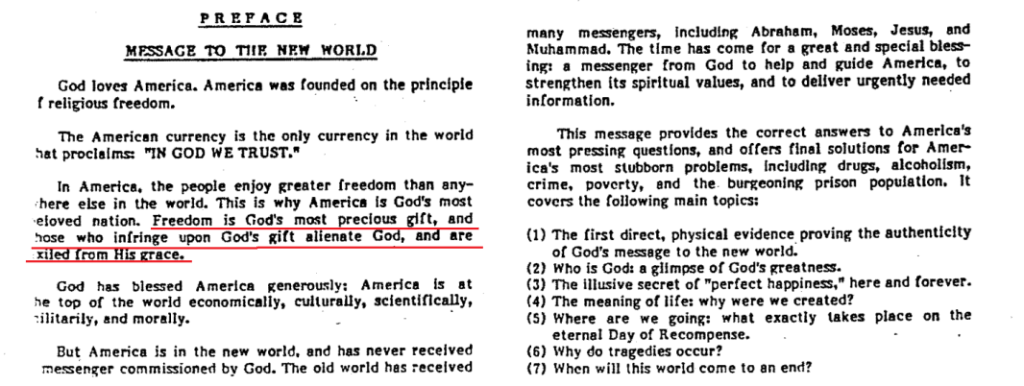
Rashad Khalifa opened the Final Testament with a preface he titled “Message to the New World,” and in it he distilled the whole matter into one sentence that should be engraved over every parliament and every pulpit: “Freedom is God’s most precious gift, and those who infringe upon God’s gift alienate God, and are exiled from His grace.” That sentence is the spine of this article. We will hold it up against the most contested patch of ground on earth — the land the world calls Palestine and Israel — and we will discover something that unsettles almost everyone: the Quran itself, the very book that traditional Muslims claim to defend, has already ruled on the questions people are killing each other over. The believer’s task is not to win an argument for a flag. It is to read what God actually decreed, to measure both sides against the gift of freedom, and to refuse to lie even when honesty is costly.
Part 1: Freedom Is God’s Most Precious Gift
The Divine Principle of Non-Compulsion
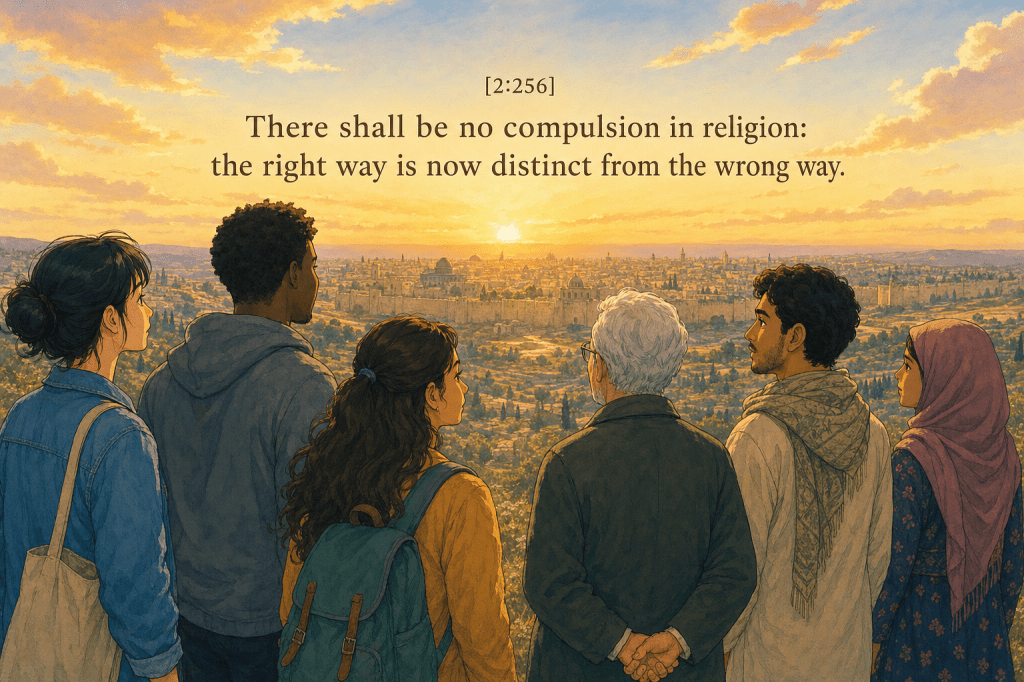
The Quran does not whisper about religious freedom; it commands it. The most famous verse on the subject is not a footnote or a concession but a structural law of God’s kingdom, placed immediately after the Throne Verse, the high-water mark of the chapter:
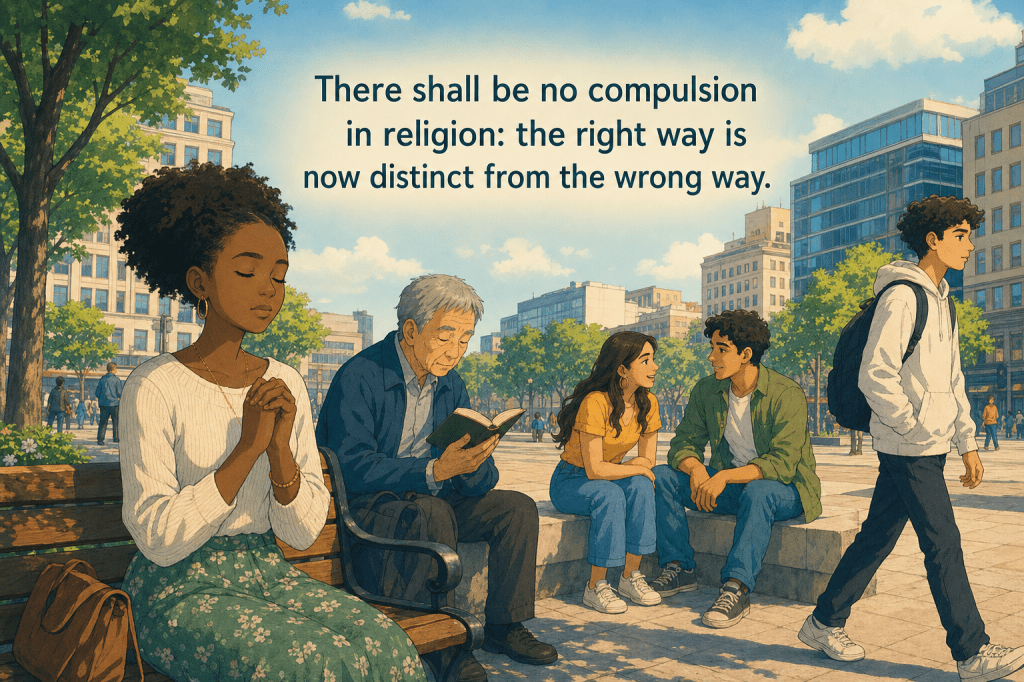
[2:256] “There shall be no compulsion in religion: the right way is now distinct from the wrong way. Anyone who denounces the devil and believes in God has grasped the strongest bond; one that never breaks. God is Hearer, Omniscient.”
Notice the logic. Compulsion is forbidden precisely because the guidance is already clear; once truth is distinct from falsehood, force becomes not merely cruel but redundant. A faith that must be installed at gunpoint is a faith that has stopped trusting its own evidence. God reinforces this by pointing to His own restraint — He, who could make every human a believer with a single word, deliberately declines to do so:
[10:99] “Had your Lord willed, all the people on earth would have believed. Do you want to force the people to become believers?”
If the Creator of the universe refuses to coerce belief, no clergyman, no state, and no militia has been granted a license He withheld from Himself. The point is sealed in the most direct delegation of choice anywhere in scripture, where the messenger is told to deliver the truth and then step back entirely from the result:
[18:29] “Proclaim: ‘This is the truth from your Lord,’ then whoever wills let him believe, and whoever wills let him disbelieve. …”
The messenger’s entire job description is reduced to delivery, never enforcement: “You shall remind, for your mission is to deliver this reminder. You have no power over them” — [88:21-22]. This is why freedom is not a Western invention grafted onto religion; it is the native soil of submission itself. To strip a person of the right to disbelieve is to strip them of the only thing that makes their belief worth anything to God.
The Messenger’s Verdict: Where the Soul Is Free, God Is Near
Rashad Khalifa drew the practical conclusion that traditional clerics still cannot stomach. Asked whether life under a secular constitution was somehow less godly than life under a so-called Islamic regime, he answered the opposite of what the audience expected. In a recorded interview he said (at 41:30): “The United States is about the most Islamic country in the world because the person is free to worship God in any way they want, to the extent that if you are in Egypt or Saudi Arabia or one of those countries and you really speak up for the true Islam, which is upholding Quran, nothing but Quran, your life is actually endangered.” The measure of a godly society, in other words, is not how loudly it advertises God’s name but whether it lets a human being seek God unmolested.
He made the same point with sharper edges elsewhere, observing of his adopted country (at 36:25): “This country is fanatic about religious freedom.” The man who said this had himself fled the lands that brand themselves the guardians of the faith, because in those lands a person who upholds the Quran alone is treated as a heretic. The lesson is permanent and it travels: do not ask a society how religious it claims to be. Ask whether the Jew, the Christian, the submitter, and the doubter can each wake up tomorrow and worship — or refuse to worship — without fear. That single question is the test the rest of this article applies to the Holy Land.
Part 2: The Test Applied — Two Societies on the Same Land
Who Lets the Other Worship?
If freedom is the gift by which God measures a people, then the conflict over the Holy Land has a measurable dimension that no amount of slogans can hide. On one side of the line sits a state with roughly two million Arab citizens — about a fifth of its population — who vote, who form their own political parties, and who have sat in the governing coalition; one of those parties, Ra’am, joined the government in 2021 (Source: Arab citizens of Israel). Arab judges sit on its Supreme Court: Khaled Kabub was sworn in during 2022 as the court’s first permanent Muslim justice, following the Christian Arab justice George Karra who served until 2022 (Source: Times of Israel, 2022). The Baha’i faith — persecuted to near-extinction in Iran — chose this same land for its world spiritual center in Haifa and Acre, declared a UNESCO World Heritage site in 2008 (Source: UNESCO). The Christian population there is small but growing, around 184,000 and rising year on year (Source: Israel CBS via Times of Israel).
On the other side of the line, in the territory governed by Hamas, the trajectory runs the opposite direction. The Christian community of Gaza, once several thousand strong, has collapsed to roughly a thousand souls (Source: Jerusalem Post). Amnesty International documented at least twenty-three summary executions of accused “collaborators” during a single conflict in 2014, six of them shot publicly outside a mosque (Source: Amnesty International, 2015). The last time anyone there was permitted to vote in a presidential election was 2005; the last legislative election was 2006; a 2021 round was simply cancelled (Source: 2006 Palestinian legislative election). One society extends the gift of freedom even to those who hate it; the other has revoked it even from its own.
The Independent Scorecard
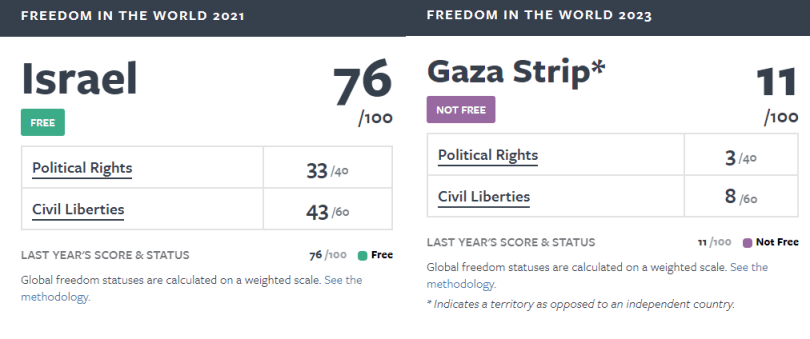
This is not a matter of taking one side’s word. Freedom House, which rates every country on earth by the same yardstick, places Israel in the “Free” category — 73 out of 100 in its 2025 edition, the only nation rated Free in its region — while rating the Hamas-run Gaza Strip at 2 out of 100 and the Palestinian-Authority-run West Bank at 22 out of 100, both “Not Free” (Source: Freedom House 2025). Honesty requires noting that Israel’s score has been sliding — it was in the high seventies a few years ago — and critics will cite that decline, which we acknowledge rather than hide. But the gap is not a gap of a few points between near-equals; it is the difference between a flawed democracy and a closed territory where dissent can be lethal.
Return now to the measuring stick from Part 1. Rashad Khalifa argued that the godliness of a society is read off precisely this variable — not its banners, but its freedom. By that standard, the side that jails and executes its critics, drives out its Christians, and teaches children to seek martyrdom has failed the only test God said mattered, while the side that seats its minorities in parliament and on the bench, for all its real faults, has not. The believer who claims to follow the Quran cannot wave this away, because the Quran made freedom the test — and the data is not ambiguous about who is administering it and who is failing it.
Part 3: The Quran Itself Decrees the Holy Land for the Children of Israel
A Decree, Not a Suggestion
Here is where the article asks traditional Muslims to do something painful: to actually read their own book. The single most explosive fact in the whole debate is that the decree assigning the Holy Land to the Children of Israel is not found only in the Torah, which Muslims dismiss as corrupted. It is in the Quran — recited, memorized, and ignored. The translator Rashad Khalifa even gave the passage its own subtitle in the Final Testament: “God Gives the Holy Land to Israel.” Read the words:
[5:20] “Recall that Moses said to his people, ‘O my people, remember God’s blessings upon you: He appointed prophets from among you, made you kings, and granted you what He never granted any other people.”
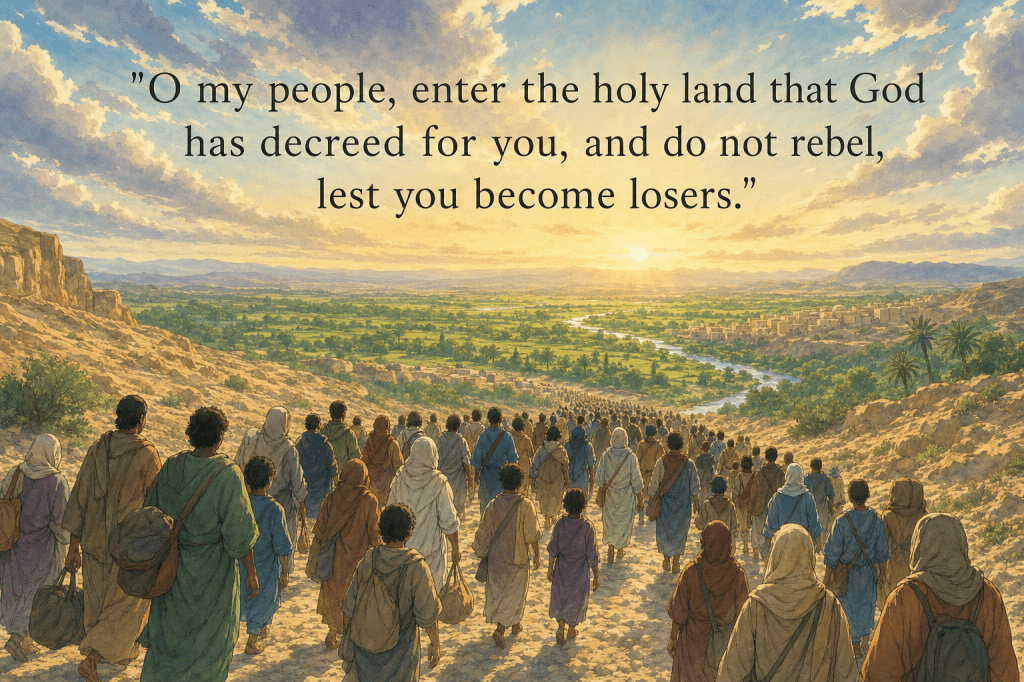
[5:21] “O my people, enter the holy land that God has decreed for you, and do not rebel, lest you become losers.”
The verb is decisive. The land was not loaned, not offered for negotiation, not made conditional on a vote of the surrounding nations — it was decreed. The Arabic carries the weight of a divine writ. A Muslim who stands on a street corner and shouts that the Children of Israel have no claim whatsoever to that land has placed himself in direct contradiction to a verse he would defend with his life if you misquoted a single letter of it. He is, without realizing it, arguing against God.
The Inheritance Theme Runs Through the Whole Quran
This is no isolated verse that could be explained away. The Quran develops the theme as a sustained motif. After the destruction of Pharaoh, God declares the transfer of land and honor to the oppressed nation He had just rescued:
[7:137] “We let the oppressed people inherit the land, east and west, and we blessed it. The blessed commands of your Lord were thus fulfilled for the Children of Israel, to reward them for their steadfastness, and we annihilated the works of Pharaoh and his people and everything they harvested.”
The blessing is repeated as a defining feature of this people throughout the scripture: “O Children of Israel, remember My favor which I bestowed upon you, and that I blessed you more than any other people” — [2:47]. God describes them as recipients of scripture, wisdom, and prophethood, “and provided them with good provisions; we bestowed upon them more blessings than any other people” — [45:16]. The point is not Jewish supremacy — we will dismantle that reading shortly — but the simple, textual fact that the God of the Quran tied this people to this land by decree. You cannot be loyal to the Quran and erase the very promise it records. The argument is not between Muslims and Jews; it is between Muslims and their own scripture.
Part 4: The Forty-Year Argument, Demolished
Read the Verse, Not the Headline
When confronted with [5:21], the more literate objector retreats to a second line: “Yes, God decreed it — but the decree was revoked. The very next passage shows God forbidding them the land.” This sounds clever until you read the passage. The Children of Israel, having just been handed a divine writ, refuse to march:
[5:24] “They said, ‘O Moses, we will never enter it, so long as they are in it. Therefore, go—you and your Lord —and fight. We are sitting right here.’”
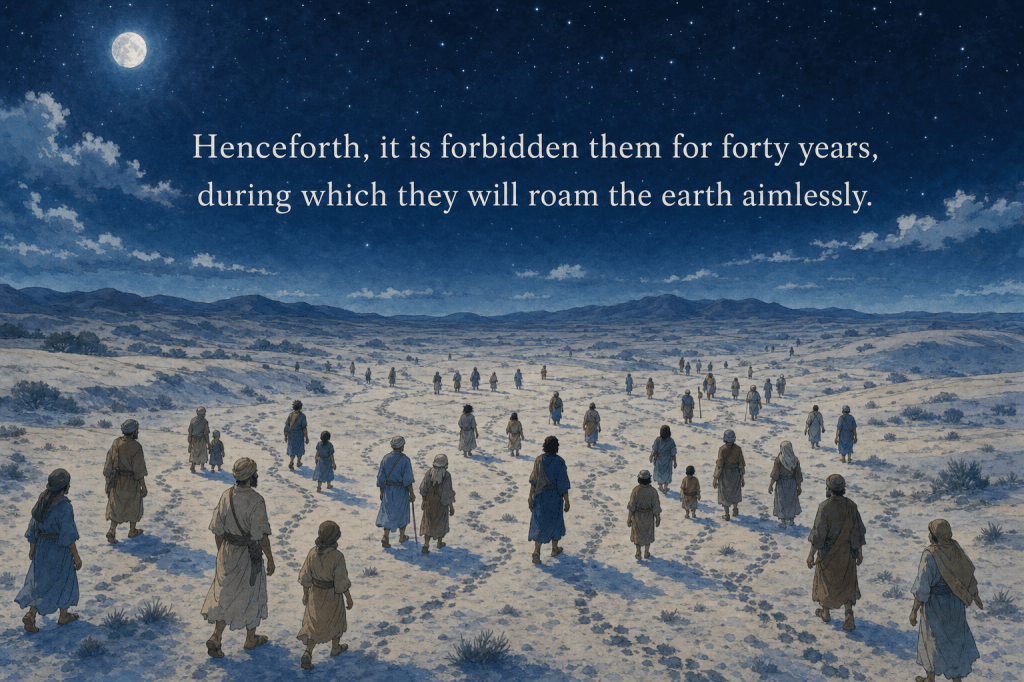
[5:26] “He said, ‘Henceforth, it is forbidden them for forty years, during which they will roam the earth aimlessly. Do not grieve over such wicked people.’”
Now read the actual words of the punishment. It is “forbidden them for forty years.” This is not a revocation; it is a suspension with an expiry date stamped on it. God did not say “forbidden forever,” or “the decree of [5:21] is annulled.” He imposed a generational time-out — the cowards who refused would die in the wilderness, and their children would enter. That is precisely what happened in the recorded history both scriptures share: the generation of the wilderness perished, and the next generation, under Joshua, crossed in. The forty years did not cancel the decree. The forty years enforced the decree by removing the people unworthy of it.
Chosen-ness Is Responsibility, Not Immunity
This passage demolishes two errors at once. It demolishes the Muslim who says the land was never given, because [5:21] plainly gives it. And it demolishes the ethnic-supremacist who imagines the land is an unconditional, eternal, racial entitlement — because the very same passage shows God suspending it the moment the people rebelled. The decree is real, but it is moral, not tribal. Being chosen, as God frames it repeatedly, means a heavier yoke of responsibility, not a permanent exemption from judgment. The forty-year wandering is the proof that God’s land-decrees come with conditions, and that disobedience forfeits the gift — for a season, or, where the rebellion is total, for a generation.
This is the same balance the Quran strikes everywhere it discusses this nation. It calls them blessed above other peoples in one breath and condemns their specific rebellions in the next, precisely because blessing and accountability are two sides of one coin. The lesson lands on the modern reader with full force: no people, Jewish or Arab or any other, holds the land as a possession independent of how it behaves. God grants, and God can suspend. That is not a loophole for antisemitism; it is a warning to everyone who stands on that soil.
Part 5: “Go Live in This Land” — The Final Prophecy of the Ingathering
A Promise Spoken After Moses
If [5:21] settles the ancient decree, a different verse reaches across the millennia toward our own headlines. Spoken to the Children of Israel after the drowning of Pharaoh — after Moses, after the wilderness — it carries language that is unmistakably about the end of history:
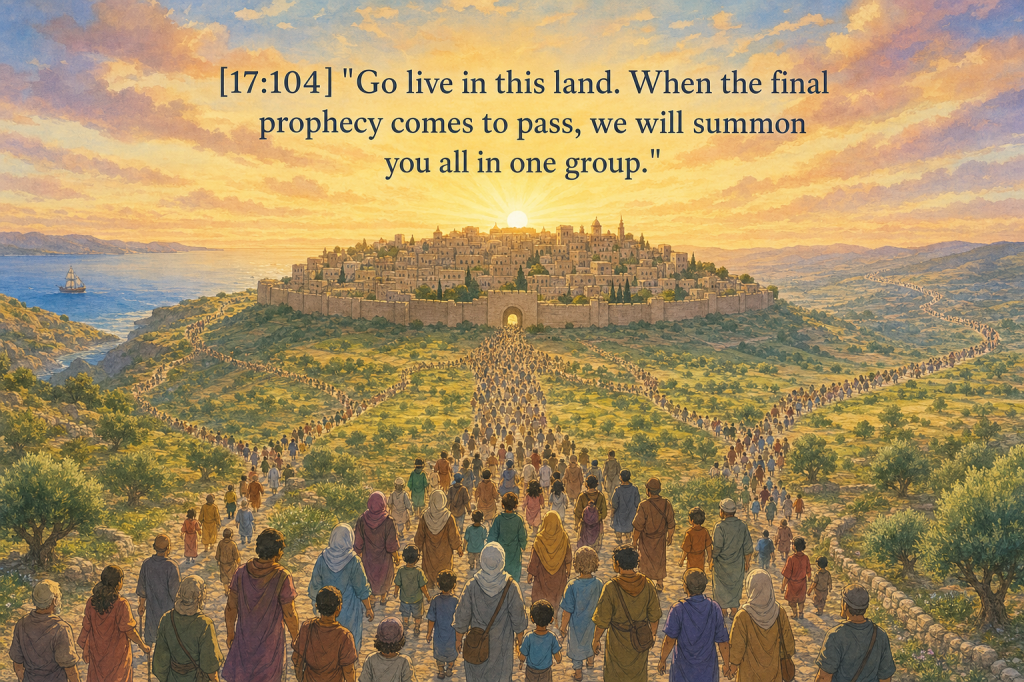
[17:104] “And we said to the Children of Israel afterwards, ‘Go live in this land. When the final prophecy comes to pass, we will summon you all in one group.’”
Read it slowly. First, the command: “Go live in this land” — a directive to dwell, to settle, to return. Then the horizon: “When the final prophecy comes to pass” — an explicitly eschatological marker, the last act before the curtain. And then the climactic image: “we will summon you all in one group” — a gathering of a scattered people into one body in the land. The Final Testament’s rendering is distinctively a regathering prophecy: not “a mixed crowd” wandering somewhere, but a deliberate divine summoning of this nation, back to this land, as a sign that the final chapter has begun.
The Return as the Quran’s Own Sign
We must be careful and honest here, because the precise mapping of end-times events belongs to God’s knowledge, and the early submitters who studied these verses debated the details without dogmatism. But the plain sense of the verse is hard to unsee. A people scattered to the four winds for two thousand years, gathered “all in one group” back into the very land of [5:21], within living memory — the submitter who reads [17:104] and looks at the twentieth century is entitled to feel the floor shift. Rashad Khalifa himself spoke of the land in present-tense identification, telling a study session plainly that the Quran’s references to the ancient land of the prophets point to the territory where the modern state sits today (at 19:22): “The Quran is telling you exactly where Noah’s ark rested, in Judea… the West Bank. Right there, where Israel is.”
The honesty clause holds: this is not a claim that any modern government is sinless, nor a claim to know the day or the hour. It is the recognition that the Quran predicted an end-times ingathering of the Children of Israel to this land, and that something answering that description has happened on a scale no prior century witnessed. The believer does not need to canonize a state to notice a prophecy. He needs only to read [17:104] without flinching — and to ask why the people who recite the Quran most loudly are the ones most desperate to deny what it says.
Part 6: Divine Land Grants Were Never an Ethnic Monopoly
God Gave Land to More Nations Than Israel
Affirming that God decreed the land for the Children of Israel is not the same as endorsing ethnic supremacism, and the scripture itself forecloses that misreading. The Hebrew Bible that records the grant to Israel records, in the same breath, parallel grants to other nations: God tells Israel not to provoke the descendants of Esau, “because I have given mount Seir unto Esau for a possession” (Deuteronomy 2:5); not to harass Moab, “for I have given Ar unto the children of Lot for a possession” (Deuteronomy 2:9); and the same for Ammon (Deuteronomy 2:19). God’s covenantal activity with land was never a monopoly of one bloodline. He is the Lord who apportions the earth, and He apportions it to many.
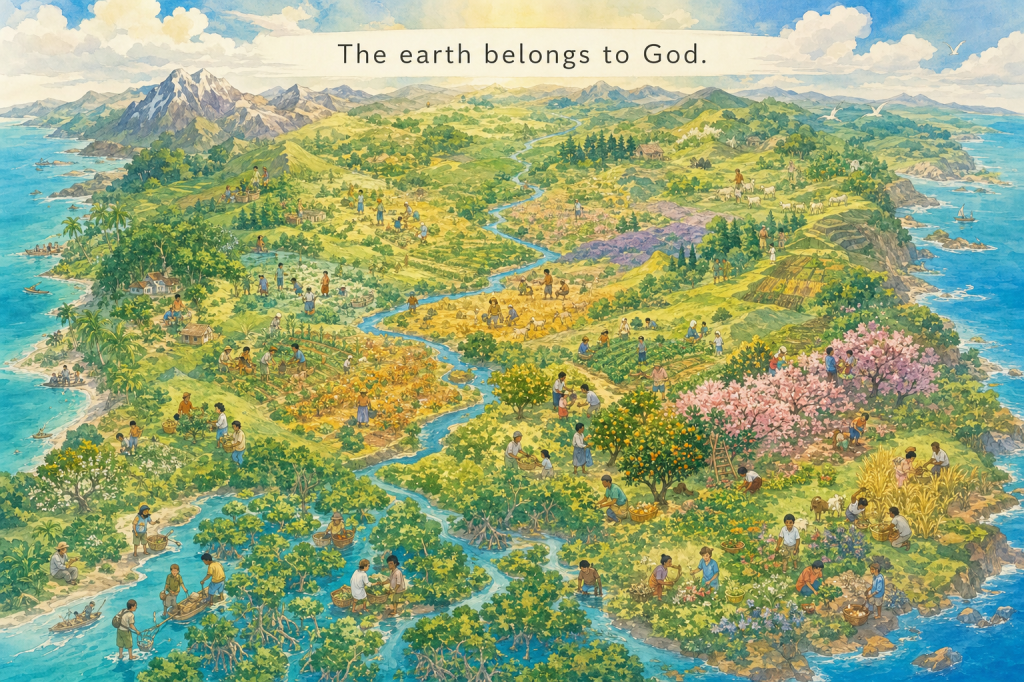
The Quran frames the entire matter under God’s universal sovereignty, not tribal title. Moses tells his own people, in the middle of their fear: “The earth belongs to God, and He grants it to whomever He chooses from among His servants. The ultimate victory belongs to the righteous” — [7:128]. The deed-holder is always God; every grant is a stewardship, revocable for cause, as the forty years proved. This is the firewall against turning the Holy Land decree into a charter for racism. The land was given to a people for a purpose under conditions — exactly as land and victory are given to “whomever He chooses” — never as a trophy of blood.
The Trap of Exclusivism the Quran Names
The Quran is in fact sharply critical of the exclusivist mindset that treats chosen-ness as a closed possession. It does not deny that God chose this people; it denies that being chosen licenses a claim against everyone else. Watch how surgically it cuts:
[62:6] “Say, ‘O you who are Jewish, if you claim that you are God’s chosen, to the exclusion of all other people, then you should long for death if you are truthful!’”
The condemnation is not of chosen-ness — God affirms elsewhere “We have chosen them from among all the people, knowingly” — [44:32] — but of the added clause, “to the exclusion of all other people.” The error is the monopoly, not the gift. This is the same disease that infects the supremacist on any side: the conversion of a divine trust into a private deed. The Quran’s correction is precise enough to honor the decree of [5:21] and to amputate the racism that lesser readers try to graft onto it. God’s land grants are plural and conditional; no one — Jew, Arab, or anyone else — gets to weaponize them into a license to dispossess or to hate.
Part 7: The Violence Is Older Than the “Occupation”
A Chronology That Starts in 1517
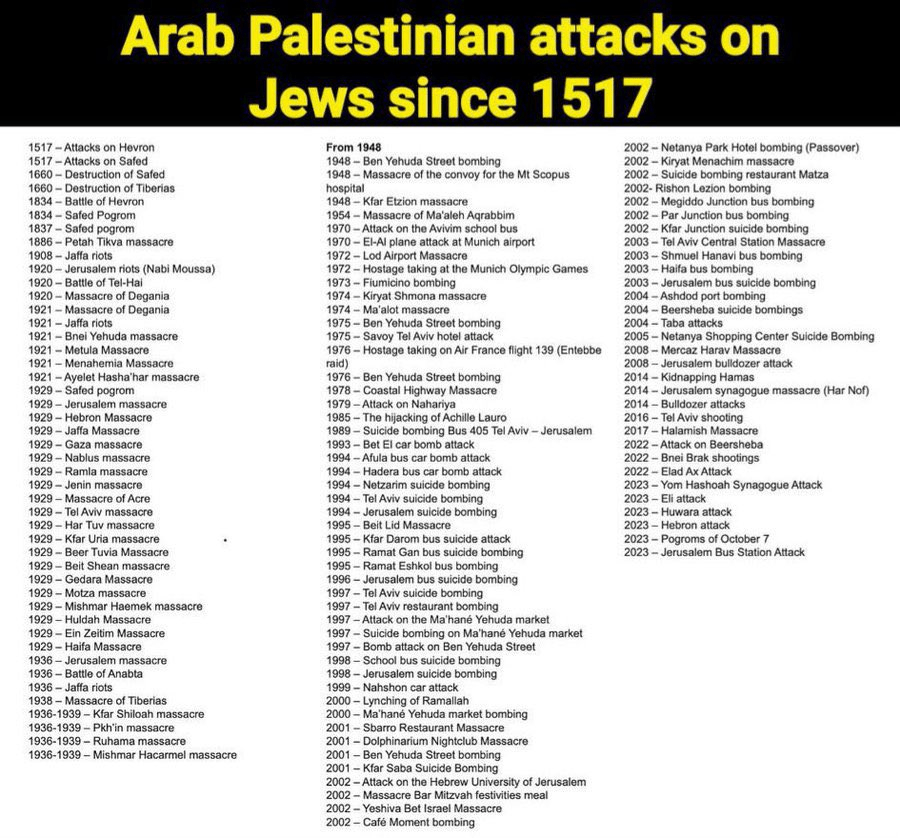
A central claim of the modern narrative is that violence against Jews in the land is a response — a reaction to occupation, to settlements, to dispossession after 1948. The historical record dismantles this. Attacks on the Jewish communities of the land are recorded centuries before any modern state existed: chronicles describe assaults on the Jews of Safed and Hebron in 1517 during the Ottoman-Mamluk transition (Source: 1517 Hebron attacks); the month-long looting and destruction of Safed’s Jewish quarter in 1834 (Source: 1834 looting of Safed); the 1929 Hebron massacre, in which sixty-seven Jews were murdered and an ancient community ended (Source: 1929 Hebron massacre); and the killing of hundreds of Jews during the 1936–39 revolt (Source: Britannica). These predate the State of Israel by decades and, in the case of 1517, by more than four centuries. Violence that begins 431 years before the thing it supposedly “responds to” is not a response. It is a pattern with a much older root.
The pattern continues unbroken into the era of suicide bombings and into our own decade — the 1974 Ma’alot school seizure that killed twenty-two children (Source: Ma’alot massacre), the 2001 Sbarro restaurant bombing that killed fifteen including seven children (Source: Sbarro bombing), and the assault of October 7, 2023, in which about 1,200 people were killed (Source: Al Jazeera, 2023) and 251 taken hostage (Source: Human Rights Watch, 2024). And the ideology animating the deadliest of these is not a secret. The 1988 Hamas Charter, never revoked, quotes a fabricated narration as its program in Article 7: “The Day of Judgement will not come about until Moslems fight the Jews (killing the Jews), when the Jew will hide behind stones and trees” (Source: Yale Avalon Project). That is not a grievance about borders. It is a genocidal theology imported wholesale from the very hadith corpus the submitter rejects.
1948 Was an Invasion — and “Palestinian” Once Meant the Jews
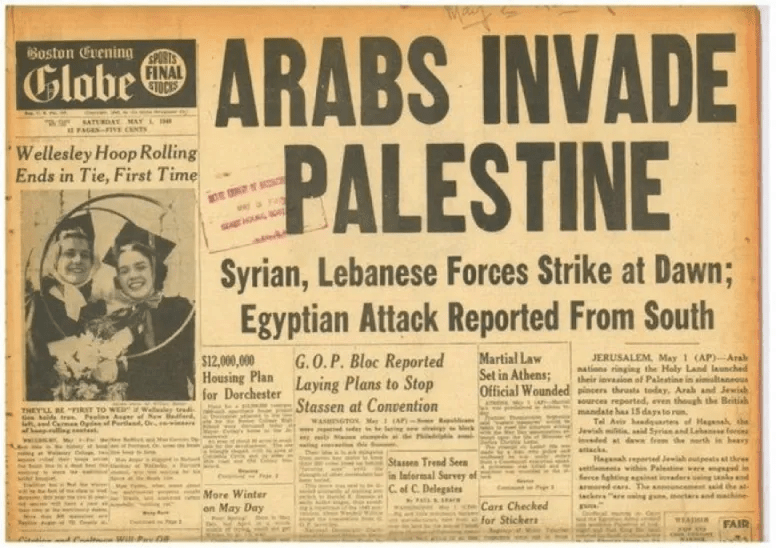
The founding myth requires that 1948 be remembered as a peaceful population expelled by colonizers. The contemporary press remembered it differently. Two weeks before Israel even declared independence, American front pages were reporting the opposite story; the Raleigh Times of May 1, 1948 ran the banner “PALESTINE INVADED BY ARABS,” carrying the Associated Press wire about Arab Liberation Army forces — composed largely of Syrian and Lebanese volunteers who had been crossing the border since January 1948 (Source: Arab Liberation Army). The archival Boston Evening Globe page reproduced in this article, with its “ARABS INVADE PALESTINE” headline, belongs to that same verified day of coverage. In the headlines of 1948, “Palestine” was the land the Jews were defending against invading Arab armies.
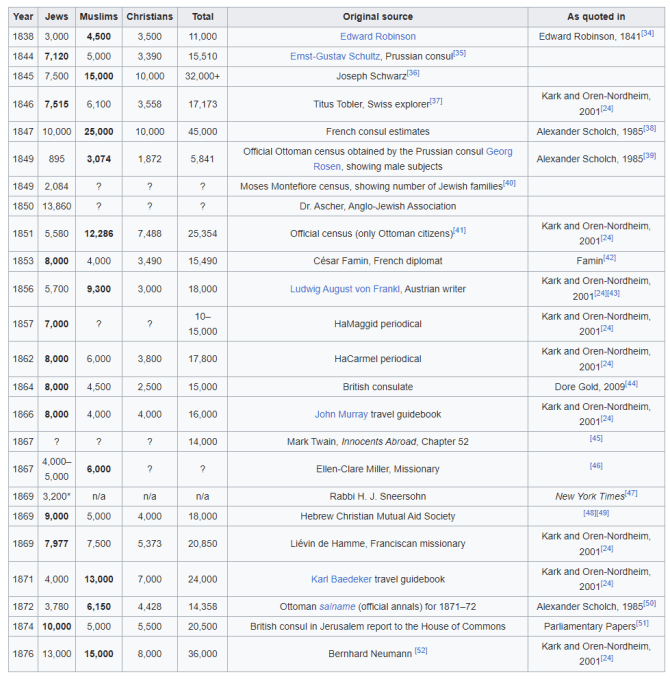
That inversion of language is itself revealing. Before 1948, “Palestinian” commonly referred to the Jews of the British Mandate: the Palestine Post became the Jerusalem Post in 1950 (Source: The Jerusalem Post); the Palestine Symphony Orchestra became the Israel Philharmonic in 1948 (Source: Israel Philharmonic Orchestra); Jewish volunteers served in the British Army’s Palestine Regiment wearing “Palestine” insignia. And the demographic record undercuts the “empty replacement” story from the other end: numerous nineteenth-century estimates put Jews as the largest single community in Jerusalem by mid-century, and an undisputed absolute majority by the 1880s and 1890s — roughly sixty-two percent by 1896, half a century before the state existed (Source: Demographic history of Jerusalem). One more uncomfortable thread completes the picture: the Mufti of Jerusalem, Haj Amin al-Husseini, met Hitler in Berlin in November 1941 and helped recruit a Bosnian Muslim division for the SS (Source: US Holocaust Memorial Museum). None of this makes any modern government holy. It simply means the simple story — innocent natives, guilty newcomers, violence born of occupation — is false in every one of its parts.
Part 8: Why, Then, Are the Muslims Defeated?
The Question Rashad Khalifa Dared to Ask
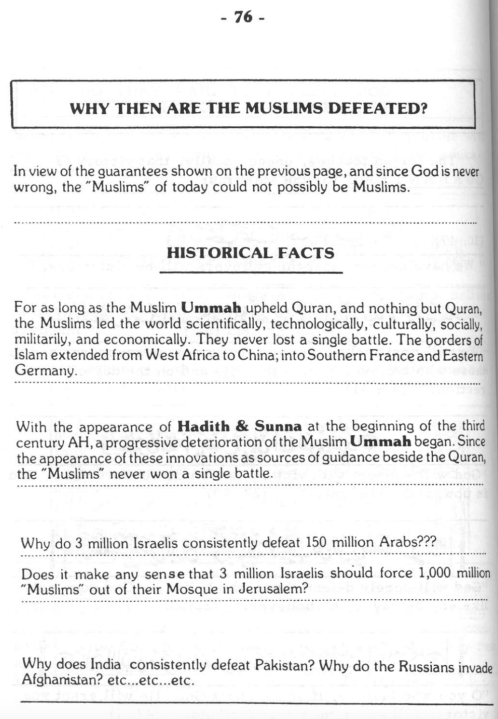
Rashad Khalifa put on the table the question the entire traditional world avoids. In his book Quran, Hadith, and Islam, in a section headed “Why Then Are the Muslims Defeated?”, he observed that for as long as the early believers upheld the Quran and nothing but the Quran they never lost a battle, and that the losses began only after the fabricated narrations and traditions were elevated beside the scripture. He then asked the question that detonates the whole grievance industry. Describing his own book in a recorded session, he said (at 5:08): “It asks the question, does it make any sense that three million Israelis defeat, consistently defeat 150 million Arabs? Consistently. Even on the physical level, it doesn’t make sense. But this is what God says — because those people were given the Quran. When you are given the Quran, your responsibility is immediately doubled.”
He pressed the point to its conclusion (at 6:42): “It doesn’t matter what the physical statistics say. You may be 200 million… and God gave them so much wealth, just to make all the physical statistics on their side. Yet they keep losing. Consistently defeated. And it’s because they abandoned the Quran.” The numbers are a sign, not an accident. When a tiny nation repeatedly prevails against a populace fifty times its size, the believer is forbidden from explaining it with conspiracy theories, because the Quran already explained it.
The Verse That Names the Cause
The cause is not Jewish cunning, Western weapons, or hidden cabals. It is divine abandonment, earned by a community that traded God’s book for man’s traditions. The Quran states the entire mechanism in one verse:
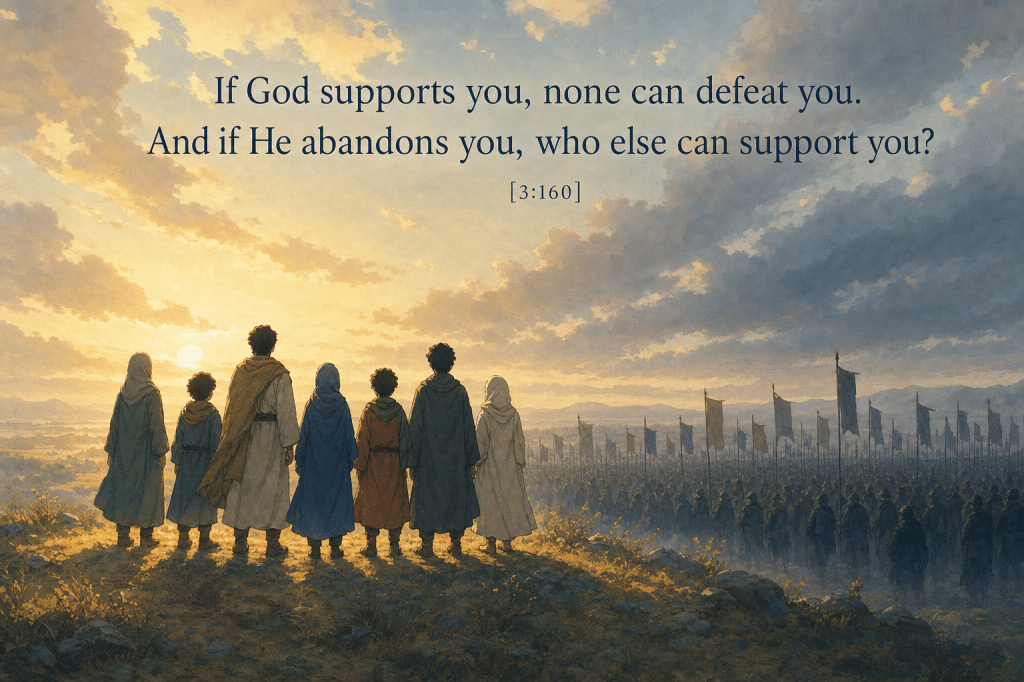
[3:160] “If God supports you, none can defeat you. And if He abandons you, who else can support you? In God the believers shall trust.”
God also set the precedent that numbers are irrelevant when His support is present, recalling “the two armies who clashed… They saw with their own eyes that they were twice as many. God supports with His victory whomever He wills” — [3:13]. The traditional world has the manpower, the oil wealth, and the weapons, and still it loses, because it has forfeited the one factor that overrides all the others. This is the most bitter pill in the whole article for the traditionalist: the defeats he blames on the Jews are in fact God’s verdict on his own abandonment of the Quran for the hadith. The honest believer stops cursing the smaller nation and starts examining the idols — the fabricated narrations, the deified scholars, the traditions placed above revelation — that cost him God’s support. The remedy was never to defeat Israel; it was to return to the Quran.
Part 9: Palestine as an Idol — The Worship of a Cause
The Selective Outrage That Exposes the Heart
There is a tell in the global obsession with this one conflict, and it is not compassion. While the streets of every Western capital fill for Gaza, two catastrophes of far greater scale unfold in near silence. Sudan’s civil war has killed an estimated 150,000 or more and displaced some twelve million people — the largest displacement crisis on earth — with famine formally declared in 2024 (Sources: Migration Policy Institute; International Rescue Committee). The wars of eastern Congo have killed on the order of five to six million since the 1990s and displaced nearly seven million more (Sources: US Holocaust Memorial Museum; IOM). Where are the encampments, the boycotts, the emergency sessions for them? Their absence proves that the intensity of global outrage is not tracking the scale of suffering. It is tracking something else.
We have made this argument in full elsewhere, and rather than repeat it we point the reader to it: our earlier study, “Global Child Suffering: The Ignored Catastrophes — Why We Must Return to God Instead of Idolizing Wars”, documents the grotesque mathematics of selective attention and names the disease for what it is. When a cause replaces God as the organizing center of a person’s devotion — when the protest replaces the prayer, and the flag replaces the prostration — that is idolatry in modern dress. These are not golden calves but golden causes, and the Quran’s warning about hearts that take their own ego as a god applies with full force to the activist who has made one war the whole of his religion.
The Institutional Version of the Same Idol
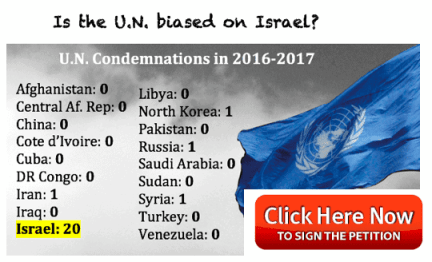
This idolatry has an institutional face. From 2015 through 2024 the United Nations General Assembly adopted 173 condemnatory resolutions against Israel versus 80 against the entire rest of the world combined; in 2016 alone it passed 20 against Israel and zero against Sudan or the Democratic Republic of Congo (Sources: UN Watch, 2015–2024 tally; UN Watch key statistics). One small state absorbs more official condemnation than every genocide, famine, and tyranny on the planet put together. No honest accounting of human suffering produces that ratio. It is produced only by an obsession — the same singling-out the Quran diagnoses as a spiritual disease, scaled up from the individual heart to the world’s parliaments.
The believer must see through this, because the obsession is a trap that consumes the one who indulges it. To pour one’s grief, one’s identity, and one’s rage into a single nation’s sins while stepping over millions of corpses elsewhere is not righteousness; it is a heart that has chosen its idol and called it justice. The cure is not to care less about Gaza. It is to care about all of God’s suffering children with the even-handedness God commands — and to refuse to let any cause, however emotive, take the place in the soul that belongs to God alone.
Part 10: The Genocide Charge, Weighed With Precision
What the Word Means, and What the Numbers Show
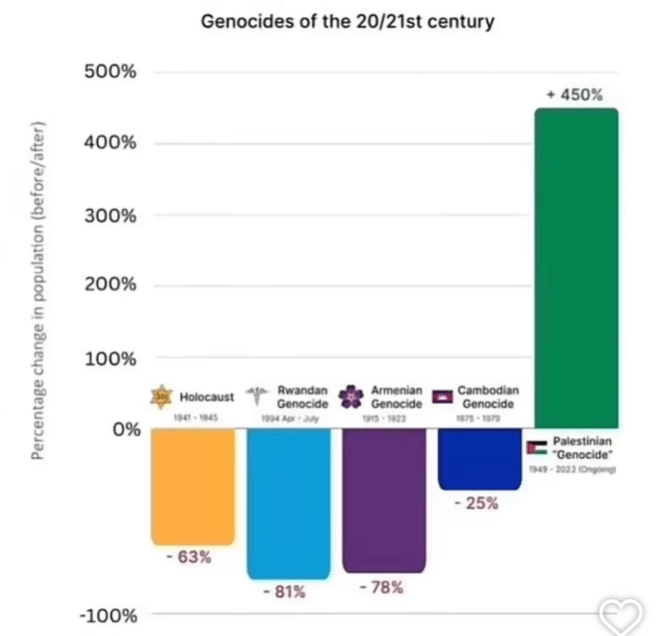
The gravest accusation leveled is “genocide,” and a believer commanded to bear witness with absolute equity cannot let so heavy a word float free of evidence. Genocide, in its technical meaning, is the systematic destruction of a population. Yet by the Palestinians’ own statistics bureau, their population has grown roughly tenfold since 1948 — from about 1.37 million to over 15 million worldwide — with Gaza alone rising from a quarter-million around 1950 to more than two million before the current war (Sources: PCBS world-population release, 2025; PCBS Nakba statistical bulletin). A chart circulating online sharpens the contrast by setting demographic change side by side: the Holocaust reduced Europe’s Jews by some sixty-three percent, the Rwandan and Armenian genocides by roughly eighty percent each — against a Palestinian population that, over the same span the label “genocide” is applied to, increased. A people that multiplies tenfold has not been subjected to systematic extermination; the word, used as a slogan, collapses against the demographic record.
The honesty clause now demands its due, and we will not flinch from it. To rebut the word “genocide” is not to deny that real civilians have died, that homes have been destroyed, or that famine conditions were declared in parts of Gaza in 2025. Innocent blood is innocent blood, and the Quran weighs a single unjust killing as if it were the killing of all humanity — “anyone who murders any person who had not committed murder or horrendous crimes, it shall be as if he murdered all the people” — [5:32]. The point is not that anyone is sinless or that suffering is fictional. The point is precision: a grievous war with real civilian dead is one thing; a systematic extermination is another; and using the second word to describe the first is a lie, and the believer does not traffic in lies even for a cause that moves him.
The Aid Record and the Mismatch of Scale
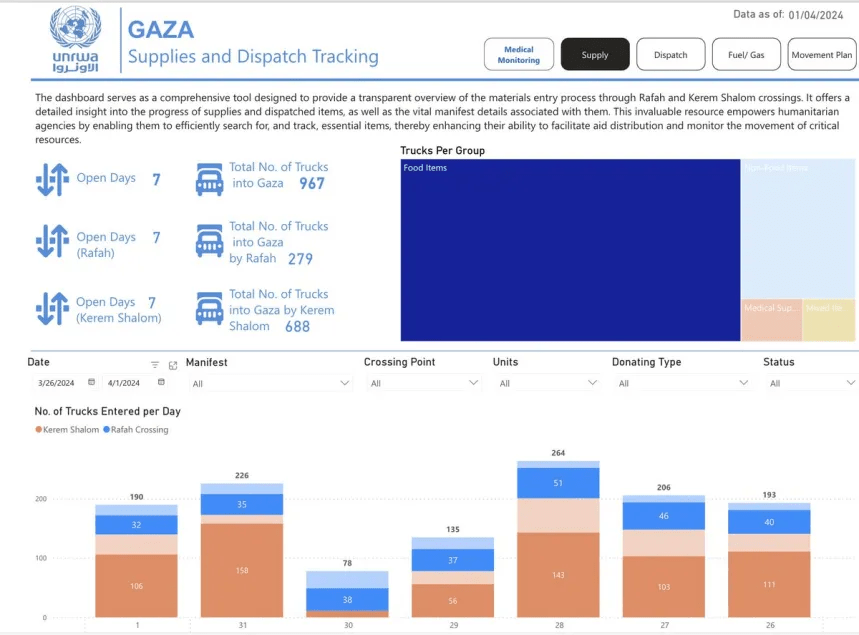
The same precision applies to the charge of deliberate starvation. By Israel’s own logistics agency, tens of thousands of aid trucks have crossed into Gaza — for instance, some 25,200 trucks carrying roughly 450,000 tons during the six-week ceasefire in early 2025 alone (Sources: The New Humanitarian, citing COGAT; JNS, citing COGAT). Honesty requires the counter-note that United Nations counts run materially lower, that aid agencies dispute whether the volumes met the need, and that famine was nonetheless declared — so this is not a clean bill of health, and we do not present it as one. What it does establish is that a campaign of deliberate, total extermination is not what the supply record describes.
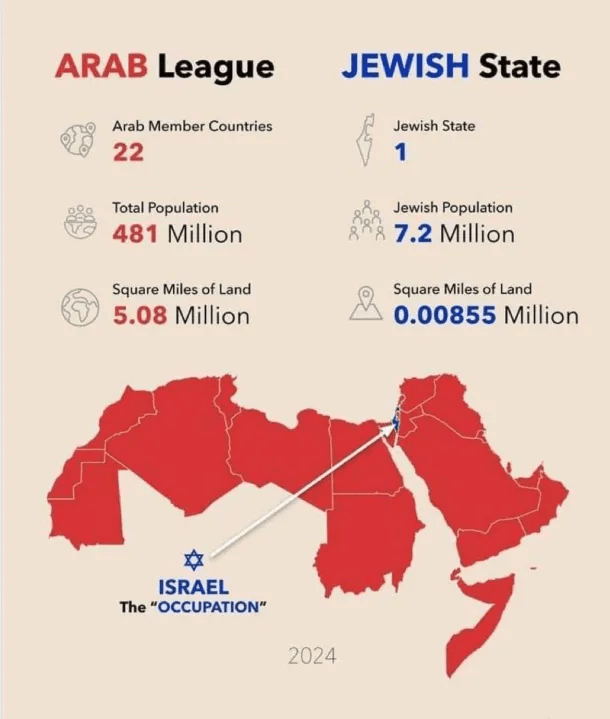
And then there is the simple, vertiginous mismatch of scale that the slogans never mention. The infographic reproduced in this article sets it starkly: the Arab League comprises twenty-two countries, some 480 million people, and roughly five million square miles — beside a single Jewish state of about seven million Jews on under nine thousand square miles, labeled on the map, without irony, “the Occupation.” Twenty-two nations and a continent’s worth of land, unable to absorb the grievance of one sliver the size of a small county, choosing instead to keep the wound open for eighty years. That is not the arithmetic of an oppressed majority. It is the arithmetic of an obsession — the very idol diagnosed in the previous section, drawn now to scale on a map.
Part 11: Antisemitism as Envy — the Quran’s Diagnosis
The Scripture Names the Emotion
Why does the obsession take the specific form of hatred toward this one people? The Quran does not leave the motive unnamed. It identifies envy — the resentment of a blessing one believes should have been one’s own — as the engine of much of the hostility directed at those God has favored:
[4:54] “Are they envious of the people because God has showered them with His blessings? We have given Abraham’s family the scripture, and wisdom; we granted them a great authority.”
[2:109] “Many followers of the scripture would rather see you revert to disbelief, now that you have believed. This is due to jealousy on their part, after the truth has become evident to them. You shall pardon them, and leave them alone, until God issues His judgment. God is Omnipotent.”
The Quran is even-handed enough to apply this diagnosis in every direction — the envy verse describes a universal human sickness, the resentment of God’s distribution of gifts. But it lands with uncomfortable force on a traditional Muslim world that watches a tiny nation it despises flourish in science, agriculture, and arms while its own far larger numbers stagnate. The rage that follows is not, at root, about a border. It is the ancient ache of [4:54] — “are they envious of the people because God has showered them with His blessings?” — and the believer who recognizes the emotion in himself is halfway to being free of it.
The Command Is Restraint, Not Retaliation
Notice what God prescribes for this envy, and how completely it differs from the program of the charters and the militias. The command in [2:109] is “pardon them, and leave them alone, until God issues His judgment.” Judgment is reserved to God; the believer is ordered to disengage, not to avenge. This is the exact opposite of a theology that recruits children to kill. The antisemitism-as-envy that pulses through the traditional world is, in Submission’s diagnosis, the compromiser’s deflection — a way to avoid the verdict of [3:160] by blaming the favored nation instead of examining one’s own abandonment of God’s book.
And here the chain of the whole article closes. The defeated do not lose because of a Jewish conspiracy; they lose because they forsook the Quran (Part 8). They then refuse that diagnosis and reach for the scapegoat their envy supplies (this section). And they pour the resulting rage into a single cause that becomes their idol (Part 9), while the real catastrophes of the world go unattended. Break the first link — return to God’s book, accept that “if He abandons you, who else can support you?” — and the whole chain of envy, scapegoating, and idolatry falls apart. The cure for hatred of the Jews was always, simply, submission to God.
Part 12: The Honesty Clause — We Do Not Whitewash Anyone
Equity Even Against Ourselves
None of this is a brief for a flawless state, and a believer who turned it into one would be violating the very scripture he claims to serve. The Quran’s standard of witness is merciless toward our own bias:
[5:8] “O you who believe, you shall be absolutely equitable, and observe God, when you serve as witnesses. Do not be provoked by your conflicts with some people into committing injustice. You shall be absolutely equitable, for it is more righteous. …”
The command “do not be provoked by your conflicts with some people into committing injustice” runs in both directions. It forbids the traditionalist from lying about Israel out of hatred, and it forbids us from lying for Israel out of a desire to win the argument. Individual states are judged by their deeds, not by an ancient decree that immunizes them from accountability; the land-grant of [5:21] confers a stewardship, not a permission slip. Where any government, on any side, kills the innocent, corrupts justice, or oppresses the weak, the believer names it as sin, because no flag is sacred and no nation is above the law of God.
The Innocent Dead Are Grievous to God
The suffering of innocent civilians in Gaza is real, and it is grievous to God. The Quran makes the sanctity of a single life cosmic — to murder one innocent soul is to murder all of humanity [5:32] — and that verdict does not have a nationality. A submitter reads the casualty lists of children and does not reach for a talking point; he grieves, because God grieves, and because no demographic statistic and no aid dashboard can cancel the weight of one murdered child. The argument of this article is not that Gaza’s pain is fictional or that Israel is sinless. The argument is narrower and harder: that the Quranic verdicts stand regardless of who is currently behaving worst.
Those verdicts are three, and they are stubborn. The land decree of [5:21] stands. The freedom of religion of [2:256] is the test, and it exposes which society honors the gift and which tramples it. And the obsessive singling-out of the Jews is a spiritual disease the Quran diagnoses as envy [4:54] and forbids as injustice [5:8]. A believer can hold all of this at once — grief for the innocent dead, refusal to whitewash any state, and loyalty to what God actually decreed — because the alternative is to let his emotions overrule his scripture, which is the original sin of every faction in this conflict. “None bears the burden of another” [6:164]; the believer answers to God for his own honesty, not for a nation’s record.
Part 13: Righteous Jews and the Unity of Submitters
The Door God Refuses to Close
Lest anyone twist a single sentence of this article into a license for hatred, the Quran slams that door shut. Salvation, God declares, is not awarded by ethnic or sectarian label but by faith and works, and the Jew is named explicitly among those who can attain it:
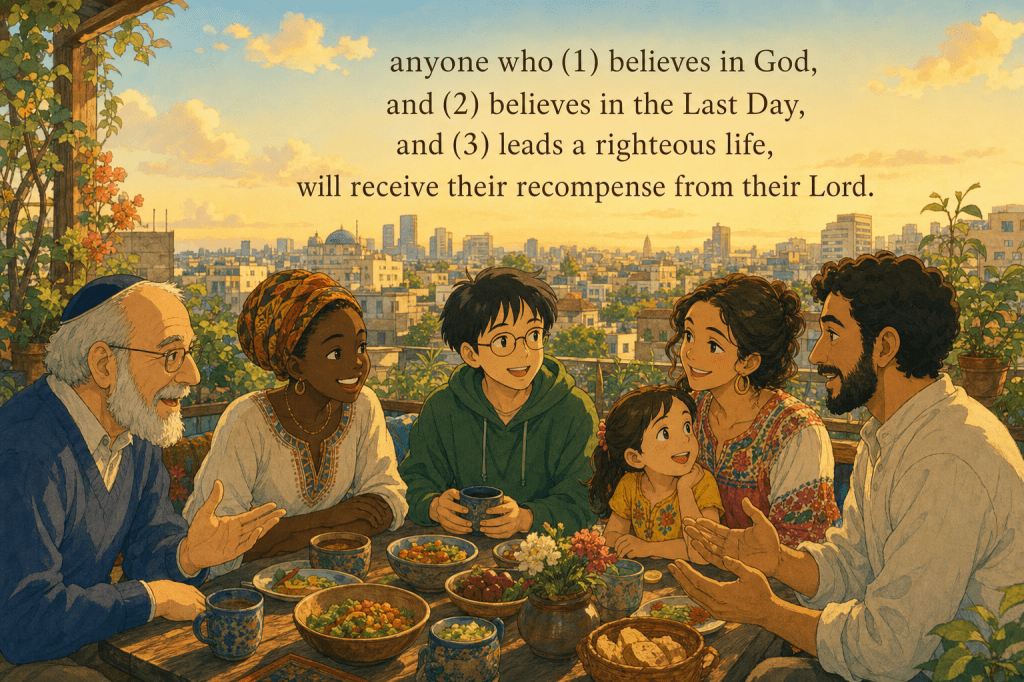
[2:62] “Surely, those who believe, those who are Jewish, the Christians, and the converts; anyone who (1) believes in God, and (2) believes in the Last Day, and (3) leads a righteous life, will receive their recompense from their Lord. They have nothing to fear, nor will they grieve.”
The Quran insists the People of Scripture are not a monolith: “They are not all the same; among the followers of the scripture, there are those who are righteous. They recite God’s revelations through the night, and they fall prostrate” — [3:113]. Rashad Khalifa hammered this against the sectarians of his own background, explaining (at 1:03:08): “They say the Jews and the Christians will not go to Heaven. Well, the Quran tells us otherwise. Anyone who worships God alone will make it to Heaven.” Any reading of this article that ends in contempt for Jews as Jews has misread it completely, and has earned the Quran’s rebuke rather than its endorsement.
Friendship, Not Blanket Enmity
The traditional polemicist loves to quote the half-verse about not befriending certain Jews and Christians, and he always omits the condition that governs it. Rashad Khalifa corrected exactly this dishonesty in a recorded interview (at 40:28): the prohibition “should be completed as follows: you shall not befriend the Jews and Christians who oppress you and persecute you because of your religion… the Quran says that God does not forbid you from befriending those who do not fight you and do not evict you from your homes. So we must take the total picture in mind and we must never tell half truth.” The governing law is stated plainly:
[60:8] “God does not enjoin you from befriending those who do not fight you because of religion, and do not evict you from your homes. You may befriend them and be equitable towards them. God loves the equitable.”
The enemy in the Quran is never an ethnicity; it is a behavior — aggression, persecution, the eviction of people from their homes. Against those who do that, on any side, the believer stands firm. Toward those who do not, the believer is commanded to friendship and equity. This is the unity of submitters that the conflict’s tribalism cannot comprehend: a Jew who worships God alone and leads a righteous life is nearer to the submitter than a self-described Muslim who has buried the Quran under a mountain of fabricated tradition. The line God draws does not run between peoples. It runs between submission and idolatry, straight through the middle of every nation.
Conclusion: Return to God, Not to a Flag
We began with a measuring stick and we end holding it up to the reader’s own heart. Freedom is God’s most precious gift, and the society that honors it stands nearer to God than the society that crushes it, whatever banners either one flies. The Holy Land was decreed by God to the Children of Israel in a verse the world’s Muslims recite and refuse to read; the forty-year wandering proved that decree is conditional, that chosen-ness is responsibility rather than racial title, and that no people holds the land independent of how it behaves. The end-times ingathering of [17:104] has unfolded within living memory, and the believer is entitled to be moved by it without canonizing any state. The violence is older than the occupation it blames. The defeats are God’s verdict on a community that forsook His book. And the obsession with one people is a disease of envy that the Quran names, forbids, and cures — by returning the heart to God.
So the call is not to pick a flag. It is to put down the idol — whether that idol is a cause marched for in the streets, a state defended past the point of honesty, a fabricated tradition exalted above revelation, or an ancient envy dressed as justice — and to take up the gift instead. Care for the innocent dead of Gaza and of Sudan and of Congo with the even-handed grief God commands. Tell no half-truths, for any side. Read what God actually decreed, and let it cost you the comfort of your tribe. The choice the Final Testament places before every reader is the same choice it has always been: to seek God freely, with both hands open, for “whoever wills let him believe, and whoever wills let him disbelieve” — or to clutch an idol and call it a homeland.
The land belongs to God, who grants it to whomever He chooses. The future belongs to God, who summons His servants in one group when the final prophecy comes to pass. And the gift — the freedom to choose Him — belongs, for now, to you. Do not let anyone take it. And do not, by infringing on another’s, exile yourself from the grace of the One who gave it.

 Quran Only Studies
Leave a comment